Jens Paul Berg, 1890
Below also see: Jens Paul Berg, 1907
Jens Paul Berg, 1923 – Indecent assault
Jens Paul Berg, 1924 – Death
Clara Jane Berg, 1930 – Death
Australian Star, Thu 11 Dec 1890 1
FAMILY NOTICES.
———◦———
MARRIAGES.
BERG—DEARIN.—December 4, at St David’s Church, Surry Hills, by the Rev J Hargraves, Jens Paul Berg, of Brisbane, to Clara Jane, fourth daughter of TB Dearin, of Crown-street, Sydney.
~ ~ ~ ~ ~
The Sydney Morning Herald, Thu 11 Dec 1890 2
MARRIAGES.
BERG—DEARIN.—December 4, St David’s Church, Surry Hills, by the Rev J Hargrave, Jens Paul Berg, of Brisbane, to Clara Jane, fourth daughter of TB Dearin, of Crown-street, Sydney.
~ ~ ~ ~ ~
The Brisbane Courier, Fri 6 Sep 1892 3
THE ELECTIONS ACTS, 1885 TO 1892.
————
ELECTORAL DISTRICT OF BRISBANE
NORTH.
————
LIST OF NAMES of all Persons appearing on the Electoral Rolls now in force and on the July Quarterly Electoral List against which I have placed the word “dead,” “left,” or “disqualified.”
The name of any Person included in this List who qualification is not proved on oath to the satisfaction of the Annual Revision Court to be still subsisting will be omitted from the Electoral Roll.
PW Pears,
Electoral Registrar.
…
243 Berg, Carl A; left
244 Berg, Jens Paul; left
Jens Paul Berg, 1907 4
Australian Star, Mon 25 Mar 1907 5
TWO WILLS
———◦———
SUIT IN THE PROBATE COURT
————
THE ESTATE OF MRS DIXON
————
This morning, in the Probate Court, Mr Justice Street resumed the hearing of the suit over two wills—the Perpetual Trustee Company v. Charles Dixon.
Mr Alexander Gordon, KC, and Mr Peden (instructed by Messrs WJ Dearin and Vivian) appeared for the applicants; Mr Loxton and Mr JA Ferguson (instructed by Bretnall and Son) for the respondent.
The claim was for probate of the will of the late Maria Dixon, of Crown-street, Surry Hills, who left an estate of valued at £3000. Testatrix made a will on January 18, 1900, bequeathing portion of her property to her husband, and dividing the remainder between her two sisters, Mrs [Clara Jane] Berg and Mrs Large. In a previous will, dated December, 1899, testatrix gave her husband a life interest in the property, and directed that on the death of her two sisters the property was to go to Thomas Musgrave Dixon, the son of her husband by a previous marriage. Under the 1899 will Charles Dixon was appointed executor.
Mrs Dixon died on September 7, 1906. Her husband, who states that he was in ignorance of the second will until after his wife’s death, opposes the granting of probate to the Perpetual Trustee Company on the grounds that testatrix was not of sound mind when the 1900 will was made, and that undue influence had been used by Thomas H Dearin, one of Mrs Dixon’s relatives, and others. Testatrix was a Miss Dearin before she married Dixon.
Mrs [Clara Jane] Berg, of the latte Mrs Dixon, was examined to-day.
In reply to Mr Gordon witness said that Mrs Dixon spoke to her in January, 1900, about her will. That was some days before the will was drawn up and signed. Mrs Dixon asked for her brother Tom. About that time witness saw her sister nearly every day. Her sister knew what she was doing. Thomas Dearin went to the house as requested. Mrs Dixon was not in bed. When the will was read and signed in January, 1900, Mrs Dixon thoroughly understood what she was doing. Witness understod [sic] what her sister said, and what she wished in regard to the distribution of her property. Her brother Thomas went through the list of the various properties with testatrix. She never heard Mr Dixon say in 1900 or between 1900 and the death of testatrix in 1906 that she was incapable of looking after her affairs. Mrs Dixon was in better health in January, 1900, than she was in December, 1899. Witness knew that her sister had a paralytic stroke in November, 1899. After the will was signed in January, 1900, testatrix seemed pleased, and later on she spoke of what she had done. That was some weeks after the signing of the will. Testatrix asked witness not to tell anyone about the will, which was made in January, 1900. Mr Dixon was not in the house when the will was made. Between the signing of the will and her death last year testatrix was treated as an invalid, but not as a person of weak intellect.
To Mr Loxton: Her brother Thomas took down the particulars from testatrix, but witness did not know who put the will into form.
Thomas Henry Dearin was the next witness. He said he was the brother of the late Mrs Dixon. He had the will of January 18, 1900, prepared, and he went to the Dixsons with two witnesses, Mr Caddy and Mr Nixon. It was shortly after 2 o’clock when he went to the house. The will which had been copied frim [sic] the draft of which Mrs Dixon approved was read over. Mrs Dixon understood what was done. She said, “That is all right.” The witnesses were then brought into the room, and Mrs Dixon said, “You sign it, and I’ll hold the pen.” He said it would be better if she signed without assistance. He then held her wrist, and the signature was placed on the will. Nothing was said or done before or on the day of the signing of the will to influence or control Mrs Dixon in any way. Mr Dixon never said or suggested that Mrs Dixon was mentally incapable. He did not do anything of the kind until legal proceedings were commenced after Mrs Dixon’s death. A little before her death Mrs Dixon, with help, signed a receipt for some money from the Dearin family estate.
Cross-examined by Mr Loxton, witness said he had not been opposed to the marriage of his sister. She was 40 years of age when she married Mr Dixon. He (witness) did not warn his sister not to be overcome by her husband’s cunning, nor did he worn her to be careful in signing documents. He may have written to his sister after her marriage, telling her to be careful about her property. He may have advised her in the letter not to sign her name to any document without getting the advice of some friend. It was true that he declined to go to the wedding breakfast. His reason was that his wife was not on good terms with his sister at the time. He did not attend the weddings of his two other sisters, but he did not object to them marrying.
Jens Paul Berg was then called. He said he married one of Mrs Dixon’s sisters. In January, 1900, he had a conversation with Mrs Dixon. She said she had signed a will in December, which was not hers, but her husband’s. witness suggested that she could make a new will. Mrs Dixon then said that she would see her brother Tom about it. She said she would rather see her brother than a lawyer. The fresh will was afterwards made
The court then adjourned till to-morrow morning.
Jens Paul Berg, 1923
The Sydney Morning Herald, Wed 21 Feb 1923 6
LAW NOTICES.
———
Wednesday, February 21.
…
QUARTER SESSIONS.
…
No. 3 Court.—Harold Bogg, assault occasioning actual bodily harm; George Drysdale, perjury; Edwin Jones, wilfully making a false statement on oath; Jens Paul Berg, indecency.
~ ~ ~ ~ ~
The Daily Telegraph, Thu 22 Feb 1923 7
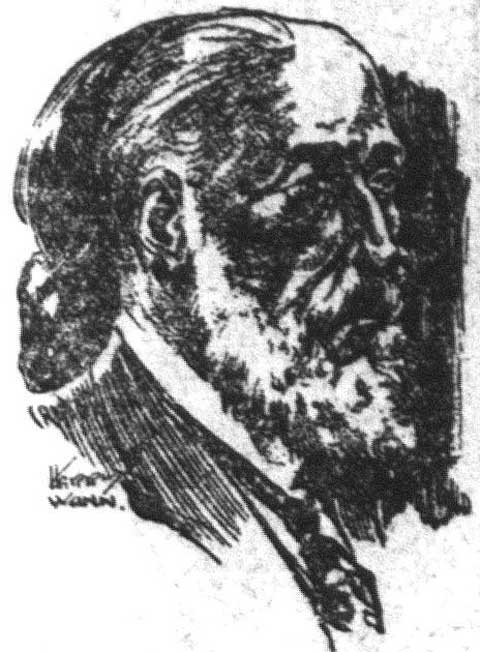
Qld), Sun 4 Mar 1923, p. 11.
Reproduction: Peter de Waal
CRIMINAL.
————
(Before Judge Scholes).
Crown Prosecutor, Mr LJ McKean.
…
(Before Acting-Judge Edwards).
Crown Prosecutor, Mr PV Storkey.
OLD MAN CONVICTED.
Jens Paul Berg, for whom Mr RD Meagher appeared, was convicted in No. 3 Court of the Quarter Sessions on a charge of having committed a serious offence, [indecent assault on Leonard George West, 8 years], at Lindfield on November 15. Accused, who was strongly recommended to mercy on account of his age and previous good character, was remanded for sentence.
~ ~ ~ ~ ~
The Sydney Morning Herald, Thu 22 Feb 1923 8
QUARTER SESSIONS.
(Before Acting-Judge Edwards).
Mr PV Storkey, Crown Prosecutor.
…
REMANDED FOR SENTENCE.
Jens Paul Berg, an old man, pleaded not guilty to a charge of having committed a serious offence at Lindfield on November 15. Mr RD Meagher appeared for the accused, who was found guilty, with a strong recommendation to mercy on account of hiss age, and previous good character. The accused was remanded for sentence.
~ ~ ~ ~ ~
The Daily Telegraph, Fri 23 Feb 1923 9
CRIMINAL.
————
(Before Judge Scholes).
Crown Prosecutor, Mr LJ McKean.
…
(Before Acting-Judge Edwards).
Crown Prosecutor, Mr PV Storkey.
…
SEPTUAGENARIAN SENTENCED.
Jens Paul Berg, an old man, who had been convicted, with a strong recommendation to mercy, on a charge of having committed a serious offence, was sentenced to a year’s imprisonment, with light labor. His Honor directed that the attention of the Comptroller-General of Prisons be drawn to the fact forthwith that prisoner was 72 years of age.
~ ~ ~ ~ ~
The Sydney Morning Herald, Fri 23 Feb 1923 10
QUARTER SESSIONS.
…
(Before Acting Judge Edwards.)
Mr PV Storkey, Crown Prosecutor.
SENTENCE.
Jens Paul Berg, who had been convicted of committing a serious offence, was sentenced to 12 months’ light labour in such gaol as the Comptroller-General of Prisons may appoint. The attention of the Comptroller-General is to be forthwith directed to the fact that accused is 72 years of age.
~ ~ ~ ~ ~
Truth, Sun 4 Mar 1923 11
PIOUS POLLUTER.
———◦———
PILLAR OF CHURCH CONVICTED.
———◦———
LIGHT OF SWEDENBORGIANISM IN DOCK.
———◦———
Guilty Of “BEASTLY OFFENCE,” says the Judge.
————————
A pillar of the religious organisation styling itself the New Church, “signified by the New Jerusalem in the Book of Revelations,” was arraigned at the Darlinghurst Sessions in Sydney on Wednesday, presided over by Judge Edwards, for indecently assaulting a little boy of eight years. The pillar was Jens Paul Berg, who gave his age as 72, a retired accountant, living at Highgate–road, Lindfield, and the offences took place on November 15 last. Mr Storkey was Crown Prosecutor and Mr Meagher appeared for Berg.
In the February number of “The New Age,” the organ of this religious sect, it is set forth on the title page that it is “An Australian monthly journal, advocating the doctrines of the New Church,” and “published by JP Berg, Highgate-road, Lindfield, for the New Church in Australia, an inter-colonial association instituted 1881.” The originator of the sect was Emanuel Swedenberg, a Swede, who was created a baron and had his name changed to Swedenborg, in 1719. The baron, so he himself declared, travelled over heaven, hell, and purgatory, and conversed with numerous spirits and angels, through being on terms of personal friendship with “the Lord.” Whether Swedenborg had a tile off the roof or not is best judged by his own declaration of the wonders he saw in heaven and hell.
“As often as I
Conversed With Angels
face to face,” he wrote, “it was in their habitations, which are like to our houses on earth, but far more beautiful and magnificent, having rooms, chambers, and apartments in great variety, as also spacious courts belonging to them, together with the gardens, parterres of flowers, fields, etc, where the angels are formed into societies. They dwell in contiguous habitations, disposed after the manner of our cities, in streets, walks, and squares. I have had the privilege to walk through them, to examine all around about me, and to enter their houses, and this when I was fully awake, having my inward eyes opened.”
In the current number of “The New Age,” a paragraph announces that “Mr Berg, our trusty manager, desires us to remind our readers that their subscriptions to “The New Age” are now due, and will be very welcome.”
The New Church, however, doesn’t appear to be very strong in Sydney, there being only one hall, in Thomas-street, where the New Jerusalemites meet every Sunday morning. Its treasurer is JP Berg, of Lindfield.
The chief witness against the old sinner was, of course, the little boy himself. On November 15, he said, he called at Berg’s house in an endeavour to sell some tickets in aid of the Sydney Hospital. Berg asked him to come back on the morrow. Next day when he called, as he had been told, Berg asked him inside the house. On the doorstep he was hitching up his braces, and when Berg noticed this, he asked what was the matter, and told him to come in. Inside the room, Berg
HANDLED HIM INDECENTLY,
and exposed himself. Afterwards Berg gave him a shilling for a ticket, and twopence for himself, and as he was going out Berg said something about not telling anybody and to come back next week. The boy said he did not ask Berg to expose himself.
The deposition of the boy’s adopted mother, or guardian, which was taken at the lower court, was read. It said that on the day in question the boy came home very upset. She gave him his dinner, and sent him off to school. After he returned he threw his arms around her and told her that Berg lay back on a couch and behaved improperly.
Sergeant Simon Fowler, of Pymble, stated that on November 16 he saw the boy, and was told something, in consequence of which the boy was taken to Dr Moss and examined, but no marks or bruises were seen. The boy’s pants and flannel were taken possession of and submitted to the Government Microbiologist for examination, but the result was negative. On November 25, went on the sergeant, along with Constable Malcolm, he saw Berg at this home, in Highgate-road, Lindfield. Berg was hosing down the front veranda, when he called, “Your name is Mr Berg, I understand?” “Yes,” responded Berg. “What is your full name?” “Jens Paul Berg.” “Well, I want
A SERIOUS TALK
with you,” he explained. Inside the house he asked if he remembered the previous Wednesday week, the 15th?” “Yes,” replied Berg. Asked if he remembered what occurred on that day, Berg said he did, and that a little boy called at the back door selling tickets for the Red Cross. “He was scratching himself. I asked what was the matter, and told him to come inside. As Berg seemed willing to give his account of the affair, witness wrote down what the old man had to say, afterwards giving it to him to read and sign. This statement said the boy was scratching himself, and Berg asked him to come inside and let him look at the trouble. The statement cannot be published, but in it the old man made certain serious admissions. He said he had given the boy pennies before that day.
Giving evidence on his own behalf, Jens Paul Berg, bald, with a scant fringe of grey, and wearing a moderate-sized grey beard, a man of medium build, and speaking a foreign accent, looked as though he was not vitally interested in the outcome, and at once adopted a high moral tone. He was 72 years of age, he said, and lived with his wife, who was elderly like himself, at Highgate-road, Lindfield, where they had lived for the past 10 years. For over 40 years he had lived in Australia, and a few years ago come to Sydney from Queensland, where he was an accountant in the Civil Service. The New Church connection, he said, was based on the doctrines of Emanuel Swedenborg. Witness was one of the trustees, and attended to the publication of “The New Age,” the periodical of the church. It was
HIS FIRST APPEARANCE
in any court, save as a witness.
Mr Meagher mentioned that he was unacquainted with the tenets or doctrines of the New Church, but nonetheless he was liberal-minded enough to see there were good and bad in all religions, and thought the illiterate savage in darkest Africa, if benevolent and good and true to his wife and children, had quite as much chance of attaining eternal bliss as the most highly civilised who were equally good.
Getting a fresh start, Berg said that when the boy called with his tickets first, he told him to call next week, when Mrs Berg would be at home. But the boy called the very next day, and started scratching himself at the door. He asked what was the matter, and invited the boy inside for examination. There he told the boy to take down his pants, thinking some sores might be the cause, sores which were sometimes a heritage from parents to children. An examination, however, failed to discover any reason why the boy should scratch himself, so he inculcated cleanliness, and showed the boy how it could be done. Certainly it wasn’t —. Why, he couldn’t dream of it. The examination took place in his office, not a bedroom—only a couch. He lifted the boy up and caressed him.
Mr Meagher: Do you mean that you kissed him?—Certainly.
“The boy,” added Berg, “told me a story about two girls and a boy, and I
GAVE HIM GOOD ADVICE,
telling him they were bad company for him.”
Mr Meagher: Were you actuated by any neurotic feelings or were you endeavouring to inculcate moral
advice?—I was inculcating moral precepts.
His Honor: And were your pants undone then?—Yes.
Mr Meagher: But from start to finish you were not activated by any immoral desire or thought?—I was not.
Mr Storkey: Did the constable say to you, “This is not the first occasion he has been in to see you, and one day you took him and another boy into your cellar?”—That is untrue.
Is the cleanliness of youth one of the basic principles of this New Church?—No.
The reason you were so interested in the boy had nothing to do with the church then?—No; certainly not.
Where was your wife at the time?—She had been away for three weeks, but she came back on the Saturday following.
On November 25 didn’t you tell the sergeant that she was still away? She was still away; I made a mistake.
Berg did not call any of his neighbours or residents of Lindfield to give evidence about his character, but instead he called William Henry Hartley, another elderly man, living in Canley Vale. Hartley had carried on business in the city for 30 years, but was now living in rural retirement. He said he was a member of the New Church, signified by the New Jerusalem foretold in Revelations, and with branches in all the States. Berg, he declared, was treasurer of the New South Wales Church, and also editor of the “New Age,” and they had known each other for 30 years or more. Hartley described Berg as one of the most conscientious men he had ever met, and his reputation was
THE MOST EXCELLENT
amongst all who knew him.
Mr Meagher, addressing the jury on his client’s behalf, said the statement purporting to have been given by Berg was really a condensation of leading questions put by the arresting constable and Berg’s answers prosed into narrative form. To the pure, however, all things were pure, and if the liberty of men depended on the statements of boys of eight years of age, nobody would be safe.
His Honor, however, left it to the jury to say whether Berg’s attentions to the boy were purely for the purpose of inculcating precepts of a high order of morality, or the very reverse. They should consider why the man lay down on a couch in the undress he was and picked up the little boy to kiss him, and what actuated him.
The jury deliberated the question for over two hours, and then recorded a verdict of guilty, the foreman stating the jury recommended Berg strongly to mercy on account of his very old age and previous good character.
Mr Meagher urged his Honor to consider that Berg had passed life’s allotted span, and hoped the man would be bound over in recognisance for good behavior instead of being sentenced to imprisonment. It was a most painful proceeding and should be met by humane treatment.
His Honor said he hardly knew what to do with the man, who was very old. But it was a beastly offence, and he preferred to consider the question. Had the jury not recommended him to mercy, he would certainly take into consideration the facts and that he was a very old man. Still, it was
A BEASTLY OFEENCE,
and one liable to penal servitude. Was anything known of him?
The Sergeant: No, your Honor.
Mr Meagher: Could your Honor not bind him over to come up for sentence when called upon?
His Honor: I will think the matter over, and he can come up for sentence to-morrow.
On Thursday Berg was sentenced to 12 months imprisonment, with hard labor.
~ ~ ~ ~ ~
Jens Paul Berg, Gaol photo sheet 12
![SRNSW: NRS2467, [3/6108], State Penitentiary photographic description book, 5 Sep 1922-24 Mar 1923, No. 19200, p. 385.](../../images/trials/1923-Berg-6108-gaol-photo-19200.jpg "SRNSW: NRS2467, [3/6108], State Penitentiary photographic description book, 5 Sep 1922-24 Mar 1923, No. 19200, p. 385.") |
Gaol Photo Sheet - Transcribed Details
No. 19200
Date when Portrait was taken: 23-2-1923
Name: Jens Paul Berg
|
Native place: Norway Year of birth: 20-10-1849 Arrived Ship: Scottish Admiral Trade or occupation Religion: Lutheran Education, degree of: R & W Height: 5' 6¼" Weight On committal: 135 Colour of hair: Grey Colour of eyes: Blue |
Marks or special features: Bald on top of head. Lump inside left wrist |
|
(No. of previous Portrait ... ) CONVICTIONS |
|||||
|
Where and When |
Offence. |
Sentence |
|||
|
Sydney Q.S |
21 |
2 |
1923 |
Indecent assault on a male |
12 months H.L. |
Jens Paul Berg, 1924
The Sydney Morning Herald, Tue 7 Oct 1924 13
DEATHS.
BERG.—October 5, 1924, at a private hospital, Randwick, Jens Paul Berg, dearly beloved husband of Clara Berg, late of Stewart-street, Randwick.
Clara Jane Berg, 1930
The Sydney Morning Herald, Sat 17 May 1930 14
FUNERALS.
BERG.—The Friends and Relatives of the late CLARA JANE BERG are respectfully advised that her remains will be laid to rest in the Independent Cemetery, Randwick. The Funeral is appointed to leave her niece’s (Mrs N Hinds) Hayle, Copeland-street, Beecroft, at 1.30 o’clock, THIS AFTERNOON
GEO ANDREWS
Funeral Directors,
237-9 Liverpool-road, Ashfield.
‘Phone (2 lines).
~ ~ ~ ~ ~
The Sun, Wed 2 Jul 1930 15
BEQUESTS TO CHARITIES
————
Clara Jane Berg, widow, of Surry Hills, who died in May, aged 78, left an estate of £10,714, to relatives, subject to bequests of £50 each to the Sydney City Mission and St David’s Church of England, Surry Hills.
~ ~ ~ ~ ~
The Sydney Morning Herald, Thu 3 Jul 1930 16
LATE MRS CJ BERG.
———◦———
Probate has been granted of the will of Mrs Clara Jane Berg, widow of the late Mr [Jens] Paul Berg, of Crown-street, Surry Hills, who died on May 15 last at the age of 78 years. Testatrix, who left and estate valued at £10,714, appointed Thomas Henry Dearin and Walter James Dearin her executors and trustees. She left £50 each to the Sydney City Mission and to St David’s Church of England, Surry Hills. The residue of the estate was left to relatives and friends.
1 Australian Star, (Sydney, NSW), Thu 11 Dec 1890, p. 1.
2 The Sydney Morning Herald, Thu 11 Dec 1890, p. 1.
3 The Brisbane Courier, (Qld), Fri 16 Sep 1892, p. 7. Emphasis added.
4 Further details about this Probate Court case can be found in the: Australian Star, (Sydney, NSW), Thu 21 Mar 1907, p. 7; Australian Star, (Sydney, NSW), Fri 22 Mar 1907, p. 5; Australian Star, (Sydney, NSW), Wed 27 Mar 1907, p. 5.
5 Australian Star, (Sydney, NSW), Mon 25 Mar 1907, p. 7. Emphasis added.
6 The Sydney Morning Herald, Wed 21 Feb 1923, p. 10. Emphasis added.
7 The Daily Telegraph, Thu 22 Feb 1923, p. 2.
8 The Sydney Morning Herald, Thu 22 Feb 1923, p. 6.
9 The Daily Telegraph, Fri 23 Feb 1923, p. 5.
10 The Sydney Morning Herald, Fri 23 Feb 1923, p. 6.
11 Truth, (Brisbane, Qld), Sun 4 Mar 1923, p. 11. Emphasis added.
12 SRNSW: NRS2467, [3/6108], State Penitentiary photographic description book, 5 Sep 1922-24 Mar 1923, No. 19200, p. 385.
13 The Sydney Morning Herald, Tue 7 Oct 1924, p. 8.
14 The Sydney Morning Herald, Sat 17 May 1930, p. 13.
15 The Sun, (Sydney, NSW), Wed 2 Jul 1930, p. 13.
16 The Sydney Morning Herald, Thu 3 Jul 1930, p. 8.