Charles Meikelham, 1889-1909 – Conjurer
Below also see: Charles Meikelham, 1911, 1916
The Sydney Morning Herald, Fri 6 Dec 1889 1
AMUSEMENTS.
———◦———
…
A smoke concert was held last evening by the officers of the Australian Joint Stock Bank, at Aarons’ Exchange Hotel. There was a large gathering, and a social evening was very pleasantly spent. A number of songs and instrumental solos were contributed, besides which several clever tricks were performed. Those who took part were Messrs CF Hancock, A Stanley, C Meikleham, GW Scarlett, GE Weatherill, BG Simons, LC Newman, GM Allard, H Knight, JH Wood, JR Johnson, and N Dewhurst.
~ ~ ~ ~ ~
Windsor and Richmond Gazette, Sat 7 May 1892 2
RICHMOND.
————
There was a large congregation at the Harvest Thanksgiving Service at St Peter’s Church on Sunday. The building was very beautifully decorated with maize and other produce, sheaves of wheat, and a large growing plant of arrowroot, presented by the Principal of the Agricultural College. The farmers sent any quantity of produce–in fact more than was required—all entering into the spirit of the thing with zeal. The effect was very pleasing, and the success of the service reflected great credit upon those who devoted their time to the praiseworthy object.
_______________
…
Mr Charles Meikleham, who is known well in Sydney and elsewhere as a remarkably clever conjurer, has agreed to give an entertainment on Saturday evening next (the evening of the last day of the Show) in the School of Arts, in aid of repairs to the interior of St Peter’s Church. Assistance will be rendered, in the shape of instrumental and vocal selections, by several lady and gentleman amateurs, and the entertainment should be a most successful and enjoyable one.
~ ~ ~ ~ ~
Windsor and Richmond Gazette, Sat 21 May 1892 3
CONJURING ENTERTAINMENT
AT RICHMOND.
————
On Saturday evening last an exhibition of legerdemain, by Mr Charles Meikleham, was given in the School of Arts in aid of repairs to the interior of St Peter’s Church of England. The entertainment was assisted throughout by Windsor and Richmond lady and gentlemen [sic] amateurs, who contributed songs and instrumental music. The audience was not a large one when the proceedings commenced, but filled up as the entertainment progressed. The front seats were fairly well filled, this portion of the audience being chiefly composed of ladies. The opening piece was a violin solo by Master H Moses, piano accompaniment played by Miss Moses. This item was loudly applauded, and regret was expressed that the young performer did not contribute another piece during the evening. Song, “Will o’ the Wisp,” Mr Paddington, another favourite with a Hawkesbury audience, gave much satisfaction. Mr Paddington later on sang “The Garonne,” for which he was encored and sang “Mona.” Song, “I have waited,” by Miss Netta Walker, was well received, though the lady being apparently nervous, sang hardly loud enough to be heard all over the hall. The same lady also contributed another sentimental song in the second part of the programme. Song, “Apart,” Mrs Benson, who has a sweet voice, and gave an excellent rendering of this pretty song. Mr Copeland, who was in good form, sang an item in his usual pleasing style. Pianoforte duet, Mrs JE Pitt and Miss Edie Onus, was very well executed, and showed considerable skill in the handling of the new semi-grand piano. Song, comic, “The Irish Spree,” Mr James Farnell, created an uproar in the back seats, who would not let Jimmy off without contributing another of his comicalities, so he had to give that somewhat hackneyed song “Gone for Ever,” (which we hope it has), without accompaniment. During the evening Mr Meikelham, a gentleman from Sydney, an amateur conjurer, contributed on four different occasions a number of exhibitions of sleight of hand. Upon making his appearance the performer was met with an outburst of applause. Mr Meikleham said that no doubt most of the audience had frequently pronounced his professional name before his appearance before them, but for the benefit of those who had not, he would do so, which he did in a much shorter space of time than many of the audience who had been vainly trying to decipher the huge mass of letters. He (Mr Meikleham), would endeavour to explain a few tricks with sleight-of-hand. Sleight-of-hand was very useful; he had seen an exhibition that day on the Show-ground by one who belonged to that craft, who relieved a gentleman of a sum of money in a very skilful manner, and did great credit to the profession. The conjurer then went through his performance in a very clever manner, and, with his coat-sleeves turned up, he did his tricks before the observant gaze of the audience without the slightest trace of shuffling or clumsiness. The feats of legerdemain were equal to the best professionals—Professors Anderson, Heller, Dr Lynn and others. The entertainment wound up with the well-known trick, performed at nearly all entertainments of this kind—the removal from a borrowed hat of multifarious articles, from a silk handkerchief to a canary cage. The performer was repeatedly applauded.
During the evening the Rev E Hargrave alluded to the object of the entertainment, and thanked the ladies and gentlemen for their kind assistance. He said he had made arrangements for a series of lectures to be given during the winter months, the first being by the Rev Canon Kemmis, “Travels in the Old Country.” Another lecture would be a “Medley,” and Mr Bray, the Naturalist, who was an old school-mate of the speaker’s, would lecture on “Snakes,” with experiments, or, as Mr Hargrave humourously put it, to see whether death-adders sting with their heads or their tails.
~ ~ ~ ~ ~
The Sydney Morning Herald, Wed 24 May 1893 4
AMUSEMENTS.
———◦———
…
The second smoke concert of the Cosmopolitan Club was evidently given last night in loyal anticipation of the Queen’s Birthday, and accordingly just after the stroke of midnight the president (M Kowalski) proposed “Her Majesty the Queen,” and the health was duly honoured with enthusiasm. Some of the officers of the Kaiserin Elisabeth and other men-of-war now in port were present, and were thus amongst the other cosmopolitans who thus early remembered the national festival. The chief feature of interest in the evening’s doings was a remarkably pretty lightning-sketch by Mr Streeton, showing a shepherd and a shepherdess strolling over the mead, followed by their fleecy flocks. M Kowalski essayed the task of expressing the scene in music, which he did picturesquely by an impromptu which now suggested a rustic dance and anon the song of birds and the tranquillity of country life. Throughout the whole the pastoral tone was well maintained, and the impromptu was much applauded. Mr Meikleham, an amateur whose conjuring tricks and sleights of hand are quite professional in their neatness, amused the company very successfully for half an hour; Signor Lardelli played his new “Autrefois Gavotte,” of which the theme was full of dainty grace, and Messrs Reginald Toms, A Deane, JT Donovan, WB Spong, and others contributed to the entertainment.
~ ~ ~ ~ ~
The Sydney Morning Herald, Fri 22 Sep 1893 5
NEUTRAL BAY BAZAAR AND WILD
FLOWER SHOW.
———◦———
The Neutral Bay School of Arts was en fête yesterday, the occasion being a bazaar and wild flower show in aid of the purchase fund of the institution. The main entrance to the hall had been draped with bunting, from HMS Mildura. Inside flags had also been liberally used to line the walls of the building and the proscenium of the stage. Immediately facing the entrance was a summer-house stall, artistically covered with arum lilies and greenery. This was in charge of Mrs Beatson, Mrs Lloyd, Mrs Morgan, Miss Bessie Robertson, and Miss Rube Cowles. In a corner was a stall which was called HMS Wallaroo, and here Mrs Digby and Miss Hawley and her two sisters were disposing of articles of fancy ware, needle-work, &c. Opposite to the Wallaroo was an Old Curiosity Shop, in charge of Mrs Barry, Miss Hensleigh, and Miss Norris. Then, in the vicinity, was Nicotina, a prettily-decorated stall, where Mrs Leonard Dodds, and the Misses Ada Knight, Vernon, Wells, Amy Wells, and Dodds were selling pipes, and the “noxious weed” done up in various attractive packages. One of the largest stalls was the Mildura, which was in charge of Mrs Gainford, Mrs Barron, Mrs G North-Ash, the Misses Seife, and Miss Williams, and here the ladies were kept busy retailing various articles of dairy produce, together with refreshments. Passing from the main hall through a doorway on the northern side, the wild flower section was reached, and here the effect was that of a rustic bower. At the northern end was an artistically-arranged stall, where Mrs Duff-Walker and Misses Ethel, Vuna, and Belle Duff-Walker and Miss Ella Phillips. Miss Pia McDermott and Miss A McDermott were embowered. Near by Mrs Newstead, Mrs Playfair, and the Misses Milson, Watson, Cantor, Richards, and Johnson were directing “HMS Orlando.” A rustic stall, conducted by Mrs Clews, was another pretty feature, and snugly ensconced in a corner was a gipsy fortune-teller’s tent in charge of Mdlle Henri.
Shortly after 3 pm his Excellency Admiral Bowden-Smith, Mrs Bowden-Smith, with one of their daughters, and accompanied by Flag-Lieutenant Corbett, arrived, and were received at the entrance by Mr JF Cullen, MLA, and the Mayor of North Sydney. They were conducted into the interior of the building, where they were met by the two little Misses Playfair, who were seated in a go-cart, wheeled by Miss Newstead, which was wreathed with garlands of native flowers. One of the children descended and presented Mrs Bowden-Smith with a beautiful bouquet. The Admiral and Mrs Bowden-Smith having been conducted to seats near the stage, a patriotic song was sung by children of the local Public school, under the direction of their teacher, Mr Stafford, after which Mr McKnight, as Mayor of North Sydney, welcomed the Admiral and Mrs Bowden-Smith, and requested Mrs Bowden-Smith to declare the bazaar open.
HIS EXCELLENCY THE ADMIRAL, on behalf of his wife, said he thought they should thank the committee for inviting them, rather than be thanked for their presence. He congratulated them upon the wealth and variety of their native flowers, and said he trusted that, as the population grew, they would take care of their bush flowers. He had much pleasure in declaring the bazaar open.
Mr CULLEN having made a speech, in which he dwelt upon the advantages offered by the institution, another song was sung by the school children; after which, the pupils of Miss Pye performed the Maypole dance.
Amongst other attractions are a phonograph, wax-works, an exhibition of conjuring, a shooting gallery, and a picture gallery; and, in addition, musical selections will be given each afternoon and evening until the show closes on Saturday next. In the evening, Mr Meikleham gave a capital exhibition of conjuring, and Herr Wittorf delighted those present with a cornet solo. Other musical selections were given.
~ ~ ~ ~ ~
The Sydney Morning Herald, Thu 7 Dec 1893 6
CHURCH BAZAARS.
———◦———
WAVERLEY WESLEYAN CIRCUIT.
A united circuit bazaar, to last four days, was opened yesterday afternoon in the Wesleyan School Hall, Waverley. At the opening ceremony the Rev Charles Stead, senior minister of the congregation and chairman of the circuit, occupied the chair. There were also present the Revs W Halse Rogers, George Lane (Paddington), Joseph Spence (Randwick), Alderman Thomas Jessep (Superintendent of the Waverley Sunday School), Mr E Vickery, jun, Mr Joseph Vickery, Mrs Charles Stead, and several lady members of the executive committee. The chairman referred in high terms to the excellent work, extending over many months, which had been done by ladies and gentlemen who had the cause at heart, and which had culminated in the splendid display before them. A hymn having been sung, the Rev WH Rogers read a passage of Scripture, and the Rev George Lane offered prayer. Mr Joseph Vickery, circuit steward and secretary of the committee, read a description of the progress of the Wesleyan Church in Waverley. In January, 1844, the foundation-stone of a little church, the first built in Waverley by an denomination, was laid by Mr Launcelot Iredale, and a few months later it was opened. The pulpit Bible, which had then been presented by the Rev Daniel Draper (who lost his life in the wreck of the London in the Bay of Biscay), was the one from which Mr Rogers had read that day. Mr Vickery showed that from this small beginning they had now three churches with sitting accommodation for about 1500 adults, and schools to hold about 1000 children. The present personage in Botany-street had cost about £1500, and it had long been felt that a second parsonage was necessary. The late Mrs Schofield had promised £350 towards the erection if a further sum of £250 was raised by the congregation. One friend had already promised £100 of this amount, and one of the objects of the present effort was to obtain further funds for this. The net proceeds would be equally divided between the Waverley Church, the Bondi Church, paying off a small debt on the old parsonage, and to the new parsonage fund. Mr Vickery called on Mrs Stead to declare the bazaar open, which that lady did. Mr E Vickery, jun, then called on three little girls—Misses Amy Jessep (Waverley), Ethel Vickery (Bondi), and Rita Corbett (Lugar Brae)—to present Mrs Stead with bouquets of flowers on behalf of the scholars of the three Sunday schools.
Great pains had been taken to make the bazaar a success. A temporary porch had been constructed covered with evergreens, and the hall decorated with flowers, flags, pretty draperies, &c. Mr E Vickery, jun, and Mr John James (clerk of works to Messrs Vickery) have expended much time and shown great taste in carrying out the construction of the flower-stall. Water has been specially laid on, and two waterfalls of native wood bark, virgin cork, &c, put up, the water flowing over a rockery in which are arranged a vast assortment of ferns and other plants. The floor is of broken marble. In front are three arches, supported by trunks of trees in their natural state, round which is twined ivy. The roof is formed of heads of palms and dracænas. In the evening the lights of various colours in the rockery, reflecting on the water as it fell, produced a beautiful effect. The following is a list of stalls and stall-holders and assistants:—
Waverley Stall.—Fancy work &c: Mrs Holt, assisted by Miss Miller and Mesdames Shepperd, Martin, NO Lane, and Carter.
Lugar Brae Stall.—Fancy work &c: Mesdames MH Rogers, Wallace Firth, Corbett, Caves, and Powell.
Bondi Stall.—Fancy work &c: Mrs James Terrey, jun, assisted by Mrs Cummins, Misses Lizzie James, Richards, M James, Marrack, and Terrey.
Waverley Sunday School.—Fancy work &c: Mrs Thos Jessep, assisted by Misses Hipsley, Green, and Anderson.
Flower Stall.—“Elfin Bower”: Mr E Vickery, jun, assisted by Misses Firth, Amy Vickery, Emily James, Corbett, Grace Hooper, and Witt.
“Edina” Stall.—Fancy work &c: Mrs Vickery, assisted by Mrs GJ Waterhouse, Mrs E Vickery, jun, Mrs Joseph Vickery, and Miss Vickery.
Refreshment Stall.—Mrs James Fletcher, assisted by Mrs Perrau, Sadler, Sweet, Reynolds, R Reynolds, Amy Mackay, and Robertson.
Fish Pond.—Misses Bean, McGee, Elsie Corbett, and Alice Baker.
Sweets Châlet.—“Hollywood”: Miss Allen, assisted by Misses Kershaw, Richards, Elsie Allen, and Gertrude Kershaw.
During the evening, Mr Charles Meikleham gave an exhibition of conjuring. A very few minutes after the opening the Rev C Stead gave the ladies a very serious warning to be careful of pickpockets, as three ladies had already lost their purses, containing something over £6.
~ ~ ~ ~ ~
The Sydney Morning Herald, Sat 6 Oct 1894 7
FETES AND SALES OF WORK
———◦———
…
THE BELLENDEN KER MISSION.
The sale of gifts opened on Thursday in the schoolroom, Union-street, North Sydney, in connection with Christ Church, Lavender Bay, was continued yesterday afternoon and evening, and was well patronised. A musical programme was gone through, and an exhibition of conjuring by Mr Meikleham served to entertain the young folk. Financially, the affair was a success.
~ ~ ~ ~ ~
The Sydney Morning Herald, Fri 12 Jul 1895 8
AMUSEMENTS.
———◦———
…
ENTERTAINMENT AT NORTH SYDNEY.
The North Sydney School of Arts was crowded last evening to witness an entertainment in aid of the Church of England Orphanage fund. After a conjuring exhibition by Mr Meikleham, a comedy, “The Coming Woman,” produced for the first time in Australia, was creditably performed by the Misses R Johnson, L Potts, Pye, and Burge, and Messrs F Maitland and Loughlin and Master Potts. Some capital selections were rendered at intervals by an efficient orchestra.
~ ~ ~ ~ ~
The Sydney Morning Herald, Tue 3 Dec 1895 9
AMUSEMENTS.
———◦———
…
MANLY VILLAGE FAIR.
This fair was closed finally on Saturday evening. Some conjuring by Mr Meikleham was exhibited, and a promenade concert was given by friends from Sydney. It is feared that the funds of the church will not be augmented to any great extent. Messrs De Coque and Wedderburn, as also Mr HA Thomas, have been indefatigable in their efforts during the week, and the stallholders, in spite of their disappointment through the weather and other hindrances, kept to their posts to the last.
~ ~ ~ ~ ~
The Sydney Morning Herald, Fri 5 Jun 1896 10
AMUSEMENTS.
———◦———
ÆOLIAN SOCIETY.
At a smoke concert held at the Café Français last night the new Æolian Society, promoted by Mr Harry Nathan, was declared duly formed. Mr Neville Montague took the chair, and explained that Mr Nathan’s idea was to establish a new musical society on the lines of the Ballad Singers’ Club in London. Mr W Goddard, who referred to the services in the cause of music rendered in the old colonial days by Mr Nathan’s grandfather, also spoke, and Mr Nathan himself mentioned that he did not wish to extend the society beyond the limit of 200 members, and that already a large number of persons had joined. All the speakers were heartily cheered by those present, who nearly filled the concert-room. During the evening an excellent programme of recitations and music was contributed to br Messrs Staël, Nathan Sykes, Simonsen, Straus, Lawrence Campbell, F Leston, and Meikleham. Mr John Laure is the hon secretary of the new Æolian Society, which we should suppose to be on somewhat the same lines as the once-popular Orpheus Club.
~ ~ ~ ~ ~
The Sydney Morning Herald, Mon 20 Jul 1896 11
TO-DAY.
———◦———
…
A CONVERSAZIONE is to be held this evening at the Equitable-building, under the auspices of the Bankers’ Institute and the Economic Association. For some weeks past a joint committee of the two associations has held many meetings, at which several ladies have been present, and the result has been the elaboration of a programme divided into two parts. Part 1 (in the northern room) consists almost entirely of vocal and instrumental music, contributed by Messrs Kowalski, Parkinson, Callaghan, Grimm, Foggitt, LH Johnson, and Dinnis, with Mr Lawrence Campbell (recitation), Mesdames Beatrice and Muriel Griffiths, Pedley, and Godfrey. Part 2 (in the southern room) is devoted to lightning sketches by Messrs Spence and Souter, limelights by Mr Manning, star photographs by Mr HC Russell (Government Astronomer), conjuring by Mr Meikleham, calculating apparatus by Mr Carment of the AMP Society, coin exhibits by the Hon HC Dangar and Mr Coleman P Hyman, Fijian notes, &c, by Mr D Sturrock of the Union Bank of Australia, bank notes by Mr Denison Miller, &c.
~ ~ ~ ~ ~
The Sydney Morning Herald, Tue 15 Dec 1896 12
SOLDIERS’ WIVES LEAGUE.
———◦———
A tea was given yesterday afternoon to the members of the Soldiers’ Wives League in a large marquee on the lawn of the Victoria Barracks. There was a large attendance of the members and their children, and the tea which was partaken was thoroughly enjoyed. Afterwards games for the children and races were held on the open space surrounding the marquee. Among those who assisted in entertaining the guests were Lady Hampden, who was accompanied by Captain Ferguson and the Hon Margaret Brand; Lady Paston Cooper, Mrs and Miss French, Colonel and Mrs Mackenzie, Lieutenant-Colonel and Mrs Airey, Lieutenant-Colonel and Mrs Savage, Colonel and Mrs Taunton, Mrs Bridges, Mrs Gillett, Mrs Selby, Mrs Morris, the Misses Christian (2), Mrs Bayley, Captain Dangar, Captain and Mrs Tower, Major and Mrs Lee, Captain Kyngdon, Lieutenant Stewart, Surgeon-Captain French. The prizes to the successful competitors were presented by Lady Hampden. In the gymnasium Mr Solomon, the paymaster, who is hon treasurer of the league, made a financial statement, which showed that during the past year 300 garments had been made, and all cases of distress among soldiers’ wives had been relieved. There was now a credit balance of between £84 and £85. A number of feats of conjuring, which were shown in the gymnasium by Mr Meikleham, were very pleasing. A vote of thanks was accorded to Lady Hampton.
Mrs Douglas McKenzie read an address, in the course of which she said:—The soldiers’ wives have found out the benefit of belonging to the league. It brings us all together, as it exists for the purpose of bringing the wives of all soldiers, whether officers, warrant-officers, non-commissioned officers, or men of the staff and permanent troops of the military forces of New South Wales into close contact with one another, so that, whether in sickness or health, they may be able to mutually aid and assist one another in times of difficulty, trouble, or distress. This was the object with which Mrs Hutton started the league, and to-day we have representatives from all branches of the service on our committee, and in many cases we have been able to render help to those who wanted it. The league is much indebted to Lady Hampden for the great interest she takes in it. When we remember her position in this colony, and her many duties, we feel more than grateful to her for coming amongst us as often as she does, and also to the Misses Brand, who come so regularly to the sewing classes. Such an example cannot fail to do the greatest good. In Lady Paston Cooper we have indeed found a good friend. From almost the first time I met her she told me she was a thorough soldier, and would be glad to help in the work of the Soldiers’ Wives League, and well she has kept her word. She has entertained us at Woollahra House, presented a maternity bag for the use of the poorer members of the league, and a quilts, the proceeds of which amount to £1 11s. This is to replenish the bag when needed, and has been handed to the hon treasurer.
We are much indebted to Major-General French for allowing us to have a tattoo in aid of our funds, and to Mr Solomon for the concert he organised. In speaking for the working committee, I can testify to the confidence such generous support as we have had from Lady Hampden, Lady P Cooper, and Mrs French has given us. We welcome Mrs French amongst us again after her long illness.
~ ~ ~ ~ ~
The Sydney Morning Herald, Tue 1 Jun 1897 13
The following advertisement was published on the 21st ultimo:—“Mrs Roberts, wife of WR Roberts, collector, 95 George-street, of a son.” We are requested to state that this notification was unauthorised and is without foundation.
…
On Friday evening Mr Charles Meikleham afforded the boys on board the Sobraon a treat by a second entertainment of conjuring tricks. These consisted of the most mystifying accomplishments, and frequently gave rise to roars of laughter from a very appreciative audience.
~ ~ ~ ~ ~
The Sydney Morning Herald, Tue 28 Dec 1897 14
CONCERT AT ROCKDALE.
———◦———
A concert to raise funds for the Rockdale School of Arts took place in the Town Hall, Rockdale, on December 22, when there was a good attendance. The programme was contributed to by Mrs SA Burns, Mrs Schy, Miss Burns, Miss Glen Spong, and Messrs Geeves, Johnson, Meikleham, Lamont, Spong, and Mr Alex Edward, who received a well-deserved encore for his song “The Skipper,” and he afterwards sang “Good Company.”
~ ~ ~ ~ ~
The Sydney Morning Herald, Wed 12 Dec 1898 15
ST JAMES’ PARISH CONCERT.
———◦———
An entertainment was given in the Manchester Unity Hall, on Monday evening, before a crowded audience, in aid of certain parochial needs of St James’ Church. Mrs WR Campbell had arranged a concert programme, to which Miss Chisholm contributed “One Morning, Oh, So Early,” Mrs W Fleming, “May Morning,” and Miss Crystal Rienitz “The Carnival,” each of the ladies named being recalled and encored. Mr Percy Bates sang “The Message,” and Mr Reginald Groud “A Song of Thanksgiving.” St James’ choir boys sang some Christmas carols, and Mr Russell Roxburgh recited. The accompaniments were supplied by Miss Woolley and Mr Arthur Mason. After an amusing exhibition of legerdemain by Mr C Meikleham, the entertainment concluded with the farce “Who is Who,” capitally played by Miss Wilkinson, Miss Carr-Smith, and Messrs R Roxburgh, EC Walker, and J Jones.
~ ~ ~ ~ ~
The Sydney Morning Herald, Sat 13 May 1899 16
SOCIAL.
———◦———
…
A pleasant entertainment was provided by Miss Ed Deane under the auspices of the Hospital Amusement Association on Wednesday evening, May 3, at the Walker Convalescent Hospital. The main feature of the programme was a clever charade acted by some amateurs, and a programme of popular music was also contributed. On Wednesday evening, the 10th instant, the same associated visited the Prince Alfred Hospital. Mr Meikleham gave a clever exhibition of conjuring. The American Banjo Company, led by Mr Stent, contributed some lively selections, and songs were rendered by Miss Meston, Miss Boys, and the Rev Mr Tovey. Miss Mabel Webb added two bright recitations. Miss G Hall acted as accompanist.
~ ~ ~ ~ ~
Windsor and Richmond Gazette, Sat 18 Nov 1899 17
TOWN GOSSIP.
————
Brief then—What’s the news.—King John.
————
…
Mrs Brancker provided a pleasant entertainment for about thirty boys and girls one evening recently. Mr Meikelham was the guest of Mrs Brancker, and as a conjurer that gentleman perhaps has no equal in the colony. He gives much of his time to the amusement of children, and Mrs Brancker invited a party of them to witness a private entertainment. The youngsters were delighted.
~ ~ ~ ~ ~
The Sydney Morning Herald, Sat 17 Nov 1900 18
FAIR AT PETERSHAM.
———◦———
The conversazione and fair opened by Lady Lyne on Tuesday last in the Petersham Town Hall, in aid of the Stanmore Wesleyan Church funds, has been successfully continued during the week. Last night a naval and military display was the principal item in the performance. This comprised selections by the band of the Naval Artillery Volunteers, cutlass drill by a squad of Scottish Rifles. There were also several patriotic songs and tableaux, and a display of conjuring by Mr Meikleham. The attendance was large, and the various stallholders did excellent business. Various attractions are announced for to-night. The proceeds so far considerably exceed those of the corresponding efforts of previous years.
~ ~ ~ ~ ~
The Sydney Morning Herald, Fri 4 Oct 1901 19
SALES OF WORK.
———◦———
A sale of work was opened yesterday afternoon in St Clement’s 20 Parish Hall, Mosman, in aid of the building fund of the proposed new church. For some time past the present church has been found inadequate for the growing requirements of the parish, and a movement was initiated, having for its object the erection of a larger church upon land adjoining the present edifice, having frontages to Raglan and Canrobert streets. Plans for the new church have been prepared.
The sale of work was opened by Lady Graham. The rector (Rev EC Beck) explained that the amount in hand was £720.
A hearty vote of thanks was accorded Lady Graham.
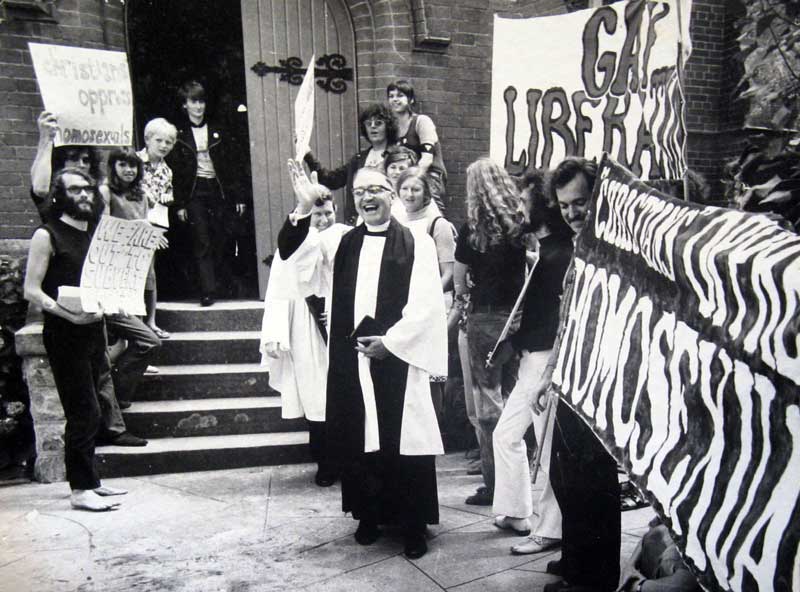
outside St Clement’s Church, Mosman, Sun 12 Nov 1972.
Photo: Private collection Peter de Waal
The hall, prettily decorated for the occasion, was tastefully arranged, and the numerous stalls, artistically draped, were replete with articles of use, food, and ornaments. In the church grounds were erected two large tents, in which ladies dispensed refreshments amidst a wealth of ferns and bush flowers. The sale will remain open to-day. The afternoon will be devoted to the entertainment of the children, when Mr Meikleham will give an exhibition of conjuring.
The following are the stalls and stallholders:—
Choir Stall.—Mrs S Garling, Mrs Cooper, the Misses Rhoda, Dind, Davis, Potter, Knight, and Harnett.
Fancy Stall.—Mrs C Cowles and Miss Mitchell.
St Luke’s Stall.—Mrs Goulding, the Misses Cook (2), Edwards, and M Cook.
Needlework Stall.—Mrs Selby, Mrs Cullen, Mrs Johnston, Mrs Webster, and Mrs Loveday.
Toys and Dolls (Children’s) Stall.—Mrs Dind, Miss Dowling, Mrs Pike, and Mrs Fowler.
Sweetmeats.—Mrs Oatley, Mrs King, Miss Jackson, Miss Gibbons.
Produce Stall.—Mrs Sayers, Mrs E Wilshire, and Mrs Barre Johnston.
Flower Stall.—Mrs Rose, the Misses Rose, C Fraser, E Williams, and C Malley.
Art Stall,—Miss RM Smith and Miss Duff Walker.
Snowball.—The Misses Noble (2).
Refreshments.—Mrs Barrett, Mrs Piggott, Mrs Hill, Mrs Hedley, Mrs Styles, Mrs Alec Thomson, Misses Duusmuir, Dowling, Harnett, Nash, Creed, and numerous assistants.
~ ~ ~ ~ ~
The Campbelltown Herald, Wed 25 Jun 1902 21
LOCAL AND GENERAL.
————
…
Mr Charles Meikleham, who is known to many of our readers, and who is now on a tour round the world, writes from Cairo (Egypt) to his Campbelltown friends advising all well. At the time of writing, Mr Meikleham had seen most things worth seeing in the places he had visited, and in India and Egypt passed through scenes of “wonder, magnificence, antiquity, plague, and idolatry.” Mr Meikleham is due in London for the Coronation.
~ ~ ~ ~ ~
The Cumberland Argus and Fruitgrowers’ Advocate, Sat 17 Jun 1905 22
DISTRICT NEWS.
————
…
SCHOOL ENTERTAINMENT.
On Thursday evening next the Superior Public School, Parramatta South, will hold an entertainment in the Town Hall, in aid of the school fund. Mr Chas Meikleham, the celebrated conjurer, has promised to give one of his entertaining exhibitions of Eastern magic, and the rest of the programme will be filled by items contributed by the school children.
~ ~ ~ ~ ~
Singleton Argus, Tue 20 Mar 1906 23
LOCAL NEWS.
————
…
CONCERT AND CONJURING.
To-morrow night at the Hall of the Mechanics Institute a concert and conjuring entertainment will be held, in aid of the Superior Public School funds. Mr C Meikleham, from India, will exhibit a number of conjuring feats and illusions, and musical items will be supplied by lady and gentlemen amateurs.
~ ~ ~ ~ ~
The Cumberland Argus and Fruitgrowers’ Advocate, Sat 15 May 1909 24
CURRENT NEWS.
———◦———
…
———
SCHOOL CONCERT.
On Tuesday next the concert organised by, and in aid of, the District School, Parramatta, will be of a highly entertaining character. Mr Charles Meikleham, who has just returned from a two years’ trip round the world, will introduce a number of illusions, and a number of the leading singers and players of Parramatta have willingly given their services to help the school. The object is a good one, viz, to purchase tools with which to start manual training operations at the school. Parents and old pupils are asked to assist it every way possible.
Charles Meikelham, 1911
The Cumberland Argus and Fruitgrowers’ Advocate, Sat 28 Jan 1911 25
PARRAMATTA QUARTER SESSIONS.
———◦———
Tuesday, January 24.
———
(Before His Honor Judge Docker.)
———
THE CONJURER.
Charles Meikleham [aka Charles Meikelham], a tall, elderly, scholarly-looking and cultured-looking man, was charged with assault at Sydney on October 7th.
Mr JC Gannon was for the defence.
There was a second charge of a similar nature, the date of the alleged offence being December 16, and the place Sydney.
The accused man challenged no jurors.
The Crown Prosecutor said that the accused was a man who gave social entertainments at institutions where youngsters predominated. He continued his acquaintanceships with youngsters after, and beyond the range of entertainments; and when he had established a certain degree of intimacy and friendship, he resorted to acts in connection with the young people which had a sad and lamentable tendency to deprave and debase young people, and went towards the ultimate possibility of bodily and mental ruin.
A lad, [George Henley], 14 years of age, of Granville, was the first witness. He gave evidence that he had known Meikleham for five months. He gave a lecture on his travels at Burwood public school. He had conjuring tricks with him. He gave a lecture and a conjuring exhibition on different nights. Went with others to the station to see him off. He invited witness to his place at 48 Flinders-street, Sydney. 26 Fancied that was in September. Went with another lad to the man’s place. Stayed there till about 12 o’clock. Went at 9 o’clock. He showed witness and the other lad and three other boys a collection. Went home. The accused sent an invitation to witness to visit him. Went to the accused’s place by himself in September. Went again on October 7th. Meikleham was in lodgings. Went to his room.
The young witness then gave particulars of what was complained of in the indictment against the accused. He first told of the matter to his mother. Talked to other boys first about a month after the occurrence, and found that other boys had had experiences similar to those of his own.
A second lad, [David Douglas Eyre], witness gave evidence also. He, like the other lad, was a resident of Granville; and he was 14 years of age. At Parramatta district school met the accused five or six months ago. He was giving a lecture to the boys and girls of the school. Had seen the accused four or five times since he first met him. He had been at witness’s place a couple of times. Went three times to accused’s residence, 48 Flinders-street, Darlinghurst.
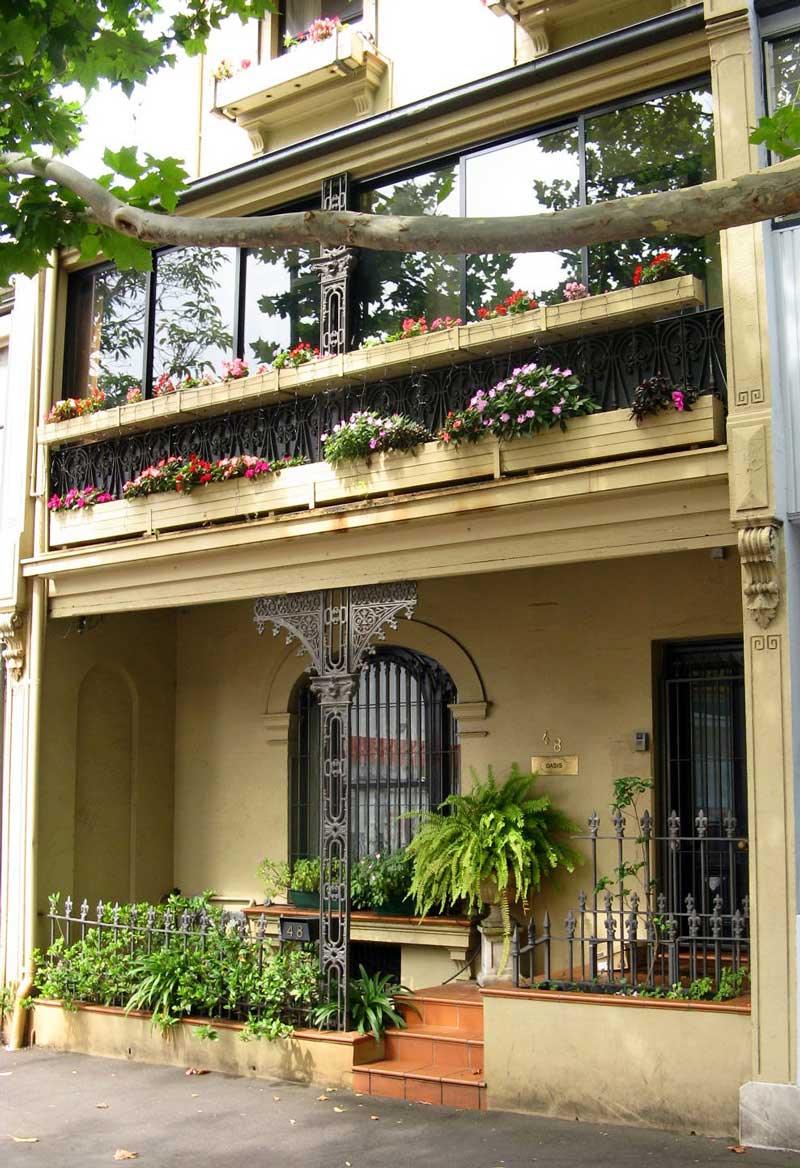
Darlinghurst. Photo: Peter de Waal
Sarah Black, married woman, living with her husband, Patrick Black, at [48] Flinders-street, Moore Park, deposed that she had known the accused for nearly three years. He was a boarder at her house. During the latter end of 1910 his health had appeared to change. Thousands of lads came to her house, and were entertained by him. He had always appeared to be a gentleman—an honest, truthful man. Of late the accused appeared to be losing his head altogether. He became neglectful; his memory seemed to have gone. He could not remember where he had put things. He was a gentleman—a most reserved man. Had never heard a complaint against the man. He was almost eccentric, for his lavish entertainment of boys.
The witness said she knew that the accused suffered from insomnia, because she had noticed his sleeplessness. She had had to go in to him and poultice him at 11 pm at times. Of course she only during her waking hours had noticed his sleeplessness.
His Honor: It’s pretty hard work keeping a boarding house.
Witness: Well, it’s not all sunshine, your Honor.
His Honor: You are tired, and glad to get to rest.
Witness: Yes.
His Honor: He did not keep you awake very often?
The witness: Not very often, your Honor.
Mr Samuel Watson, superintendent of the Deaf and Dumb Institution, deposed that the accused had come to entertain the deaf and dumb and blind children. He was always courteous and kind to the children. He appeared to be upright and gentlemanly; had no business dealings with him.
Mr Gannon: What do you mean by gentlemanly, because, you know, sometimes gentlemen “run very crook.” (Laughter.)
Mr Watson said that he thought that the meaning of a gentleman was obvious. He had told of his travels to the adult deaf and dumb, and witness had interpreted his lecture for them.
His Honor asked if had appeared to the witness that the accused’s stories of his travels were true—was there anything apparently of the Baron Munchausen about him?
Witness: No, I thought not. Certainly not.
Victor Alex Adams, principal of St Mark’s Crescent College, stated that previously he was at Darling Point—head master of Miss McCauley’s school. Had known the accused for 20 years. Had been closely associated with him. Some of the boys under witness had gone to the accused’s place to be educated.
His Honor: Educated in what?
Witness: In geography, and the results of his travels and the ways and habits of different nations that he had visited.
The witness said that he always had thought that the accused was straight and honest. Had an idea of late that the accused was “out of tune.” The boys always spoke of the accused in the most eulogistic terms. Witness’s own boys had been entertained at the accused’s house. The accused had entertained the boys in groups of two or more, and had lectured to them when they had been assembled together.
Robert Pollock, marine surveyor, representing Lloyd’s Register in Sydney, deposed that he had known the accused intimately. He formed a very high opinion of the accused. Could rely upon his word. The accused had visited at witness’s house.
To his Honor: Had always understood that the accused was a single man.
Captain Tom Pain, a retired master mariner, who had “put in many years’ service at sea, and was now enjoying a well-earned rest on land” (as Mr Gannon said) deposed that he had known the accused for 16 years or so. Had always looked upon him as a most upright, good, courteous man. Had noticed a change in his manner, and had put it down to old age crawling on him. Accused might be 50 years of age. It depended a good deal on what a man had gone through—how he had put the first fifty years in—whether he showed signs of decay through old age at 50 years.
Rev Henry J Noble, rector of St Luke’s, Liverpool, deposed that he had known the accused for, say, 20 years. Had formed the opinion that the man was one whose word could be relied upon. The said moral character had appeared to be above suspicion. Had had no suspicion of anything bad in connection with his character. He entertained at witness’s house. He did not charge a fee. Had looked upon him as a friend.
Cross-examined: Met him first when witness was at Darling Point. Thought that the accused attended at St Mark’s Church. One of witness’s boys had been to the accused’s house on several occasions. Had regarded the accused with esteem. Thought that the accused was a confidential clerk in the Joint Stock Bank when witness first knew him; witness was then in the Government service.
Dr Chisholm Ross, formerly of Gladesville Hospital for the Insane, and Superintendent at respectively Newcastle, Kenmore, and Callan Park, stated that he had made an examination of the accused, perhaps a fortnight ago. Supposing that the accused was telling the truth, witness believed that the accused was suffering from a form of “masked epilepsy.” The accused was nervously unstrung. His memory was not at the best as it should be. He was much upset at the charge; witness had to consider that. He seemed to be a man with his mind distraught—nervously unrested. Could not conceive the man doing what he was charged with, knowledgeably. He would call what had been described a sort of sexual perversion. Anything could occur in a masked epileptic; a man might do anything—commit automatic and purposeless actions—and not remember anything of it afterwards. It meant a morbid mental state without any physical phenomena whatever. The evidence given that day, and what witness had noticed, had confirmed his view that the accused was probably masked epileptic. The letters of invitation sent to the lads might have been sent in good faith. Nearly all epileptic acts are impulsive. It was quite possible for the things described to have been done impulsively, and the accused to have had no knowledge. Thought that that was the explanation of the case. That was witness’s view before he had heard any evidence at all. There was something in the man’s manner that helped witness to come to the view that he was suffering from epilepsy. In the intervals between the attacks the patient would be quite sane. The actions described did not necessarily show that the patient (the accused) was suffering from epilepsy. There was a form of vice—very prevalent, unfortunately—which was responsible for actions such as those described in that day’s evidence; and that form of vice was independent of epilepsy. Epileptics did things abnormal, as if they were done by conscious intention. Practices of evil and vice of that kind were independent in the main of the sanity or insanity of the persons who indulged in them. In an epileptic the mind was working as in a dream. Sexuality is a part of epileptic trouble—restrained ordinarily by moral responsibilities and conventions.
To his Honor: Did not consider that an epileptic was a man possessed of “an unclean spirit,” such as the Scriptures spoke of.
That was the case for the defence.
Mr JC Gannon addressed the jury. He referred to the accused’s past life of blamelessness. He was devoted to the interests and the promotion of the entertainment of the young. The evidence pointed to the conclusion that the accused was morally incapable of doing the things with which he was now charged. The jury could hardly imagine that a filthy man who had entertained hundreds of lads about Sydney would have escaped detection. The letters of invitation sent to the lads might have been sent in good faith. For fifty years Meikleham had lived a blameless life. Dr Ross had said that he was a victim of a disease which seized him at times, although in between the different influences, or spasms (or sexual storms in his brain) he was a perfectly sane man, in the normal enjoyment of his faculties. From the dock the accused had said that with reference to the alleged occurrences (which he did not deny—though persons, fighting for their liberty, would be inclined, under similar circumstances, to do so, at all hazards), his mind was a perfect blank. A sexual “storm” came over the man; and, whilst it was upon him, he would know nothing of it. The indulgence was of a perfectly unconscious kind. That was the claim of the defence. The accused’s contention was, “If this has been done by me, I don’t know it.” If the man was guilty, he deserved condign punishment; if he was not, he was a sufferer from an evil—a visitation from God—and not something the result of vice on his own part, the manifestations of which evil were sudden impulses of a dreadful character.
The Crown Prosecutor addressed a few remarks upon the rather unusual (uncommon) form of the defence raised—virtually that the accused was insane at the time of the actions. The onus was upon the accused of proving that he was, at the time when he did those things told of that day (if the jury believed that he did them), unconscious of what he was doing, unable to realise that he was doing a wrong act or wrong acts. Dr Chisholm Ross had said that there was such a thing as masked insanity; the jury could not gainsay that. But they had to study the facts of that case. There was a man in his normal senses, apparently; he entertained scores—hundreds —of lads. He asked boys to go to his place; and it appeared that the object of the accused in inviting the boys to the house was to commit offences such as had been complained of in that Court. There was nothing in the external appearance of things to suggest insanity. Dr Ross’s idea that the accused was the victim of masked insanity was based upon the premises of the supposition that he (Meikleham) was speaking the truth. Well, very often men who had the reputation of being persons of truth, told what was for removed from the standard of truth when it was necessary to shelter themselves from convictions in regard to offences.
At 4 pm his Honor summed up. The jury had to try each charge, and bring in a separate verdict in regard to each. The defence set up in respect to both the cases was virtually known as the defence of insanity. The offence with which the accused was charged was one of the most atrocious crimes known to our law. And the circumstances of the two cases must have been to the jury of a particularly disgusting and horrifying kind. Just let them think of the nature of the acts, and their consequences. The consequences of boys’ corruption were not confined to themselves; they were like a lighted match thrown into a grass paddock. When mischief of that kind was started in a school, it was easy to understand how it would spread and infect the whole of the pupils. The accused had gifts and accomplishments which rendered him fascinating to boys; and those gifts and accomplishments were directed to the education and entertainment of young people. Here in two cases the accused set himself to lead two boys into practices calculated to ruin lads, body and soul. The Crown had to prove the assaults. Two lads had given accounts of certain things; and the accused had made a statement in which he had said that he did not question the veracity of the witnesses. The acts had been virtually admitted by the accused. The defence was that the accused, at the time that he did certain things, did not know that he was doing them, because he was suffering from a mental disease, masked epilepsy, that rendered him unconscious of the fact that he was committing those acts. Masked epilepsy showed no outward signs of its existence. It was plainly a mysterious disease, and one correspondingly difficult to prove. The highest legal authority in the Empire had laid it down that a person charged must be presumed to be sane, and to know the nature and quality of the act he was doing, until the contrary—that the accused did not know the difference between right and wrong, in respect of the very act with which he was then charged—was proved to the jury’s satisfaction. So the question for the jury was, had the accused proved that at the time of the alleged offences he was unconscious of the acts he committed in the company of the two lads. Did the evidence of Dr Chisholm Ross convince the jury that the accused was suffering from a disease that rendered him unconscious of what he was doing at the time that he was in the seizure of that disease (masked epilepsy)? If the man committed the acts (and that was not denied even by the defence), he should be convicted, or be found not guilty, on the grounds of insanity—the consequences of a verdict of which character would be a detention.
The jury brought in a verdict of guilty on the two charges, and accused was remanded for sentence.
…
PARRAMATTA QUARTER SESSIONS.
———◦———
Tuesday, January 24.
———
(Before His Honor Judge Docker.)
———
…
Wednesday, January 25.
———
SENTENCES.
…
MEIKLEHAM SENTENCED.
TWO YEARS' HARD LABOR.
The man Charles Meikleham, who had been convicted on two charges of assault, was called up for sentence.
Mr Gannon, KC, was present to make an application for the extension by the Judge of the most merciful possible consideration on behalf of the prisoner.
Mr Gannon made a most powerful appeal for clemency.
Sergeant [John] Illingworth, of Granville, was questioned by his Honor. He stated that he had had charge of the case. Had had to make enquiries. There had been complaints; but he had not investigated them personally.
His Honor, addressing Meikleham, said that his case had been to the speaker one of the most painful and disgusting that he had ever had to hear from the Bench. Witnesses had spoken of his career in the highest terms. That was what he had appeared to be to them. Whether he had been always what he seemed to them the Court did not know; the Court hoped so, that some dreadful disease, animalism, had taken demoniacal possession of him—that he had not been a “wolf in lamb’s clothing” all the time. For years the prisoner had had been apparently a friend of boys, anxious for their entertainment and instruction. Whether it was worse to take boys to theatres (where public plays and other such things were presented) was open to question. It appeared that the prisoner’s mind had become depraved in a most dreadful way, and not content with indulging in detestable practices himself, he had corrupted lads in a most awful manner. The well-being of the community and of future generations depended upon the morality of the persons composing it. It was difficult to imagine a more awful phase of immorality than that presented in that case. The jury had recommended the prisoner to mercy, but the Judge could not exercise clemency in a capricious way. Good character was not a mitigation of the offence in a case of that kind. The prisoner was trusted; that seemed to aggravate his wrong doing towards boys and their parents. It had been urged that a physical disease had brought on, in his case, a mental disease. It was to be hoped that that was the case. But it was manifest to the jury that the prisoner knew what he was doing, and the nature and quality of his acts. His letters showed an indication of mental power. Dr Chisholm Ross drew the line at acts; he did not see any more than the Judge or the jury could, that prisoner could make statements with reference to certain acts, without knowing that he was making these statements, and therefore knowing what he was doing. The jury seemed to be correct in thinking that the prisoner knew what he was doing. The verdict of guilty was more merciful than a verdict of not guilty through insanity would have been. For, had the latter verdict been returned, the man would never have been set at liberty again. The punishment provided for the act was five years’ penal servitude. Considering his age, and the illness the prisoner was undoubtedly suffering from (neurasthenia), the prisoner would not be sent to penal servitude. To sentence him to imprisonment, the law (for some reason or another, of a peculiar character) could not allow a Judge to pass for such an offence a longer sentence than that of two years’ imprisonment. The sentence was two years’ hard labor in Grafton Gaol in each case. (The sentences concurrent).
~ ~ ~ ~ ~
Charles Meikleham, Gaol photo sheet 27
![SRNSW: NRS2258, [3/5994], Grafton Gaol photographic description book, Jun 1910-Nov 1922, No. 204, p. 9, R5125.](../../images/trials/1911-Meikleham-5994-gaol-photo-204.jpg "SRNSW: NRS2258, [3/5994], Grafton Gaol photographic description book, Jun 1910-Nov 1922, No. 204, p. 9, R5125.") |
Gaol Photo Sheet - Transcribed Details
No. 204
Grafton
Date when Portrait was taken: 25 April 1911
Name: Charles Meikleham
|
Native place: England Year of birth: 20 July 1861 Arrived Ship: Massilia Trade or occupation Religion: C of E Education, degree of: R & W Height: 5' 8" Weight On committal: 167 Colour of hair: Brown to grey |
Marks or special features: 3 Vaccine marks on left arm, one tooth missing from right upper jaw |
|
(No. of previous Portrait ... ) CONVICTIONS |
|||||
| Where and When | Offence. | Sentence | |||
|
Parramatta |
24 |
1 |
1911 |
Indecent assault on a male |
2 years HL on each count. |
Charles Meikelham, 1916
The Sydney Morning Herald, Sat 18 Nov 1916 28
DEATHS.
…
Meikleham.—November 17, 1916, at 90 City-road, Sydney, Charles Meikleham, aged 54 years (suddenly).
~ ~ ~ ~ ~
The Sydney Morning Herald, Mon 11 Dec 1916 29
AUCTION SALES.
————
…
Thursday, December 14, at 11 am.
At the Central Auction Rooms, 361 Pitt-St.
Under instruction from the
Public Trustee.
In the Estate of Charles Meikleham, deceased.
A Very Fine Collection of Curios, including South Sea Island, New Zealand, and Australian Weapons, etc.
A Large Quantity of Antiques, Armour, Weapons, Collected by the Deceased During His Travels in Europe, Asia, and Africa.
Open for Inspection on Wednesday, and Prior to Sale on Thursday.
AG JENKINS
AUCTIONEER.
1 The Sydney Morning Herald, Fri 6 Dec 1889, p. 3. Emphasis added.
2 Windsor and Richmond Gazette, Sat 7 May 1892, p. 3. Emphasis added.
3 Windsor and Richmond Gazette, Sat 21 May 1892, p. 5. Emphasis added.
4 The Sydney Morning Herald, Wed 24 May 1893, p. 8. Emphasis added.
5 The Sydney Morning Herald, Fri 22 Sep 1893, p. 7. Emphasis added.
6 The Sydney Morning Herald, Thu 7 Dec 1893, p. 5. Emphasis added./p>
7 The Sydney Morning Herald, Sat 6 Oct 1894, p. 7. Emphasis added.
8 The Sydney Morning Herald, Fri 12 Jul 1895, p. 3. Emphasis added.
9 The Sydney Morning Herald, Tue 3 Dec 1895, p. 6. Emphasis added.
10 The Sydney Morning Herald, Fri 5 Jun 1896, p. 7. Emphasis added.
11 The Sydney Morning Herald, Mon 20 Jul 1896, p. 5. Emphasis added.
12 The Sydney Morning Herald, Tue 15 Dec 1896, p. 6. Emphasis added.
13 The Sydney Morning Herald, Tue 1 Jun 1897, p. 5. Emphasis added.
14 The Sydney Morning Herald, Tue 28 Dec 1897, p. 2. Emphasis added.
15 The Sydney Morning Herald, Wed 12 Dec 1898, p. 8. Emphasis added.
16 The Sydney Morning Herald, Sat 13 May 1899, p. 7. Emphasis added.
17 Windsor and Richmond Gazette, Sat 18 Nov 1899, p. 3. Emphasis added.
18 The Sydney Morning Herald, Sat 17 Nov 1900, p. 14. Emphasis added.
19 The Sydney Morning Herald, Fri 4 Oct 1901, p. 3. Emphasis added.
20 In 1968 Peter Bonsall-Boone was appointed Church Secretary at St Clement’s Church, Mosman. After his appearance with partner Peter de Waal on the national ABC TV program Chequerboard, covering their lives as a suburban homosexual couple, in October 1972, he was dismissed following pressure from Sydney Anglican Diocesan authorities (bishops).
21 The Campbelltown Herald, (NSW), Wed 25 Jun 1902, p. 2.
22 The Cumberland Argus and Fruitgrowers’ Advocate (Parramatta), Sat 17 Jun 1905, p. 4.
23 Singleton Argus, Tue 20 Mar 1906, p. 2.
24 The Cumberland Argus and Fruitgrowers’ Advocate (Parramatta), Sat 15 May 1909, p. 4. Emphasis added.
25 The Cumberland Argus and Fruitgrowers’ Advocate (Parramatta), Sat 28 Jan 1911, pp. 4, 11. Emphasis added.
26 48 Flinders Street, Darlinghurst currently is ‘The Oasis on Flinders’ and claims to be: “Sydney’s only bed & breakfast retreat for gay male nudists. A truly unique experience for men wanting to enjoy all Sydney has to offer, the Oasis boasts an elegance like no other.”
27 SRNSW: NRS2258, [3/5994], Grafton Gaol photographic description book, Jun 1910-Nov 1922, No. 204, p. 9, R5125.
28 The Sydney Morning Herald, Sat 18 Nov 1916, p. 12.
29 The Sydney Morning Herald, Mon 11 Dec 1916, p. 2. Emphasis added.