Depositions for William Lee 6 Aug 1835 Sydney trial 1
1
In the sixth Year of the Reign of
Our Sovereign Lord William the Fourth,
by the Grace of God, of the United
Kingdom of Great Britain and Ireland,
King, Defender of the Faith.
New South Wales
(TO WIT)– }
Be it Remembered, That John Kinchela, Esquire, Doctor of Laws, His Majesty’s Attorney General for the Colony of New South Wales, who prosecutes for His Majesty in this Behalf, being present in the Supreme Court of New South Wales, now here, on the first third Day of August in the Year of Our Lord One Thousand Eight Hundred and Thirty five at Sydney, in the Colony aforesaid, informs the said Court, that William Lee late of Sydney in the Colony of New South Wales, Labourer –
on the fourteenth Day of June in the Year of Our Lord One Thousand Eight Hundred and Thirty- five with Force and Arms, at Sydney in the Colony aforesaid, in and upon one Marianne Anderson otherwise called Marianne Andrews feloniously did make an assault and then and there feloniously wickedly and against the order of nature had a venereal affair with the said Marianne Anderson otherwise called Marianne Andrews, and then and there feloniously did carnally know the said Marianne Anderson otherwise called Marianne Andrews and then and there feloniously wickedly and against the order of nature did commit and perpetrate the abominable crime of Buggery to the great
2
displeasure of Almighty God to the great scandal and disgrace of the human kind against the form of the Statute in that case made and provided did against the peace of our Lord the King his Crown and Dignity.
[Signed] John Kinchela, Attorney General.
~ ~ ~ ~ ~
[On reverse of the above (1-2) is the following]
No. 46
In the Supreme Court
The King against William Lee, bond
Information for Buggery
Witnesses: George Jilks, Elizabeth Hanley, Marianne Anderson alias Andrews, Michael Bourke.
6 August 1835
Judge Burton and Military Jury
plea Not Guilty
verdict Not Guilty
[Signed] George [illegible]
[Initialled] J[ohn] K[inchela, AG]
~ ~ ~ ~ ~
Justice WW Burton’s Notebook 2
34
[6 Aug 1835] 2nd Case
William Lee
Buggery upon Marianne Anderson (?) called Marianne Andrews against the order of nature
Plea NG
Elizabeth Hanley I am the wife of George Hanley – the child Marianne Andrews is under my charge – she is 10 years of age – she is the child of a woman called Margaret Murphy a prisoner in the factory at Parramatta – the mother was assigned to me from the ship & the child came with her – the mother had two other children with [her] when she was sent to the factory & she left this child with me – I have had charge of her for three years – I have instructed her as well as I could, taught her her prayers & sent her to the Roman Catholic
35
school chapel twice a day with my husband – who goes to his prayers, he is kind.
I sent for the Chief Constable in June last in consequence of Dr (Burke’s ?) directions.
I had sent for him in consequence of finding something the matter with her, she was not able to walk – I examined her, she had not previously complained of being unwell until I perceived it.
I asked what was the matter – she said she was very bad, I insisted upon knowing what was the matter & she then told me the truth.
I have seen the prisoner several times about the town – not to know anything of the man – she was afraid to tell at first lest I should beat her – she was a well behaved quite innocent child. 3
On Tuesday morning it was I perceived she was (hurt ?) & she said it happened on the
36
Sunday before, 4 at about 10 o’clock in the morning.
She always left my place at 10 minutes before 10 to go to the Roman Catholic Chapel to bring my husband home & I sent to the public house to know the time lest she should be too late – it was very near eleven before she returned – which was later than usual – he always came home a few minutes after 10 o’clock – when he came, he asked why I had sent the girl so late – I said I had sent her as usual – the child said she had stopped on the way but I thought no more about it.
I lived in Druitt Street & the prisoner belonged to Carter’s barracks – – she would not have to pass that in going to the Chapel –
By the Prisoner: (fixing the time of child going out & returning) viz. between 10 minutes before 10 and very near eleven o’clock.
37
Marianne Andrews I have lived with Mr & Mrs Andrews about 3 years. I go every day to Chapel with Mr Hanley – sometimes I remain with him, sometimes I go home & return for him again.
One Sunday about eight weeks ago, I left him there at first prayers at nine o’clock, & went straight home alone – it was 15 minutes to 10 when I went for him again by Mr Kettle’s watch. Mrs Hanley sent me over to see what time it was – I asked Mr Kettle & he told me &c. – I then went for Mr Hanley. I met the prisoner in Park Street – I knew him by eye sight. I heard he lived at Kerr’s & lodged at the Fisherman’s – I only knew by people saying so – I often saw him before, but he never spoke to me or I to him – he went I saw him go into Mac Cloud’s public house & have a gill of rum – he asked me how is Bridget. I said very well thank you. Bridget is the servant maid – when he went into the public house, he told me to step inside the door – he offered me some rum, but I would
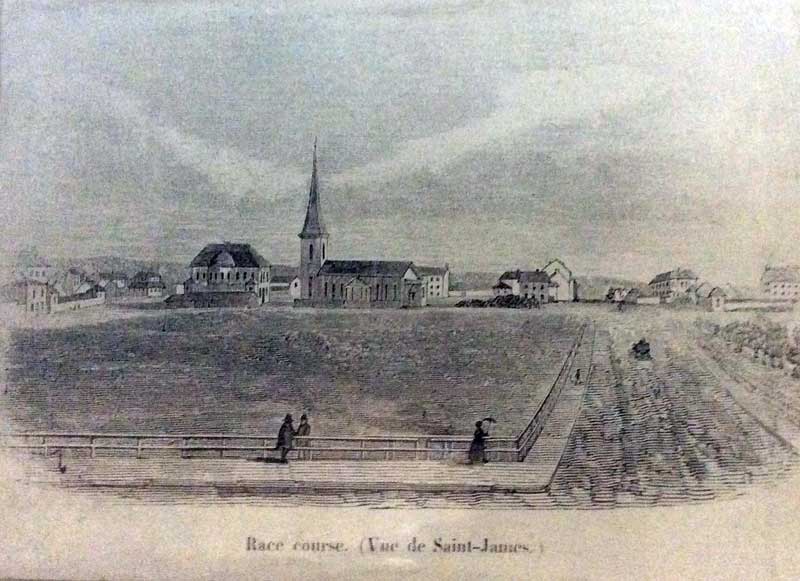
NSW State Library PXA 2113, box 56. Reproduction: Peter de Waal
38
not take any – he was in Mac Cloud’s not two minutes – Mac Cloud’s at the Castlereagh Corner – & Tom the Fisherman’s is in Elizabeth Street facing the race course, the corner house but one. He walked along with me to the corner of the race course. He then took me by the arms & legs & carried me into the Fisherman’s & brought me into a back room very small like a kitchen. It is a bed room – 5 he bolted the door inside with a wooden bolt. There were three or four drunken men in the house & Tom the fisherman’s wife sitting by the fire but I did not see the fisherman. They were singing & playing the fiddle – she was drunk – I saw her as I was coming out.
He carried me in his arms into the little room – passed through the front room – they were in the shop – there was no one in the front room – I made a noise & at the door of the little back room he put me down & put
39
his hand over my mouth 6 – he said nothing – he laid me down on the floor just by the door on my back – & then he unbuttoned his trousers & put his privates in me – he was about ¼ of an hour or 10 minutes – he hurt me a little in my front but he could not do anything in my front – he then turned me round with my nose & face to the ground & put his privates into my back – into I know the difference between my front & back – I have no name for the back – it is where the dirt comes from – he was not very long (doing ?) that – 5 or 7 minutes – he held me close to him – holding my two hands together. I could not cry out he had his other hand on my mouth. I was crying – he hurt me a great deal – I felt him inside of me – he stopped of his own accord – I saw his privates when he buttoned himself up – I saw his privates a little before – not much – he then lifted me up & ran out the back way – & I went out the front
40
way, 7 I saw the fisherman’s wife as I went out sitting by the fire in the shop – the back room was facing the shop door – the men were still there & one was playing a fiddle –
I (am ? was ?) sure the prisoner is (the man ?) – the name he went by was Bill Cavanagh, but now he is called Bill Lee.
He gave me a halfpenny not to tell my mistress, I took it & promised me another or Monday or Sunday, I promised not to tell. 8
He said nothing else to me – I did not tell my master when I went to the Chapel for him. He asked me what had made me so late, I told him I had been out for my mistress, I went home with my master – I felt sore after it for a while – & very sore next day. I could not sit upon my bottom right – on Tuesday my mistress asked me what ailed me – I told her what had been done to me – my master took
41
the whip & said he would whip me if I did not tell the truth – & then my master & mistress took me into a room – I told them just as I have now stated – in the evening about 6 o’clock – Dr Burke was sent for – he came, & examined me.
I told who the man was “Bill Cavanagh” – the servant maid Bridget said she had heard of the man – I had heard her say before that his name was “Bill Cavanagh” – he gave his name Bill Lee when he was taken.
I used to sleep in the same room as the master & mistress.
Prisoner never came to the house in his life. I never saw him & Bridget together any where else – I heard her talk about him. I never spoke to him before. 9 He told me that his name was Bill Cavanagh just before he took me into the fisherman’s – After he drank the rum – he said my name’s “Bill Cavanagh” – & Bridget said she knew him by eye sight & heard of his name many times –
42
I never heard Bridget call him Bill Cavanagh before.
I had seen him going by Druitt Street going past my master’s house – he carried me by the two arms & legs – about 10 steps – I was crying out – I saw no people about – it was about Chapel time – I told my mistress on the Tuesday that it was “Bill Cavanagh” who did it.
Mrs [Elizabeth] Hanley – recalled – She told me she was taken into a man’s house on the (east ?) (corner ?) – That the man bought some cakes & gave to her – she said it was a Cooper at the barracks who went by the name of Bill Cavanagh & she knew him well.
She said that he took her up in his arms & put his hand on her neck – & carried her in – I went to see the house, but the house, but the house [sic] but the Master & Mistress both refused me admission – the house is a small (skilling ?) – she told me that he took her into a back room & locked the door & that she durst not cry out.
43
She said there were two women in the house sitting by the fire & two or three men – she said they were drunk, & that there was a fiddle playing – she told me he gave her a halfpenny not to tell her mistress.
By the Prisoner: She told me that the man was dressed in a black or blue trousers – blue waistcoat & jacket a black hat & a striped blue & white shirt.
[Dr] Michael Burke A Surgeon, a Member of the College of Surgeons of Edinburgh.
I was sent for by Mr Hanley on the 17th June [1835] on a Tuesday or Wednesday to examine a child.
I examined the child (Marianne Andrews). I found the external parts of the vagina slightly abraded. I did not examine the anus that night – on the morning of the 19th I was led to examine that part in consequence of the child complaining of pain there. At first she only complained of pain in the loins – the parts about the vagina were not (sufficiently ?) inflamed to account for that – there was nothing then said by the child about his having used the anus.
I questioned her particularly of what
44
had been done – she first said he had first turned her on the face & then turned her on her back but she did not mention that he had used her anus at first.
Upon the second occasion she told me that explicitly – I found it very much dilated & (excoriated ?) & inflamed – so much so that she could not retain her excrement. I advised such remedies as I thought necessary & she got well in a few days.
The anus had certainly been penetrated but not the vagina.
Prisoner’s Defence: Left the barracks on the day in question at half past 7 – went to a house opposite – till (?) before 10 – took breakfast with (?) persons – amongst others John Cahill – mustered between there at 10 o’clock – shortly after inspected by Mr Bateman – marched to Hyde Park Barracks & there inspected at 11 o’clock.
45
For the Prisoner: John Cahill – a prisoner of the Crown in Govt employ – in the (Commissariat ? Commissioners’ ?) [passim] stores – I rent a house at the town end of Brickfield Hill next door but one to Mr Leary’s Public House the Currency Lad.
I know the prisoner. I remember his being taken up on a charge of abusing a child – on the 14th June – I was not at the Police office when he was committed – I heard the Day from some one who attended at the Police office.
He breakfasted at my place on the morning of the 14th June on a Sunday – between nine & 10 o’clock 10 – there were present my wife – Edward Mac Cabe a shoemaker who lives in the same house, Catherine Mac Cabe & John Connellan – & John Eccles – after breakfast the prisoner went over to Carter’s barracks that was within 20 min to a quarter of 10 o’clock – as near as I can say.
I suppose we took about half an hour to breakfast – I saw him
46
go across the (paling ?) [passim] opposite to my place towards the barracks – he belonged to the Barracks – where the men generally muster about 10. He was dressed in a blue jacket & not white trousers – whether black or blue I don’t know – they were of a darkish color.
Cross-examined. 11 I saw him again about half past one o’clock.
I paid him some money that morning for some work he did for me – I recollect his telling me his time was near for muster & he must go.
He always to my knowledge went by the name of William Lee – I never heard him called “Bill Cavanagh” in my life.
By the Solicitor General: I have known him about 18 months – he was allowed to work for himself six till nine in the morning & those hours he always worked with me as a Cooper.
I am married & (assigned ?) as my wife have been in the country going on for (8 ?) years.
Prisoner came for some money
47
I owed him – we generally breakfasted at that hour on a Sunday.
I saw the clock just before we went to breakfast.
I looked at the clock when he went away but cannot say how long it wanted to ten – it was not 10 – he came at a quarter past 7 – I will not swear it was more than half past nine when he left – I don’t know that he was acquainted with Tom the fisherman – I know the house but was never in it in my life – it is about half a mile from my house to Park St – I heard of the man being taken up, they were looking for him at my place – I am certain it was the Sunday before that he breakfasted at my house.
I did not hear what hour the little girl stated – I don’t know now, I have not been in Court & have not heard what has been stated.
The breakfast room was opposite the kitchen. I gave him the money – outside of the door – he said he must go over to muster but he wanted some money. 12
48
Catherine Cahill The wife of the last witness – the prisoner was in my house the Sunday before he was taken.
Cross-examined. I don’t know when he came 13 – but he had breakfast – I got up about 7 o’clock – – I saw him about eight o’clock – down where he used to be at work in the cellar – I went for shavings & saw him there. He breakfasted with us – none but our own family & Eccles – there was a man there but he did not breakfast (George ?) Murray he came in. I don’t know what time we breakfasted he (remained ?) a little time after(wards ?) I don’t know how long.
He had a blue jacket which he always used to wear at his work – I don’t know whether his trousers were dark or light –
By the Solicitor General: We breakfast(ed ?) late about nine o’clock – he goes to the Commissariat stores after nine, I don’t know what time he is required to be there – we breakfast about the same time week days & Sundays – the
49
Carter’s barracks clock is just opposite – we mostly go to breakfast about or before nine – we all sat down together – I don’t know how long we were at breakfast – Prisoner generally breakfasted with us on a Sunday morning – I have seen him go across the palings to Carter’s Barracks.
I never heard him called Cavanagh.
John Conlan 14 I was in the prisoner’s company the Sunday previous to his being taken up on this charge – at from about eight o’clock till within a few minutes of ten – I don’t know where he then went to – he said he was going to Carter’s Barracks – we went to breakfast about half past nine – the Sunday morning’s breakfast is a little later than on week days – he said he was in a hurry to go to Muster – I am sure it must have been within 15 or 10 minutes of ten.
By the Solicitor General: He used to work there in his leisure hours – & in my opinion he was came for his pay – he was down the yard, & (above ?) the shop – I don’t know where he kept his clothes – I don’t know how he was (?).
50
I saw him in custody – & he said to me he was taken up for something that was done on Sunday, the constable would not let him say what for. I have since heard from George Hanley that what he was taken for was done about 10 o’clock. Every other morning we breakfast at nine a few minutes before or after – he is always in a hurry for his breakfast to have it at nine or a few minutes after – I am sure it was later on the Sunday morning than usual.
Edward MacCabe About nine o’clock we had breakfast – or a little more – he left about half past nine or it might be more – I saw him go over towards the Barracks when he left across the paddock.
By the Solicitor General: He was across the first palings – he generally goes across – I was outside the house then – we were all together outside – he was talking to the Master of the house before he went away, I don’t know what about –
The paddock is about 50 yds or more from
51
the our house – the barracks & paddock are immediately opposite.
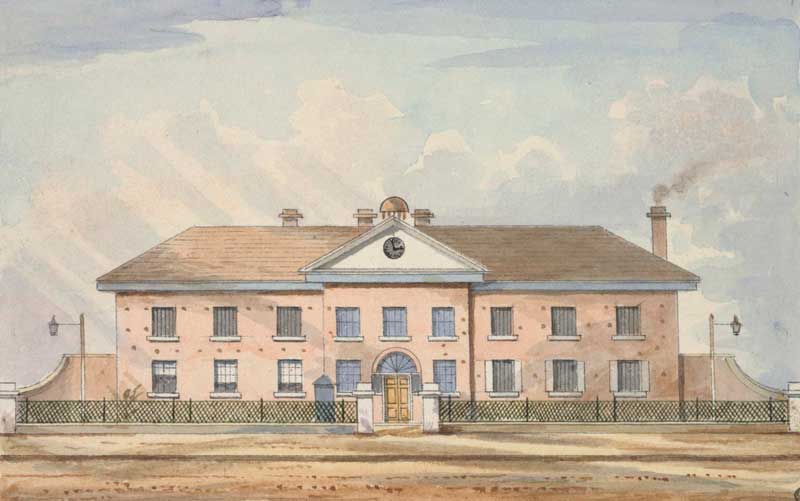
Reproduction: Peter de Waal
It was about half past nine I (looked ?) at the clock, & swear it was full half past nine – it might be more. I can’t describe how the hands were. 15 I heard the clock strike just before we went to breakfast. I heard it strike ten after he had been gone a little while – I have no idea what time the crime alleged against him was committed – I have heard it was between 11 & 12 & from some persons 10.
I don’t know any one who was at the Police office when he was brought up – I think he wore a blue jacket & (fustian ?) trousers & black hat that day, I am not sure.
I never heard him called Bill Cavanagh – describes (?) (?) Conlan – &c.
Mr George Bateman Superintendent at Carter’s Barracks – the prisoner was employed under my department as a Cooper – his name is William Lee – I have heard that he has gone by another name
52
but not under me – I have never heard him called “Bill Cavanagh” & don’t know any one by that name – I remember his being apprehended on a charge of abusing a child – it was on the 17th June last by Mr [George] Jilks accompanied by a constable about 10 at night. I got up to let him out of the ward.
Jilks said he wanted a man that was employed as a Cooper under me – I had only one man so employed who was the prisoner. He did not mention his name – I heard Jilks ask the prisoner if he knew a woman named Hanley which he denied – the prisoner said you must be mistaken in the man it a must be another person [?] naming – a Cooper who worked in the Commissariat store. I have forgotten the name. Jilks said he must go along with him, & if he was not the man he would send him back again; – he took him away.
53
I mustered the prisoners in my department on Sunday the 14th at 20 minutes after 10 – The prisoner was then present.
I saw him first thing in the morning about 7 o’clock – & the next time at muster – – the consequence of his not answering his name at muster would have been his punishment – he did not appear to be the least (flurried ?) – or like a person who had been hastening – he was clean – it was dry fine weather.
He was dressed in a blue jacket, black trousers & black hat – and a white shirt – I am not quite certain of that – waistcoat I don’t know.
The clock at Hyde Park & Carter’s Barracks correspond in time – one man keeps them both – the prisoners had been previously mustered & kept in the yard for my inspection –
54
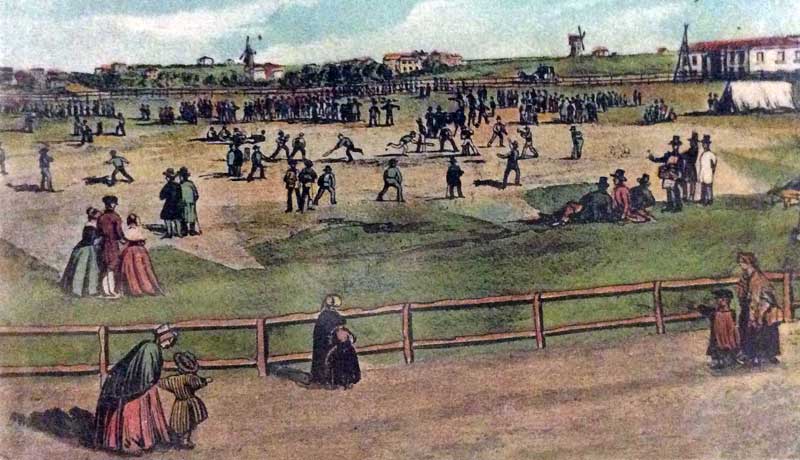
Darlinghurst. Macquarie street railing in foreground. Image: NSW
State Library, PXA 2113, box 56. Reproduction: Peter de Waal
By the Solicitor General: Not always the same number of prisoners to be mustered – there were about 25 – & some other ones belonging to Grove farm. The prisoners were mustered off to Church about half past ten, so as to arrive at the Parade ground opposite Hyde Park at ¼ before 11.
It would take a man coming from Park Street to the barracks to walk quick 6 or 8 minutes – there are orders for the men not to leave the yard on a Sunday morning without leave.
Prisoner did not ask leave that morning.
I take about 10 minutes to muster and inspect the men.
Marianne Andrews – recalled – The person named “Bill Cavanagh” I was told before this was done – lived at Hyde Park Barracks – on the Race Course – & I told Mrs Hanley so.
55
Richard Young Holder of a ticket of leave – Overseer of the prisoners at Carter’s Barracks – I remember the prisoner being taken out of the ward on this charge – I remember mustering the prisoner in the Department on the Sunday before – about 10 minutes or a quarter after 10 in the morning – the prisoner was present – they were mustered (for ?) Church parade – he remained till inspected – he was marched off to Church with the other prisoners & I saw him go with another man 16 to the Carter Barracks Catholic Chapel from my gang – that was about 10 minutes before 11 – in order to be in church at eleven.
I never lost sight of him till he got left me with another same overseer to go to the Catholic Chapel – Mr Bateman again inspected the men (on the ?) parade. 17
56
Young [continuing ?]
By the Solicitor General
I cannot take upon myself to say whether he was in the yard before muster – I recollect his coming into the yard to attend muster – he came in whilst we were mustering I don’t know where from – He was dressed in a blue jacket – he generally wears a white shirt on a Sunday.
Thomas Wilsmere Holder of a ticket, overseer at Carter’s Barracks – I saw the prisoner mustered on the Sunday morning – I cannot say for before – –
I was the overseer who took charge of the prisoners to the RC Chapel – we mustered at Hyde Park about 10 minutes before 11 – or (from close ?) to a quarter – he was one of them – went into the Chapel & staid during Divine service – he came into the yard 5 minutes or 10 minutes after ten – he had no appearance of having walked fast – he was clean for muster
57
the same as usual – the men very often walk about outside the gate, until muster is called.
I know Tom the fisherman – the prisoner had some acquaintance with him – he never slept at his house to my knowledge, he was always obliged to sleep at barracks. I know no more than what Tom the fisherman said – that he had known the man previously but had not seen him for a long time before.
Thomas Evans The last time I saw the prisoner was two months or more before he was in trouble nor from that hour to this – I am never out of a Sunday morning – I am quite sure he could not have been there with any one without my knowledge on that Sunday – there is no back way to my house.
Mr (Stranger ?) [passim] who lives in my house plays the bass viol – sometimes before he goes to Chapel where he plays it – & sometimes sacred music in the evening.
By the Solicitor General: I have known the prisoner these two years – he lodged at our house
58
for a 12 month slept on a sofa in the front room. 18 There are three rooms in my house – a front room – a little back room or skullery & a bedroom. Mr Onions a carrier of newspapers rents that room & has done so for 7 years his bed is in it – no bolt to it – he lets no one go into it.
I know it was said this crime was committed in my house.
I never saw or heard Mrs Hanley at my house. I was informed that some persons wanted to go in whilst I was absent.
On the Sunday before I heard prisoner was taken up – Mr Stranger was there Mr Morgan & Mr Onions – no fiddle – might be the bass viol – it seldom is played – my wife was sober that morning. She gets drunk now & then, very seldom.
My front door is generally open – it is impossible for any one to go into that back room without being seen from the (front room ?) – the name I knew the prisoner
59
by was Morris – I never heard him called Lee – I used to call him William.
I never saw the little girl in my house to my knowledge.
By the Court: The front room opens to the street & there we all sit – to go to the little back room you must go through that – we sit with the front door open – & both the bedroom door & Mr Onions’s room door open into the kitchen – the size of the front room about 13 feet by 10 – the fire place is on the right hand as you go in & the bedroom &c. on the left – the family consists of me & my wife – Mr Onions (?) the (Government ?) Gardener – Mr Stranger lived there 6 months or a year – he comes up to me about once a week generally. 19
There was never such a thing as a child came into the house whilst we were sitting there – there is no way out of the house but by the front.
60
Jane Evans My husband’s name is Thomas Evans – he is called Tom the Fisherman – I know the prisoner – I heard of his being taken up on a charge of abusing a child – Mr Jilks came to our house & told us of it.
On the Sunday morning previous there was no one in my house playing the bass viol.
Mr Onions my husband & Morgan were there not Mr Stranger – we were not drinking that morning or singing or playing for I said to myself I would keep steady till after dinner.
No one could have gone through my house carrying a child in his arms without my seeing it. I never saw the little child in my life till I saw her in the (?) house with the woman who is with her. 20
I would not suffer such a thing in my house, I was not drunk & had not tasted a glass of anything that morning.
By the Solicitor General: I am sure I recollect the day. Mr Jilks came I believe
61
on the Monday.
I have not much time to go to Church or Chapel – I generally go to Chapel – I read the bible & pray to the Lord in my own room on a Sunday – I had drank nothing that morning – I won’t say but what I get drunk sometimes as well as other women. Mr Onions is a musician – he delivers newspapers – he scarcely ever plays till after dinner.
There is no bolt to the small room or back door 21 – no one could get out of it without coming through the front room – there is a little square wooden lock to the door (to Mr Onions’s door) – the bolt goes into an iron shaft,
Mr Onions was in his room reading a methodist book – besides my husband & me & Morgan there was another young man in the house.
Mrs Hanley wanted to go into the room, but a man who came to visit Mr Onions would not let her go in – I did not (upon ?) (altogether ?)
62
she was going in through the place & Mr Lancaster said you have no business there, & prevented her – she did not say what she came for.
When the prisoner lodged with us he slept on a sofa in the front room.
John Onions I heard talk of the prisoner being taken up – I was there when Mr Jilks came & I shewed him the room – that was the day or day after he was taken up.
On the Sunday previous – we often have some sacred music – there is a man there who plays the bass viol & I the clarinet – we only play
63
a few hymns – I don’t know whether we were so occupied or not that morning – almost every Sunday whilst Stranger lived there – I believe he had gone away, but he some times came since – Don’t know the Sunday previous.
I saw prisoner once & asked him the reason he did not come to our house – he said because I owe money – I was once a prisoner, I got into trouble about a woman in the same (form ?) myself.
If the prisoner had been in the house I should have seen him – I had a party there on Whitsunday – on Trinity Sunday I don’t think I had any one – When we play it is in the house or kitchen – they go through there to go to my room – their bed room is to the left hand – & my room is opposite – a door to my room & a box lock.
64
On the Sunday between Whitsunday & Trinity I think we had no music on account of a lodger being ill named Parsons – I am positive they were not – the men wanted to come up, but I said don’t come because there is a lodger sick.
No one could come in whilst we were singing without our knowing of it – & go into the back room.
In Reply: The Solicitor General calls: Mr [George] Jilks I am Chief Constable – I apprehended the prisoner. Mr Therry the Roman Catholic Priest came to me – I saw the little girl first.
The child said it was a Cooper at Carter’s Barracks – Mrs Hanley was (present ?) – & who had been in the habit of calling at the house or talking to the servant woman of the house with whom he was acquainted – she mentioned
65
a name – but not the prisoner’s – I can’t remember the name – I was informed at the house of Hanley that it was a person belonging to Carter’s Barracks who often worked at a Cooper’s shop at the bottom of Brickfield Hill – I inquired at that place & learnt the name of the Cooper.
I did not tell the prisoner what I took him for – I first asked him whether he knew Hanley. He said he did – I asked if he knew where he lived, he said yes – but that if I wanted anyone it was not him, there was a Cooper belonging to Hyde Park Barracks who kept company with Hanley’s servant woman & it must be him – I told him I was certain from my information he was the man – & I should send him down to the house & if he were not the man he should be returned: I did not mention the crime, nor did I
66
mention it.
I sent him by a constable.
By the Prisoner: I asked the prisoner when he saw Biddy Hanley last – he said I was mistaken it was a Cooper at Hyde Park Barracks. I think he mentioned the name of Eccles –
It is about ten minutes walk for a child from Hanley’s to the RC Chapel – or rather more.
Marianne Andrews I have seen Eccles (now shewn [sic] to her) before – I have seen him walking with the prisoner – I never saw him speaking to Bridget.
I know prisoner’s name (?) (through ? enough ?) by what Bridget told me – he told me himself his name was Bill Cavanagh on the same Sunday he took me after he had taken (the ?) gill of
67
rum – he bought some cakes for me at a corner shop – the corner of Elizabeth Street – just a (minute ?) – a pennyworth – four – I eat them going over to the Chapel – I let them down on the floor – I had them in my hand all the time he was carrying me.
The prisoner went out of the back door into a large garden – the shop is on the right hand going in they sell nothing there they keep fish – 22
There was no talk in the little room – he bolted the door by a little bolt under the lock it has a brass handle – he unlocked the door to let me out. He was in the little room when I went out – I heard him shut the door in the back yard after him – I saw it – I was in the room house (?) when the old woman refused to let my mistress in – The old woman
68
was sitting in a chair by the fire. I saw her face that is her – I heard the fiddle playing – the back door opened into a large garden. I saw the light through (it ?).
By the Prisoner: Prisoner met me first at the corner of Park St then I walked with him to Mac Cloud’s – then walked to the corner – when he took me up in his arms & carried me. 23
George Hanley I recollect the Sunday in question. She left me at Chapel ¼ before 9 – I (desired ?) her to return for me by 10 o’clock – she came for me (?) not say but it took me 10 minutes to walk home quick – & I got home at about eleven or within a few minutes of eleven.
24 I found her flurried by her hand.
On the Monday & Tuesday nights I observed the child moaning in her bed – found on Tuesday that she was scarcely able to walk.
69
I threatened to beat her if she did not tell – she told me that it was a man who was a Cooper who formerly worked at Kerr’s with Eccles another Cooper who works in the bonded stores – she said she did not know his name but that Bridget told her his name was Bill Cavanagh – she described his dress – blue clothing – she said it was done at Tom Evans’s – she said there was music playing at the time. We frequently went by there. I cannot say that I heard music there on that Sunday.
When he was brought in by the constable – she picked him out from two (three ?) constables.
By the Prisoner: I remember John Eccles working with me – the prisoner came after I had discharged Eccles – to ask for work twice or three times. I turned Eccles away on account of finding a correspondence between him & Bridget – she kept
70
company with him after hours – neither Eccles nor prisoner have been in my house for the last 12 or 18 months to my knowledge.
John Procter I went to Hanley with the prisoner – Mc(?) & me – we were in our constables’ dress – the child was in bed. Mrs H[anley] brought her out into the kitchen where we were & she identified him. 25
She said the prisoner was the man & he laughed & said he was not the man.
I told her to be careful what she was about.
Verdict – Not Guilty
1 SRNSW: NRS880, [SC T41], Information No. 20, Supreme Court, Papers and depositions, 1835.
2 SRNSW: NRS5730, [2/2420], Judiciary, WW Burton, J. Notebooks Criminal Sessions, 1833-38, pp 34-70. Emphasis added.
3 Mn: at an old fisherman’s at the corner of Park Street on the (road ?) to the Chapel
4 Mn: the 14th of June
5 Mn: but there was no bed in it at that time – I was never in the house before
6 Mn: he kept his hand all the time. I cried out but no one came to my assistance. They were singing & playing the fiddle all the time
7 Mn: & went over to the Chapel for Mr Hanley
8 My guess is that the foregoing phrase was a children’s schoolyard oath of the day.
9 Mn: I knew his name (?) (?) him (?) (?) streets (& heard ?) Bridget talk about him
10 Mn: I heard the clock strike nine before we went to breakfast, Carter’s Barracks clock
11 Mn: I don’t know what kind of shirt he wore: Sometimes he wore a white shirt & some times a check
12 Mn: I know a person named “Bill Cavanagh” a blacksmith at the Dockyard
13 Mn: I don’t know the day of the month
14 Mn: I am a free man a Cooper
15 Mn: 3 hands
16 Mn: Thomas (Wilsmere ?) [passim]
17 Mn: Mr Bateman – that was to tell the prisoners off to their respective places of worship. I remember that the prisoner was then there
18 Mn: has been there very seldom since he used to work in his leisure hours for Mr Green the Cooper – he had leave to lodge out – he used to pay me 2/- a week – I have never seen him for four months till today
19 Mn: Mr Onions’ is right opposite the front door – a little box nine feet by 6 ft. wide not (five ?) feet high. He has occupied it as a bed room for seven years. One window in Mr Onions’ room & two in the front room
20 Mn: the child says “that is the woman”
21 Mn: nor ever was, wood or brass
22 Mn: The woman was sitting in the front room when I came out, by the fire
23 Mn: there was a door or looking very like a door on the right hand side going in
24 Mn: I cannot swear to it – I know I was a quarter of an hour after the Chapel was over before the child came for me. All the people had left & I was left by myself
25 Mn: about 8 or 9 o’clock – one candle