The Daily Telegraph, Tue 4 Feb 1896 1
QUARTER SESSIONS.
…
GLEN INNES, Monday.—At the Quarter Sessions to-day, before Judge Coffey, James Murphy, charged with an indecent assault, was found guilty aud remanded, for sentence.
Thomas Lowe, who was charged with an unnatural offence, was acquitted.
~ ~ ~ ~ ~
Glen Innes Examiner and General Advertiser, Tue 4 Feb 1896 2
GLEN INNES SESSIONS.
————
Monday, Feb 3.
————
(Before His Honor, Judge [William Henry] Coffey.)
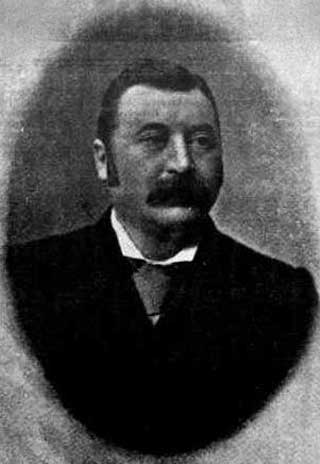
NSW Advertiser, (NSW), Sat 11 Nov 1899,
p. 1176. Reproduction: Peter de Waal
BARRISTERS present—Messrs RB Browning (Crown Prosecutor), C Garland, A McIntyre, and H Mocatta; solicitors—Messrs MH Fitzhardinge, PP Abbott, Norman H Macdonald.
…
————
BEASTIALITY.
Thomas Lowe, on bail, was charged with beastiality at Oban on 10th January, 1894.
Mr PP Abbott appeared for accused.
The following jury was empanelled:— John Sully, G Every, M Cameron, G Harris, W Barton, A. Ross, AJ Lynch, W Woods, J Smith, WA Potter, J Lockyer and J Murphy.
Accused pleaded not guilty.
Thomas Hibbard, aged 16, stated that he lived at Oban and knew Lowe; remembered going fishing with him in January, about 18 months ago; his brother Jack was with them, and they went to Backwater Creek; they afterwards went to Penson’s paddock, and caught an old brown mare. (Witness here described the committal of the offence.) Accused wanted him to follow his example, but he refused; they then went and purchased some biscuits and sardines, and ate them on the road; Lowe told witness and his brother not to say anything of the matter, if they did they had better look out for themselves; witness was first spoken to about the matter by Constable Kelly, about two weeks before police court case at Kookabookra.
By Mr Abbott: The offence happened in Jan., 1894; he never mentioned the matter to anyone, not even his brother; he did not know why it was spoken of to the police; the offence was committed between dusk and dark; he did not know whether it was moonlight; he did not swear at the police court that there was a moon; at the time of the occurrence Lowe was stopping at his brother’s, at least he believed so; he could not remember any conversation between the three from the time they left the river to Penson’s paddock, neither could he remember anything alter they left the paddock; he went with Constable Kelly and his brother and pointed out the log; the string used was of a whitish color, and Lowe pulled it from his pocket; they reached Penson’s about 8.30, and it was pretty dark; he did not swear in the police court that the offence was committed about 7 o’clock; the sun was down, and it was a bright, moonlight night when they got home; he did not know whether Lowe went to Crompton’s house that night or to his brother’s; at this time Lowe was friendly with witness’s parents; he did not know whether his parents had a row with Lowe about three months before the police proceedings; accused used to walk out with witness sister, but not often; he did not know that his mother had tried to entice accused to live with them; he had a sister married to Lowe’s brother; they were not on good terms with them, and his father had told him not to go near Lowe’s place; he also had a row with accused, but did not remember what it was about; he never heard any of his family use the words “We’ll bring something home to Lowe.”
By His Honor: Since the police court proceedings no one had spoken to him about the night being moonlight or not. Alter further cross examination witness admitted he had heard some one speak of the subject.
His Honor here remarked that if the Crown Prosecutor had no evidence stronger and different from what the boy’s evidence was, which was most conflicting compared with that given by him at the police court, he thought it would be most dangerous to commit any man on this charge. He only pointed this ont to Mr Browning.
The Crown Prosecutor said the charge was so serious he did not think he should drop the case.
The depositions as taken in the police court case were then read by His Honor to the jury.
[Thomas] Hibbard, examined by Mr Browning, said he remembered that Lowe wanted to marry his sister Alice, who was 13 years of age; the conversation about the moon took place at Oban shortly after the police court proceedings.
John Charles Hibbard, 15 years of age, corroborated his brother’s statement as to what occurred on the date in question; he also said he first told Alfred Crompton about the matter about three weeks before the police court proceedings; he also told his father, who informed Constable Kelly; his brother Tom was at Bald Blair at the time, but was brought home so that the police could interview him.
By Mr Abbott: He remembered he and his brother giving evidence at the police court; he did not hear his brother give evidence, nor did he say he had done so; he did not tell a girl named Lily Crompton he had done so; the alleged offence took place two years ago last January; it was about 8 o’clock, and was light enough to see as it was starlight; he could not remember whether he had stated there was a moon on that uight at the police court; he may have heard since there was no moon on that date; he believed it was from a man named Wilson; he would not be sure whether he said it in the house or outside, he was talking to his father or his sister, but his brother Tom was not there; he believed that Tom had seen Wilson between Penson’s and their place; a man named Jack Smoother, talking of the mooulight, said they would have to look out for themselves; in January, 1894, Lowe was living with his brother, and was keeping company with witness’ sister; he did not know whether his parents had a row with Lowe; Lowe ceased to visit the house about three months' pre vious to the police court proceedings; he swore at the last court that he had a row with Lowe; he never said, “Lowe, you will have to take the girl”; his father said —–
His Honor: What did your father say?
Witness: I don’t know.
His Honor: Now, I distinctly heard you say, “My father said that —–” It slipped from you.
Witness: I don’t know what he said.
Mr Abbott: He said in the police court there was a row between Lowe and his parents.
His Honor here asked witness why some evidence at the police court was absolutely different to that given in this court?
Witness: I don’t know.
Mr Abbott: Did not Smoother say to you it would be better not to mention the row?
Witness said he was certain it was not Smoother or any of the family.
Constable Kelly first heard of the case from John Hibbard; he then went and saw Hibbard, and questioned him in the presence of his father; the other brother was not there, but witness saw him about two days after; he saw him first alone and got a written statement which was entirely voluntary; the boys took him to the place where the offence was said to have been committed; he afterwards went to where Lowe was living, and told him there was a complaint about him; accused denied ever going fishing with the Hibbards or being in Penson’s paddock with them; he then arrested Lowe, who said he was not guilty.
By Mr Abbott: Tom Hibbard was home for a night with his parents before witness got his statement.
John Hibbard, sen., deposed he was father of the two first witnesses and also of Alice Hibbard; he was not present at the last proceedings; he had had two conversations with his boys with regard to the evidence given at the police court; this was down at the claim; Crompton was also present and recapitulated what had already been given in evidence by witness’ two sons; he asked the boys on another occasion to repeat their evidence, which they did, and he told them to tell the truth; he would swear that no one spoke to him about a descrepancy in the evidence; he knew John Smoother, he was a son-in-law; Smoother did not say anything offering friendly advice re[garding] the evidence, nor did he mention anything of the moonlight; his boy Tom told him the offence was committed at twilight; this was after the police court proceedings the man Wilson was at witness’ house about three weeks ago and they went into this case pretty well in detail together; John was also present; Wilson stated Lowe was likely to get into it, but he never mentioned the time whether it was moonlight or twilight; he was not on friendly terms with the Lowes; it was true that they wanted Lowe to come and live at his house; at that time he was on bad terms with his daughter and her husband; in January, 1894, accused was living with his brother.
Sydney Penson remembered serving Lowe with biscuits and sardines, he was accompanied by the two Hibbards; he did not know whethee it was in the month of January 1894 or 1895; he remembered distinctly in selling Lowe some biscuits in January, 1895; he believed that the Hibbards were with him; he had been thinking the matter over since and he thonght they had been there on both occasions; at the last court he did not remember he sold articles to accused in January, 1894.
This concluded the case for the Crown.
For the defence—
Thomas Lowe, the accnsed, stated he heard the evidence given; in January, 1894, he was living at Crompton’s, a distance of a mile from Hibbard’s and half a mile from the residence of his brother; he went to live with them from November, 1893, to February, 1894; he was mining at the time in Snake’s Gully; when he knocked off work he was usually in the company of the Cromptons; in January, 1894, he was not on good terms with the Hibbards; during the month of January he usually went fishing with the Cromptons in the Oban and Backwater rivers; he was not in the paddock of Penson and denied the offence he was charged with; he was in Penson’s store in January, 1895; he went there with the Hibbard boys for some tobacco and fancy biscuits; that was the only occasion he was there; he went back to Hibbards, with whom he was then on friendly terms; he had a row with the Hibbards about three mouths before he was arrested; it was Mrs Hibbard who caused the row; she wanted witness to go and live at the house, she said, “You’d better leave your murdering brother”; witness had rows with the sons about the same time; the row occurred over some bees; he used to be on friendly terms with the daughter; he had a row with the parents over the daughter; the first intimation he had of this charge was when he was arrested; he never boasted at any time that he could do what he liked with the girl Alice; some startling statements were then made by the witness regarding some family relations of the Hibbards.
Alfred Crompton stated he knew Thomas Lowe for a number of years; he remembered Lowe living at his father’s place and working with him; after knocking off work they generally spent their time in each other’s company; Lowe did not go fishing with the Hibbards during the time he was living with them.
By the Crown: He gave a statement to Constable Kelly; the Hibbards told witness that they went fishing with Thomas Lowe; to the best of his knowledge he did not think Lowe was keeping company with his sister.
Edward Lowe stated he remembered that his brother was living with the Crompton’s in January 1894, and working with them; accused was not on friendly terms with the Hibbards from November 1893 to February 1894; witness further corroborated his brother’s evidence.
Mrs Hibbard was re-called by the Crown to contradict a certain statement made by accused re[garding] the relations existing between the family, and denied the allegations made.
Alice Hibbard was also called to deny the statement.
This concluded the evidence, and Mr PP Abbott then addressed the jury on behalf of the prisoner, and made a very able address.
The Crown Prosecutor having addressed the jury, His Honor summed up, and remarked it certainly did seem strange that this offence was alleged to have been committed in January, 1894, and nothing said of it until 22 months later. His Honor summed up in his usual able and impartial manner.
The jury retired to consider their verdict at 5.40 pm, the hearing having occupied nearly six hours. After a few minutes deliberation they returned a verdict of not guilty.
Lowe was therefore discharged.
————
For coughs, colds, influenza, etc., Colemane and Sons’ Eucalypte Extract. — 2.
Read Washington H Soul and Co’s. advt. in our advertising columns. — a
For rheumatism, gout, etc., use Colemane and Sons’ Eucalypte Special Oil. — c
~ ~ ~ ~ ~
The Sydney Morning Herald, Tue 4 Feb 1896 3
CIRCUIT COURTS.
———◦———
(By Telegraph.)
(From Our Correspondents.)
————
…
Glen Innes, Monday.
The Quarter Sessions were opened this morning before Judge Coffey.
James Murphy, charged with assault was found guilty, and remanded for sentence.
Thomas Lowe, charged with an offence, was acquitted. This concludes the criminal business.
The District Court opens to-morrow.
~ ~ ~ ~ ~
The Armidale Express and New England General Advertiser, Fri 7 Feb 1896 4
EVENTS AND RUMOURS.
…
At the Glen Innes sessions, on Monday, Thomas Lowe, on bail, was charged with beastiality at Oban on the 10th January, 1894. A deal of evidence was taken, after which the accused was acquitted by the jury.
1 The Daily Telegraph, (Syd, NSW), Tue 4 Feb 1896, p. 5. Emphasis added.
2 Glen Innes Examiner and General Advertiser, (NSW), Tue 4 Feb 1896, p. 2. Emphasis added.
3 The Sydney Morning Herald, (NSW), Tue 4 Feb 1896, p. 5. Emphasis added.
4 The Armidale Express and New England General Advertiser, (NSW), Fri 7 Feb 1896, p. 5,