Bowral Free Press and Berrima District Intelligencer, Sat 9 May 1896 1
THE NEW COURT-HOUSE
————
TO BE OPENED BY A BANQUET.
————
ON Thursday evening a public meeting was held in the Town Hall, Bowral, called by the Mayor for the purpose of fixing on a date for the official opening of the new court-house. There were present:—Aldermen RS Mackenzie (Mayor), HM Oxley, W Allerdice, AJ Harrison, Mr WR Farrow (council clerk), Messrs FP Dowdell, W Alcorn, E Wickham, GP Masterman, Gavin George, WT Barnes, W Beer, JM Christie, RS Knight, GE Marston, H Foord, and JJ Campbell. An apology was received from Alderman Stephens. The Mayor presided.
Mr Farrow read the advertisement convening the meeting.
The Mayor favored the meeting being held, and thought it a proper thing to do. He had received a letter from Mr FR Wilshire, PM, that the new court-house was ready to be opened as soon as the council could make necessary arrangements. He wrote to Mr Wilshire asking if the 22nd May would be a suitable day for a public celebration in honor of opening the court-house, and Mr Wilshire had replied that the day named would suit him personally. The Mayor suggested that a dinner be given in the evening, and that the Minister for Justice or some other member of the Government be asked to be present.
In reply to Alderman Oxley, the Mayor said it would be appropriate to have the opening celebrated in the new court-house.
Mr Farrow thought there would not be room.
Alderman Allerdice moved, “That a banquet be held to celebrate the opening of the court-house on the 22nd instant.”
Alderman Harrison seconded the motion. It was a right step. They had agitated for it for some time, and it had been granted. It was their duty now as townspeople to fittingly open it.
Motion carried unanimously.
Mr George moved, “That the Minister for Justice, Mr AJ Gould, be asked to attend the banquet and open the court-house, and that the Premier, Mr GH Reid, be also asked to attend.”
Seconded by Mr Campbell, who at the same time thought it strange that a public meeting had been called, as he understood the matter would have been dealt with by the aldermen and the magistrates.
The Mayor explained that he had called the meeting by requisition, but at the same time it had hit approval. The public were asked to participate in the banquet equally with the council and the magistrates.
Mr Campbell moved, “That a sub-committee be formed to carry out all the arrangements in connection with the banquet.”
Seconded by Mr Masterman, and carried.
The following gentlemen were then appointed as the sub-committee:—Messrs RS Mackenzie, GP Masterman, EMPHASIS ADDED. Wickham, Gavin George, AJ Harrison, FP Dowdell, JJ Campbell, A Stephens, and W Allerdice.
Messrs Campbell and Oxley moved—“That the price of the ticket be half-a-guinea.”—Carried.
Resolved, “That a circular be sent to the honorary magistrates and the solicitors practising in the district asking them to co-operate so as to make the movement a success.”
Resolved, “That Messrs EM Wickham and FP Dowdell be appointed joint hon secretary and treasurer to the sub-committee.”
Resolved, “That the sub-committee meet next Monday evening at 8 o’clock in the Town Hall.”
A vote of thanks to the Mayor for presiding closed the proceedings.
~ ~ ~ ~ ~
Bowral Free Press and Berrima District Intelligencer, Sat 23 May 1896 2
OPENING OF COURT-HOUSE
———◦———
VISIT OF THE HON JA GOULD AND MR
W McCOURT TO BOWRAL.
————
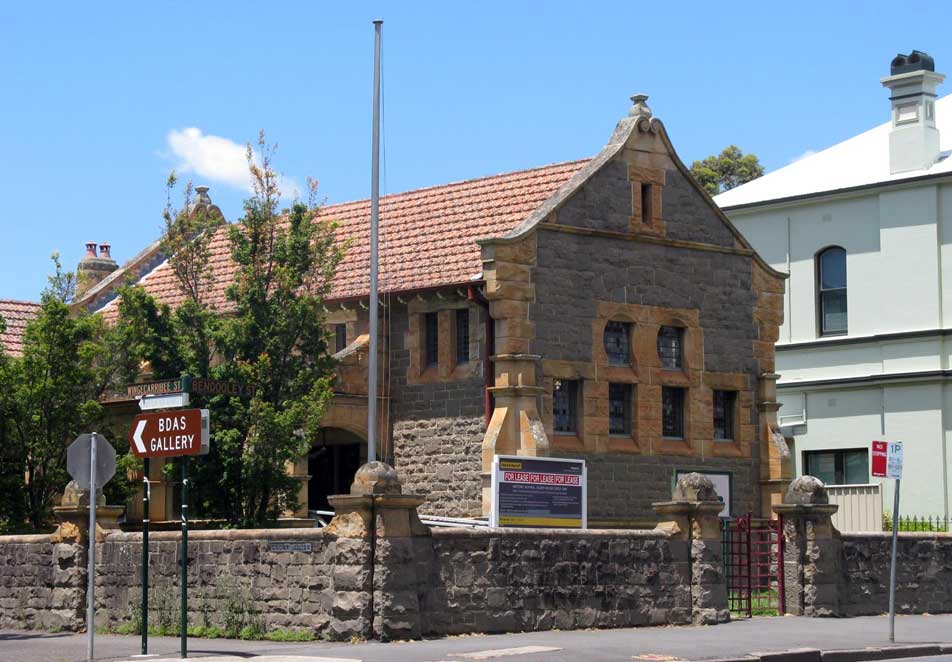
OUR new Court-house was opened yesterday (Friday) afternoon by the Hon AJ Gould, Minister for Justice. He was accompanied by Mr W McCourt, MP for Bowral. On the bench were also seated Mr FR Wilshire, PM, and Messrs JJ Campbell, RS Mackenzie, Gavin George, W Alcorn, and Major Walters, JsP. Not having yet been sworn in, Mr AJ Harrison, JP, occupied a seat near the bench.
Several ladies occupies seats in the court, and there was a good attendance of the public.
Mr FR Wilshire, PM, said they were about to open the new court-house, and by way of a little ceremony the inhabitants had asked the honourable the Minister for Justice to perform that duty.
The Hon AJ Gould rose to speak amid applause. He said it had afforded him pleasure to attend and declare the court-house open. The people had recognised the value of having a suitable place in which to conduct their court business. He was glad to learn that we had not a large criminal and disorderly class in our midst, and hoped it would be sometime before we would require to have the building enlarged. There certainly must be a place in which differences between parties could be settled. He remarked that the structure comprised good building material produced in Bowral, and visitors must be struck with the unique design of the building. The people could flatter themselves that they would not live to see the day when the Bowral court-house would be destroyed by decay. The necessity to enlarge the building would, he thought, come before its decay. Mr McCourt was to be congratulated in no small way in getting the building; in many other ways also their member had been energetic. He congratulated the Police Magistrate, the Mayor, the member, and the justices upon having the new court-house in their midst. (Applause.)
Mr W McCourt, MP, was pleased to be present. It was a fitting circumstance that Mr Gould who was the Minister for Justice, was present. He was the Minister who had granted the court of petty sessions for Bowral, which had been refused by two previous ministers. It was his (Mr McCourt’s) duty to get what the district was justly entitled to—the court-house. He had only asked for a small sum of money, and for £1500 they had got a creditable building, ample for present requirements, and which he thought other places should take example from. He hoped Mr Gould would not go away with the idea that because Bowral and other towns in this district had court-houses, that there was nothing else we wanted. We ought to have in the district a court of quarter sessions, which would entail him only an extra day on the judge attending the district court. It would prove a saving in the end.
The Mayor of Bowral (Mr RS Mackenzie, JP) made a few remarks, and on behalf of the citizens of Bowral gave a hearty welcome to Mr Gould. Mr Mackenzie then alluded to the substantial character of the court-house, and had every confidence that so long as Mr Wilshire presided there had been justice meted out of it.
Mr HM Oxley made a neat speech on behalf of the legal profession.
Mr McCourt then spoke highly of Mr Wilshire’s probits [sic] and soundness as a magistrate, and Mr Wilshire gracefully acknowledged the compliment.
Cheers for Mr Gould, for the Queen, and for Mr McCourt, terminated the evening.
————
THE BANQUET.
A banquet to further celebrate the opening of the new court-house was held last evening at the Grand Hotel. Following was the toast list—The Queen, proposed by the Mayor; The Governor, by the Mayor; The Ministry (coupled with the name of Hon AJ Gould, Minister for Justice), by the Mayor; Parliament (coupled with the name of Mr W McCourt, MLA), by Mr AJ Harrison, JP; the Bench of Magistrates, by Mr HM Oxley; the Legal Profession, by Mr T Loveridge, JP; the Contractor, by Mr W Allerdice; Prosperity of the Bowral Electorate, by Mr W McCourt, MLA; and Mr JJ Campbell, JP, Our Visitors, by Mr Gavin George, JP, the Press, by Mr FP Dowdell; the Chairman, by Mr HC Manning.
~ ~ ~ ~ ~
The Sydney Morning Herald, Mon 25 May 1896 3
THE NEW COURTHOUSE AT
BOWRAL.
———◦———
OPENING CELEBRATION.
——
(By Telegraph.)
(From Our Correspondent.)
——
Bowral, Sunday.
Mr Gould (Minister for Justice), Mr McCourt, MLA, Mr FR Wilshire, PM, and Mr RS McKenzie (Mayor of Bowral), all the local magistrates and solicitors, and a representative number of townsmen were present yesterday at the opening of the new courthouse, which has just been completed at a cost of £1400.
Mr Gould congratulated those present upon the unique design of the building, also upon the fact that while it was sufficiently large and convenient for the purposes for which it was required no needless expenditure had been incurred in its construction. Complimentary speeches were also made by Mr McCourt, by the Mayor, and by the Police Magistrate.
In the evening the event was celebrated by a banquet at the Grand Hotel. The Mayor (Mr RS McKenzie) presided. Mr Gould sat on his right, Mr GH Reid and Sir John Lackey sent letters apologising for their absence. The tables were handsomely laid, and a large and representative gathering was present.
Mr Gould responded for the Ministry and to the toast of “Our Visitors.” The question of establishing quarter sessions in this district was touched upon by Mr McCourt, who referred to the inconvenience, expense, and delay of quarter sessions business having to be taken either to Goulburn or to Campbelltown. The road from Bowral to the Wombeyan Caves was also brought under discussion, and the need for its completion, whereby easy access thereto would be afforded, was strongly urged.
On the question of quarter sessions Mr Gould replied that the Minister would have to consider that the Judge would have to remain an extra day, and Judges were limited in number. The Crown Prosecutor would also be wanted, besides other considerations of expense. Nevertheless he commended Bowral for its activity; and the crime in the district, it was pleasing to know, was never of a serious character.
The whole celebration passed off very successfully. The new courthouse is a departure in the way of architecture, being built of Bowral trachyte, which, with freestone coping and tiled roof, is ornamental.
~ ~ ~ ~ ~
Bowral Free Press and Berrima District Intelligencer, Sat 30 May 1896 4
OPENING OF NEW
COURT-HOUSE.
————
THE BANQUET.
————
THE opening of the new Court-house at Bowral, which took place officially at 3 o’clock on Friday afternoon, 22nd May, by the Hon AJ Gould, Minister for Justice, was further celebrated at 7 pm by a banquet at the Grand Hotel.
The banquet was held in the large dining-room of the Grand Hotel, in which three tables were fixed up. The worthy host and hostess, Mr and Mrs JL Campbell, deserve the highest praise for the very superior way in which they carried out the whole of the arrangements connected to the banquet. In no one particular could any fault be found; the whole management was as complete as mortal could desire. In addition, the greatest cordiality prevailed amongst all, and a very pleasant evening was spent.
The chair was occupied by Alderman RS Mackenzie, JP, Mayor of Bowral. On his right sat the guest of the evening, Hon AJ Gould, Minister for Justice; and on the chairman’s left sat the member for Bowral, Mr W McCourt.
The following gentlemen were present:—Hon AJ Gould, Minister for Justice, Mr W McCourt, MP for Bowral; Mr FR Wilshire, PM; Mr RS Mackenzie, JP, Mayor of Bowral; Alderman A Stephens, Alderman HM Oxley, Alderman W Murray, Alderman AJ Harrison, JP. Alderman C Waters, Alderman T Loveridge, JP, Alderman W Allerdice, Dr R Crawford, Messrs HM Wickham JP, B Short JP, Gavin George JP, JJ Campbell JP, Major JJ Walters, Senior-sergeant Sykes, Wm Beer, M Butler, FP Dowdell, TC Brown, JW Grovenor, C Funston, W Alcorn JP, GP Masterman, R Carmichael, HB Linthorn, EA Pidcock, GE Marston, JM Christie, HL Thirtle, LJ Ball, A Cordeaux, HC Manning, and Robt Loseby.
Apologies for their absence were received from the following gentlemen:—The Hon GH Reid, Premier; the Hon JN Brunker, Colonial Secretary; the Hon Sir John Lackey, President of the Legislative Council; Mr C Cowper, Sheriff; Father Prendergast; Messrs John Badgery, CC Gale, J Elliott, R Turnbull, WJ Cordeaux JP, RP Richardson, and Herbert Harris.
When the wants of the inner man had been thoroughly satisfied, the signal was given for a change in the programme.
The toasts of “The Queen” and “The Governor” were proposed by the Chairman in pithy little speeches full of loyalty, and were heartily drunk with three cheers each.
The Chairman next proposed “The Ministry, coupled with the name of Hon AJ Gould, Minister for Justice.” He said he rose to propose the toast of the Ministry, coupled with the name of Mr Gould, the Minister for Justice, with sentiments of respect for their high and honorable office and of appreciation of their responsible and arduous functions, on the wise and righteous administration of which the welfare of the country so intimately depended. It afforded them great pleasure to have the honor of Mr Gould’s presence as a guest there that night, and they hoped his brief visit to Bowral would prove as agreeable to himself as it was a real pleasure to them to receive and welcome him. They gratefully acknowledged that it was owing to his generous recognition of what they considered their just claims that they had the court-house, the opening of which they now celebrated, and their thanks were also due to their worthy member Mr McCourt, for the able and persistent manner in which he brought their claims under the notice of the department. It was very gratifying to them, at the opening that day, to hear the Minister’s complimentary remarks about the absence of crime in the district, the more so that they were conscious these remarks were based on facts. He (the Mayor) hoped they would always have as good a record. He remembered they were complimented in a similar manner by a member of the bar, when the police court was established at Bowral some years ago; the only criminal cases the police were then able to bring forward being one of drunkenness and one of orchard robbing, and they seemed to have improved since then; for the utmost vigilance of the lynx-eyed myrmidons of the law had failed to produce a single criminal to grace the occasion. This was a very satisfactory state of affairs, for however proud and glad they were to have their new court-house, the less use they had for it either civilly or criminally the better.
The Hon AJ Gould, in rising to respond, was received with great applause. He thanked them for the cordial way in which they had received his name and that of the Ministry. The people had recognised that during the lifetime of his Ministry they had carried out their policy. It was not necessary for him then to judge as to whether it was a wise policy, as there were men of different political opinions present. There were some men who never gave credit for another’s honesty of purpose; but he had a different view to that. He believed there were many men who were honestly opposed to their political programme. Through his Ministry the colony had entered upon a new experience—not as a mere experiment, but because the Ministry honestly believed it would be for the country’s good. The Government had received consistent and loyal support from the member for Bowral, Mr McCourt—and for that reason his support was well worth receiving and well worth recognising. It was a pleasant thing for him to be present at the opening of the court-house, and to attend the banquet that evening, and listen to the flattering remarks of the chairman. He believed that at the first opening of the Court of Petty Sessions at Bowral they had a “drunk” and an “apple thief” before the Bench to be dealt with; but on the present occasion of opening the court-house they did not even have a drunk or an apple thief before them. Some one should have allowed himself to be brought before the myrmidons of the law, pleaded guilty, and trusted to the mercy of the Bench to deal leniently with them, when perhaps the Minister for Justice might have exercised his prerogative and let the man off under the suspicious circumstance. (Applause.) It was a matter for congratulation that there was so little crime in our midst. In regard to establishing a Court of Petty Sessions in this district, Mr Gould said that many things had to be taken into consideration. The people were right in looking after the wants of their own district. He liked that quality in a people; for whatever serves to extend the progress of one district helps to benefit the whole country. They wanted men to look further ahead and study all the interests of the colony—whether they be studied from a freetrade or protectionist standpoint. After alluding to the “domestic legislation” of the present Government, Mr Gould went on to speak of federation, coupled with the late Sir Henry Parkes, whose death they all deplored, and whose mind had been steeped in the federation question. He trusted the people would vote intelligently for the federation convention about to be elected. The success of Australia would depend upon the way the foundations were laid; consequently we should not wait till a time of emergency to bring about federation. They did not want a long speech from him. His trip, through [sic] hurried, had been very pleasant. It was his first trip to Bowral in an official capacity, but he had visited us before, and hoped often to come again, being sure of a good reception. He was sorry the Premier or the Colonial Secretary could not come, but the house was sitting and required their presence. Ministers should meet at times with the people over whom they rule, in order to remove wrong impressions and create a feeling of confidence. Mr Gould resumed his seat amid applause.
Song by Mr HC Manning, “Sauer Kraut,” accompanied by Mr EA Pidcock.
Alderman AJ Harrison, JP, proposed “The Parliament coupled with the name of Mr W McCourt, MLA.” He considered Parliament was one of the freest institutions of a free country, to which they sent in men of every shade of thought. The present Parliament compared favorably with previous ones, having improved by them. It had recently passed through troublesome times, and consequently should have their sympathy. Mr McCourt, the member for this district, had been before them for many years, having never been defeated, and he (the speaker) hoped he never would. (Hear, hear.) Mr Harrison then alluded to the recent trip by Bowral people to the Wombeyan Caves, Mr McCourt being one of the party. (A voice: “You got lost.” Laughter.) Well, they did lose their way going, but came back all right. However, the party are convinced that a good road could easily and cheaply be made from Bowral, being a much shorter trip than by way of Goulburn. Mr McCourt’s energies has [sic] secured us the court-house, in which matter the minister could see that our request had been very reasonable.
Mr W McCourt rose to reply amid prolonged applause. He thanked them very much for coupling his name with the toast of Parliament. It shows that I have not lost touch with the electors. (Hear, hear.) Alderman Harrison somewhat discounted the kind things he said about me by saying that I lost my way to the caves. I did not lose my way. Night coming on, we camped, to see what it was like in the day time. So if any one says we lost our way I must say that he misrepresents us. (Laughter.) The present Parliament is the most progressive that has ever existed in this colony. It had passed three or four most important measures. It is led by a straightforward Ministry, who only hold office so long as they can do good. People expect too much from Parliament. Parliament cannot give them good times—that rests with the people themselves.
Mr HM Oxley proposed “The Bench of Magistrates.” It gave him great pleasure to do so. It was a fitting toast in connection with the new court-house. The whole bench of magistrates, from the police magistrate down to the latest additions, were men in whom the people of the district had every confidence. He had never heard a single doubt thrown upon their decisions. They were an honorable body of men who would not bring disgrace upon their high office.
The Chairman congratulated Messrs Harrison and Wickham on their recent appointment of JsP, and thought a right choice had been made.
Mr FR Wilshire, PM, responded to the complimentary remarks about the bench of magistrates. For himself, he had always tried to perform his duty in an honorable manner. He had done his duty and nothing more. But he had been aided by an upright body of JsP, of whom there were about 30 or 40 in the district. It was a remarkable thing that they had so little criminal business in this district—a very satisfactory state of things. With regard to the court-house, he must say that the Bowral people had been very long suffering; but he would congratulate them upon having a court-house of their own now.
Song by Mr HL Thirtle, “Simon the Cellarer.”
Alderman T Loveridge, JP, proposed “The Legal Profession,” briefly alluding to the kindly spirit manifested by the different attorneys in carrying on their work.
Mr Wilshire wished to supplement his former remarks by saying that the bench had always been helped by the legal gentlemen, who were worthy men.
Mr HM Oxley responded. Some hard things had been said against the legal profession—sometimes deservedly, but often undeservedly. The profession was a very honorable one. As an attorney, he was the depository of the secrets of his clients. It was satisfactory to know that the legal profession in this district had their confidence. Mr Gould was a shining light in the profession to which he (Mr Oxley) belonged; so that was an incentive to go on.
Recitation by Mr T Loveridge, “The Inventor’s Wife.”
The chairman proposed the “Army and Navy.” He did not expect to have been asked to propose this toast, but had great pleasure in doing so as the son of an old soldier. He thought the British army and navy would deal with a foe as satisfactorily now as in the days of Bonaparte, and there was no decadence of the martial spirit in the British nation. He was glad there was a nucleus of a military force in the colony which might develop into an efficient means of defence. Every country should be prepared to resist aggression.
Major JJ Walters was pleased to refer to Major Gould (the guest) as a military officer. General Hutton had proved himself efficient during his three years’ term, and his successor came with a good name. In this district there were the Bowral Infantry and the Robertson Cavalry. Passing on, it was satisfactory to get the court-house, and Bowral did not appear to be short of magistrates. Improvements in the town of Bowral reflected well on the aldermen. Personally he was a bit partial to Bowral, as he had taken his wife from here. He had no doubt that Bowral would be a very large place.
Alderman W Allerdice proposed “The Contractor.” He said that not much had been heard of Mr Alf Stephens as a contractor in the past, but he would yet be one of the contractors of the future. Mr Stephens’s first work in Bowral was for Mr JJ Campbell, but he soon struck out for himself. Shortly afterwards he married, and a true help meet his wife had been to him. As the contractor of the court-house his work had been done faithfully. The court-house was a monument of the value of the Gib stone for building purposes. The same stone was used in the Equitable buildings in Sydney, recently erected by Mr T Loveridge. Mr Allerdice thought it a great wonder that this stone had not been more generally used, being so durable and handsome when relieved by freestone, as our court-house was.
Mr A Stephens thanked them heartily for the way they had carried the toast so kindly proposed by Mr Allerdice. The court-house had been built according to plans, and under the supervision of several government officers; but beyond that, as those present knew for whom he had worked, he always endeavoured to do his work faithfully whether it were supervised or not.
Recitation by Major Walters, “The Irish Letter.”
Mr McCourt, MP, who was again received with cheers, proposed the next toast, “Prosperity of the Bowral electorate.” He remarked that this was such an important toast that two names were set down to propose it, the gentleman to follow him being an older elector than himself. This district had a good climate, grand scenery, and good roads, all of which tended to its advancement. They had here as a resident in the district—Mr Benjamin Short—a gentleman who had twice been elected by Australasia on the directorate of the chief monetary institution of the colonies—the AMP Society. No doubt his residence added to the importance of the place. The ladies of the district were the best in the colony—and by-the-way he noticed with surprise that the toast of the “Ladies” had been omitted from the programme.
Mr JJ Campbell, JP, had great pleasure in being present, and in speaking to the toast. He was the oldest resident in Bowral, to-day, arriving here in 1864, when there was only a bush track through Bowral. It had made great advancement since then. Among the more recent improvements, Mr Campbell alluded to the establishment of the municipal council, the erection of the gas-works, and now the erection of the court-house. He thought the “Aldermen” should have had a place on the toast list, as they had been the first to move in the matter of a court-house for Bowral. Bowral had had a great fight in the past to secure its rights, and from appearances he thought they would still have to fight. He was sorry there were not some representatives from the neighboring towns present, which he thought showed bad taste.
Mr B Short, JP, responded. He was very glad to be present. It was 15 years since he came to Bowral. At that time the population numbered some 450 people; now he believed it had increased to 2100 persons. It has a superlative climate, while its views are not to be surpassed elsewhere in the colonies. He had travelled throughout Australia in connection with the AMP Society, and he had not come across a town that equalled Bowral for its climate and the variety of its scenery. In reference to the Bowral trachyte, the late eminent geologist, Mr Wilkinson, said that the Gib contains enough trachyte to last 100 years—there being sufficient to rebuild Sydney twice over. The wonder to him was that Bowral was not larger than it is. The aldermen deserve credit for having improved the town, the paths being clean and dry in wet weather. The contractor for the court-house had done his work faithfully. He thought the council should peg away at the Wombeyan Caves road until they got it. Agitate—agitate—agitate. The Bowral people have only to show that the country would be benefitted by the road, and we will get it. They need not be afraid of the member for Argyle—Mr Rose. He (Mr Short) was not afraid of him, and intended to stand for Argyle again at the next election. (Applause.)
Song by Mr W Allerdice, “Nil Desperandum.” Very appropriate to Mr Short’s last remark.
Mr Gavin George, JP, next proposed “Our Visitors.” They felt it a compliment that Mr Gould had accepted the invitation to be present, and all desired to extend him a welcome. He regretted the absence of Sir John Lackey, whom the people of this district had come to look upon as “our courtly resident.” He also regretted Mr WJ Cordeaux’s absence. As a matter of fact, Mr Cordeaux and himself were granted seats on the bench together in 1892. A welcome was accorded to Senior-Sergeant Fowler. In fact, they extended a welcome to all the visitors. Mr McCourt, though not always with us, nevertheless was one of us when he did come amongst us. (Hear, hear.)
Mr Wilshire was the first to respond. It was strange to think he was regarded as a visitor to Bowral, in view of his frequent magisterial visits.
Mr McCourt also responded. He asked how he could be regarded as a visitor when he was really in “possession” of Bowral (as its member).
The Hon AJ Gould also responded in an eloquent, humorous, and lengthy speech. He had enjoyed this visit to Bowral, and had imbibed its healthful air with great relish. Mr Gould waxed eloquent in his reference to military matters. He firmly believes that if ever the time should come when an enemy should trouble us, there is sufficient of the old English blood in our veins to enable us to give a good account of ourselves in protecting our hearths and homes. (This sentiment evoked deafening applause.)
Senior-Sergeant Sykes also briefly responded. He was glad that his advent to the district as the head of the police had given so much satisfaction, and trusted the same good feeling would continue.
Mr FP Dowdell eloquently proposed the toast of “The Press,” which he looked upon as the most powerful agent in this world either for good or for evil. The Press largely influenced Parliament. Regarding its influence the Press had much to answer for. Therefore its editors should be men of the highest class of intellect—men not easily biassed. He gave the local Press credit for helping forth the wants of the district.
Responded to by Messrs TC Brown (Southern Mail), Wm Beer (Bowral Free Press), and R Carmichael (Scrutineer).
Mr HC Manning proposed “The Chairman” in a natty little speech.
Mr Mackenzie briefly responded, thanking them for the kind way in which the toast had been received.
Mr FR Wilshire proposed “The Ladies,” to which Messrs Dowdell and Oxley responded.
Mr Gavin George proposed “The Committee,” coupled with the name of Mr EM Wickham, who had brought the banquet to such a successful issue. Mr Wickham briefly responded.
Mr McCourt then called for three cheers for the guest, Mr Gould. Heartily given, as well as three more for the Queen, at the call of Mr Gould.
A verse of the national anthem brought the proceedings to a close at 11.15.
~ ~ ~ ~ ~
Bowral Free Press and Berrima District Intelligencer, Sat 27 Jun 1896 5
COURT-HOUSE STABLES.
————
THOSE interesting themselves in the matter of the erection of the much-needed stables at the new Bowral Court-house have been to understand that Mr McCourt recommended to the Minister for Justice, Mr Gould, his accepting Mr Alfred Stephen’s tender to erect the stables, and Mr Gould has promised to do so.
1 Bowral Free Press and Berrima District Intelligencer, (NSW), Sat 9 May 1896, p. 3.
2 Bowral Free Press and Berrima District Intelligencer, (NSW), Sat 23 May 1896, p. 3.
3 The Sydney Morning Herald, Mon 25 May 1896, p. 6.
4 Bowral Free Press and Berrima District Intelligencer, (NSW), Sat 30 May 1896, p. 2.
5 Bowral Free Press and Berrima District Intelligencer, (NSW), Sat 27 Jun 1896, p. 3.