The Shoalhaven News and South Coast District Advertiser, Sat 3 Apr 1909 1
THE CHILDREN’S COURT
————
(Written Specially for this Paper.)
————
By Bertha.
————
Every social relation has its ethics, and the general needs of society as a whole are the base of ethics. This profound truism, voiced by an American writer, will explain the raison d’etre of that admirable institution known as the “Children’s Court,” which is situate at Ormond House, Paddington.
The social progress of the world has been comparatively slow, and even in these days of enlightenment, economists are only gradually awakening to the great and everlasting needs of humanity, and are casting around for the best method of ensuring the moral welfare of the race.
All are agreed, however, of the immutability of the fact, that child being the father to the man, first efforts must be directed to the generation growing up. The adult must answer for his own shortcomings. Thus the wisdom of a Court, specially set apart for the hearing of cases against children. The public generally is very much in the dark as to the real aim and end of this very important innovation, one, which, by the way, has achieved signal success in America, where it is familiarly dubbed the “Kids’ Court.” It is our privilege and pleasure to throw some light on this subject, and incidentally afford interesting information for the benefit of the uninitiated. The Children’s Court was established in Sydney in 1905, up to that time, the pernicious system of congregating offenders of all ages and classes, irrespective of sex or age, was in force, a practice attendant with grave objections.
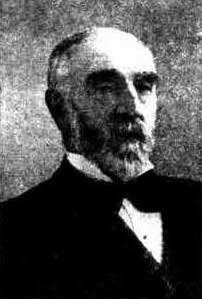
Children’s Court. Source: Western Herald,
(Bourke, NSW), Sat 10 Apr 1909, p. 7.
Reproduction: Peter de Waal
To-day, thanks to a radical change effected by the present Premier, the juveniles and adults are dealt with separately, and a special court, presided over by a special magistrate, is provided for the adjudicating of all cases pertaining to children. In the eyes of the law a child is a child until the age of 16 years, after that the jurisdiction of the Children’s Court is not sought.
A day at the Children’s Court affords to the student of human nature a wonderful insight into the complex working of the child mind, and offers an object lesson complete and convincing on the eternal problem of the morally warped. Sit as a casual in the big waiting-room and heed the broken scraps of conversation on every side. Adopt a view, formed from this point of vantage, and the law is but a greedy monster, seeking all whom it might devour. An indignant mother pours forth her tale of woe, telling of her youthful offspring, who wasn’t “doin’ nothin’, on’y playin’ marbles, and up comes a copper and nabs ’im, and wot for, ’eaven on’y knows, I couldn’t tell yer, not ter save me life.”
“That’s right,” agrees another long-suffering parent, the mother of an incorrigible.
“Ther same thing ’appened to my boy, on’y ’e wasn’t playing marbles. ’E wasn’t doin’ nothin’, and a policeman comes up and says, ‘W’y ain’t ’e at school,’ and ’im with a sore foot, and ’aving to do me bits of messages and one thing and ’nother, the d—– cops, ’erd drive yer mad. ’Spose I’ll be fined.”
Another story of stolen wood, a fancy for someone’s timepiece, sleeping out at night, truanting, throwing stones, damaging property, and a score of other offences, these constitute in the eye of the outraged parent, who are in many cases their children’s greatest enemies, the sum total of “doin’ nothin’.” But the arm of the law is long, and if justice is blind she is impartial in her findings, and the innocent (?) victims of unpropitious circumstances, though afforded the benefit of the least doubt, are brought to a sense of their shortcomings.
The atmosphere of this Court is as far removed from star chamber environment as it is possible to make it, a long room furnished with tables, chairs and a bench, being inoffensive enough to create little or no fear in the mind of even the youngest culprit. The stern and forbidding aspect of the regulation room is entirely eliminated, and everything possible is done to make the children remember the ordeal as one more of kindly correction than that of mental punishment. This is the humane endeavour of this Court. The influence brought to bear on every child appearing at this tribunal is one that, were it availed of in the full sense and meaning that it is exercised, would be conducive to material decrease in juvenile depravity. The magistrate, Mr Stephen Murphy, is an ideal man for the position he holds as his broad outlook and keen insight into human nature enables him to deal with every case on its merits, an essential when one considers its bearing on the after-life of the offender. In every case he appeals first to the better nature of the child and counsel often being tears of repentance and sorrow, whereas sterner measures would have only produced stubborn defiance. This knack of handling children in one that is commendable, and brings its own reward in the shape of many human brands plucked from the burning. Children are not hedged or heckled with formal ceremony, as unnecessary as it would be cruel. Formality in every sense is dispensed with and substituted by a thorough and fair investigation of facts, fiction and circumstances, where heredity is allowed full measure, tender years are remembered, the frailty of human nature is never lost sight of, and the welfare of a child, on the threshold of life, is the first consideration. In ninety per cent of the cases, it has been shown that the children are more sinned against than sinning, and this fact will show the magnitude of an undertaking where the pernicious influence of parents has to be fought and overcome.
Clemency, wherever possible, is extended, and the hearing of one case against a child would convince the most sceptical that if all other measures for the reclamation of children have proved comparatively abortive in working and effect, the Children’s Court stands out as a beacon of radical reform, and registers a success whose full meaning will speedily proclaim itself.
Besides dealing with juveniles, the Children’s Court also concerns itself with the difficult question of affiliation, but so jealous is this institution of its well meaning and its fair name that under no consideration whatever are particulars of these painful cases ever allowed to transpire beyond the court room, and twice a week Mr McFarlane, a special magistrate, occupies the seat of Solomon, whilst the busy world wags on, heedless and unaware of the tragedies that are receiving partial settlement at the hands of a kindly adjudicator, who, quick in his sympathy and apprehension, is ever minded to give frail woman all consideration, not only for her own sake, but for the sake of her child.
The affiliation court is fortunate in possessing the services of such a gentleman.
One cannot touch on the subject in hand without mentioning various Reformatories, viz, the Carpentarian Reformatory at Eastwood, the Mittagong Farm, the Sobraon, and the Girls’ Industrial School, Parramatta. These are fed from Ormond House, which is the receiving home for children convicted, and sentenced to terms of detention. This applies to the boy element. Ormond House receives children of both sex, but it serves only as a caravanserai, for the average number of inmates is about thirty girls and twenty boys, made up of youngsters, either on their way to and from reformatories, or waiting to be apprenticed. In a later article the subject of Ormond House will be more fully dealt with, as it is our intention to herewith deal with the subject of the Children’s Court alone, apart from any other issues.
The importance of parental rights is recognised as a prime factor in dealing with the case of every individual child, and wherever and whenever possible the magistrate commits the convicted juvenile to the care of parents or guardians, for a fixed term on probation. The State is not anxious to adopt the role of stepmother till all other measures have failed, but cases may be cited, where youngsters voluntarily returned to Ormond House and asked to be detained, preferring life here to an uncongenial home atmosphere.
This probationary phase is one of the most important of the whole system, and it is being carefully watched for results by the authorities. Those of an optimistic turn of mind are very sanguine as to the wisdom of this plan, but there are others who cannot see anything but a postponement of the evil day, their argument being that parents who have already demonstrated their inability to properly control and care for a child in the first instance, could not be expected to do so any later in the day. For the present, the matter is sub-judice.
The following figures will convey some idea both of the necessity of this Court as evidenced by the comparatively large number of cases before it and the careful discrimination exercised by the authorities in disposing of these:—
|
1908 |
|
|
Children released on probation and committed to care of guardians |
450 |
|
Children committed to an institution or reformatory |
370 |
|
Children fined small amounts for trivial offences |
443 |
|
Cases withdrawn, dismissed, pending, etc |
425 |
|
Total |
1688 |
|
Adults charged with offences against or in respect of children un der various Acts:— |
|
|
Convicted or orders made |
188 |
|
Withdrawn, dismissed, etc |
140 |
|
Committed for trial |
22 |
|
Total |
350 |
595 widows and deserted wives applied for and received State aid for their children under 16 of State Children’s Relief Act.
~ ~ ~ ~ ~
The Shoalhaven News and South Coast District Advertiser, Sat 10 Apr 1909 2
THE CHILDREN’S COURT.
———◦———
ORMOND HOUSE
—————
By Beth.
————
II.
————
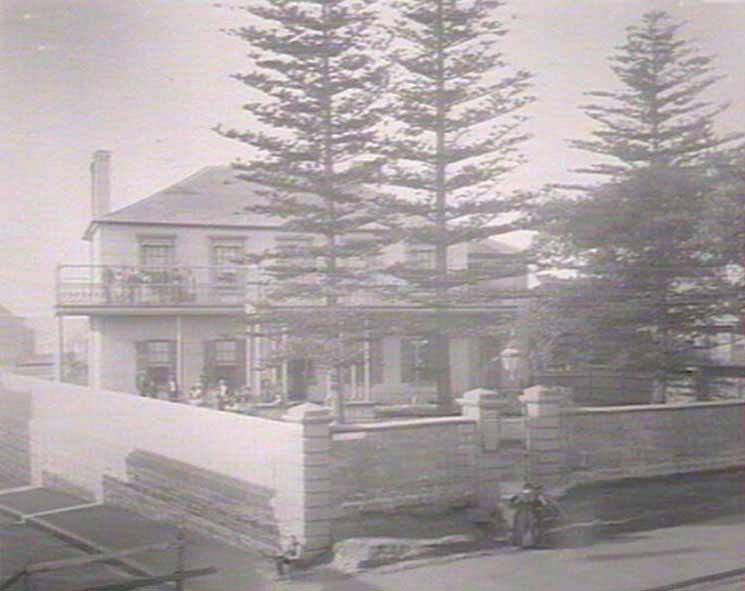
Reproduction: Peter de Waal
By degrees and in deference to a greater Sydney Scheme. Sydney is being deprived of her land marks, and amongst the comparatively few left as memories to old hands, Ormond House Paddington, is one to which attaches much ancient and interesting history.
The date of building this historic pile is somewhat indefinite, but by virtue of its age. The story that the Cooper family built it as a family residence may be accepted. Since then, it has undergone a varied career, serving in turn as a boarding-house, a private dwelling, the original venue of the Sydney Deaf and Dumb Asylum, and finally a State Shelter for Neglected Children, which mention brings us to the subject in hand.
In 1881 the State Government took over Ormond House and converted it into a depot for the reception of children, who by the force of adverse circumstances were compelled to look to the State for food, shelter and protection. From this humble beginning, one, whose aims and ambitions were modest enough perforce, in those days, has evolved that successful institution, still called Ormond House. The march of progress has brought in its train many desirable innovations and systems for the more up-to-date handling of the child problem; and from this centre, in conjunction with the State Relief Department, is the whole machinery of this important factor of social work engineered.
The Carpentarian Reformatory , or Brush Farm at Eastwood is also for boys who need firm discipline. The terms of detention are governed by the nature of the offences.
The Mittagong Farm Home appears from general opinion to be the most popular of all, and here the boys live a healthy, outdoor life, engaging in farm and orchard work, whilst building sound physical constitutions and gaining much valuable information that should serve them in after life. The Industrial school for girls at Parramatta under Mr Thompson is an institution already favourably known to our readers. Girls sent here are a type who require expert and patient handling. They receive it, and the percentage of successes if appearing to the uninitiated as somewhat low, it nevertheless represents a salving that justifies the great labour so cheerfully spent.
The same spirit of self sacrifice and whole heartedness is displayed by every officer who has the work of child reclamation in hand, and it is to this concerted action on their part that may be traced to the admirable results that are daily forthcoming.
Dr Mackellar anticipates that with the amendment of the Acts, with which the Board and the Department are concerned, he will be able to initiate many newer and more up to date reforms, by which the legitimate work of the Board may be more economically and effectively performed. For the present all praise to the existing organizations, which are achieving such sterling work.
An anomaly exists in connection with the working of these departments, in-as-much as Ormond House and its inmates are directly under the control of the Education Minister, whereas the Children’s Court which is in the same building, and deals with the same children looks to the Justice Department for its ruling. However, this condition of affairs in no way detracts from the excellent work and splendid results achieved by both, and after all this latter is what the public demand most, caring little what means are adapted, so long as desirable issues ensue.
As has already been stated in a previous article, Ormond House is mainly a shelter, a depot, a caravanserai, a port of call. Children are coming and going almost daily, and it is of the inside working of this temporary home that we wish to speak.
The Shelter is directly under the control of the State Childrens Relief Board, of which Dr Mackellar is the president. This gentleman has made this work his life long study and reward of his labours may be seen in the many excellent reforms that owe him their origin. In the Superintendant [sic], Mr A Turner is vested the internal and external workings of Ormond House and the contract is one arduous and exacting. The public have but the faintest conception of the multitudinous duties attaching this position, one which requires a vast fund of patience, tact, sympathy and more than the ordinary amount of common sense. Mr Turner is happily placed.
A bone of contention has always existed in connection with the matter of housing together, even temporarily, state children and Court Children.
Considering that Ormond House and its laudable work is viewed in the light of a very interesting experiment in social propoganda, [sic] the authorities are well content to crawl before they walk. The future operations will prove the wisdom of this course. In the fulness of time independent buildings will be provided, each organization undertaking the work of its one separate department.
Miss Brodie, the present matron, has been in charge for about seven years. During that time she has handled thousands of youngsters and, as one could well believe, has seen many interesting incidents which for want of space we are compelled to let go unmentioned. She is a popular and capable officer, and the elder girls are much attached to her.
During the year, 2,395 children passed through the Shelter, of whom 1,435 were wards of the State Children’s Relief Board and 960 were children dealt with by the Court.
In every sense of the term Ormond House is a home—the only home often that many poor unfortunate children have ever known. If committed from the Court sitting in the same building, a child is housed here till either apprenticed, boarded out, or sent to an institution. The average daily number of inmates is about 45. Whilst under this roof, they are clothed, fed and sheltered. In return for this they do the work of the establishment, the various domestic duties being shared. The boys clean brass work, knives, do yard cleaning, floor scrubbing and other jobs.
The daily routine is as follows:—
Up at six in the morning, when all go to the bath rooms. Breakfast is served at 7.30. After this meal, domestic duties keep all busily employed till dinner, which welcome break comes at 12.30. The afternoon is spent by the girls sewing and mending, the boy element being kept out of mischief by application to congenial tasks. After tea at 5.30 recreation and then bed. The menu is most excellent and wholesome, and we would impress on those who believe the contrary that the food supplied to the children is exactly the same as that served to the matron and her assistant in their private dining room. A cook has charge of the culinary department, this guaranteeing an economical and palatable food supply.
In fact, on investigation, the regime of Ormond House compares most favorably with that of the average boarding school, exception only offering in two particulars. Personal liberty to go and come is witheld, [sic] and the children must justify their upkeep by working for it—wise provisions both of them, which all broad minded folk will readily appreciate.
The dormitories are large and spacious, containing rows of single beds, most comfortably equipped with ample bed clothing. Snowy counterpanes and hangings are special home touches enjoyed by the girls. The dining-rooms are supplied with the usual furnishings, that belonging to the girls enjoying its luxury of a piano. On Sunday evenings, the assistant matron gathers the children around her and they sing hymn and sacred songs. These little phases or [sic] real home life are good to hear of, and are appreciated most strongly by the inmates.
Attached to Ormond House is a miniature drapery store. Shelved upon shelves are loaded with clothing of every kind. Stacks of straw hats, rows and rows of boots, suits, frocks, underwear, and overcoats. This supply is new in every particular and is supplied by tender. Each child on leaving the shelter to be apprenticed or going to an institution is equipped with a full complement of suitable garments, which are always of the sensible and comfortable order.
An impression exists, and an erroneous one to the effect that all clothing and belongings brought to Ormond House by children, are immediately confiscated. The matron is very anxious to have it known that this is entirely wrong and in direct contradiction to facts. Whilst living in the Shelter, all children are obliged to wear the clothing supplied by the State. All other clothes are carefully put away in trunks, for the use of their owners, when more favourable opportunities are forthcoming. Obviously many garments find their way to the second-hand clothes fund, which branch gives outdoor relief. The matron uses her power of discretion, as to the wisdom of keeping or discarding clothing, and nothing is ever taken from a child that would be of service to it. Miss Brodie laughingly remarked that an impression existed that they had a shop at Ormond House, where everything offered for sale had, at some time or other, belonged to the children. But we know this is not true, and we are glad of the opportunity of giving it a most emphatic denial.
Children are eligible for admission to the shelter at any age, and an inmate and a new arrival, as late as last week, was a wee chubby baby 12 months old, who cooed and crowed and played with its pink toes, unconscious happily of all except that it was in very good hand.
In Hargreave [sic] Street, there is a branch to Ormond House, known as Hargrave House. Here under the matron and a staff of nurses, babies and sick infants who could not receive proper attention at the Shelter are looked after. Their helplessness and innocence are their passports to the hearts and care of the loving women who tend them, and every kindness is theirs by the right of divine babyhood.
This sums up the legitimate work of the Ormond House Shelter, but passing mention will not be out of place of the various reformatories or institutions to which children are drafted from there.
The “Sobraon,” or Nautical Training Ship receives incorrigibles. A full account of the practical work done on this ship, appeared some time back.
~ ~ ~ ~ ~
The Sydney Morning Herald, Tue 21 Jun 1910 3
BUILDINGS AND WORKS.
———◦———
Progress of the Trade.
———
New Children’s Court.
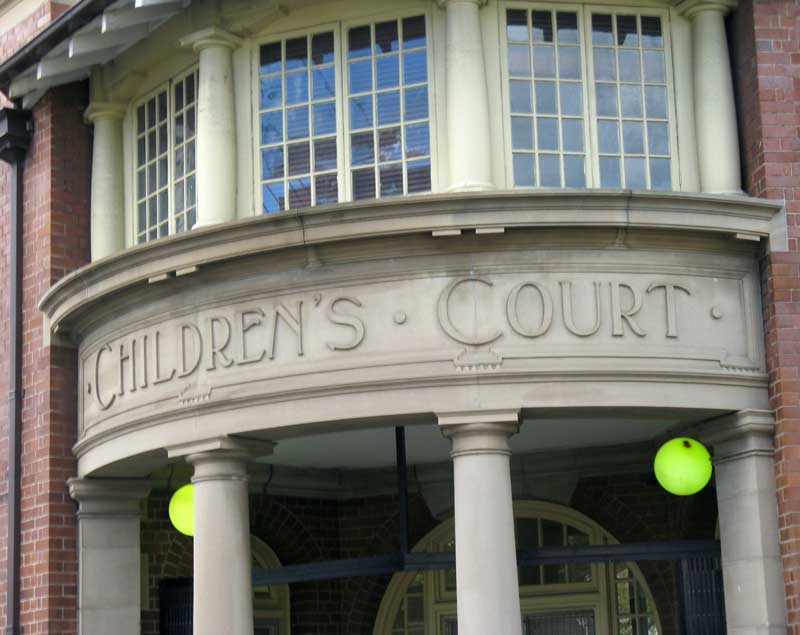
Ormond House at Paddington, which has been used as a children’s court for some time, has become inadequate for the purpose, and the Government has secured a large block of land in Surry Hills upon which it is proposed to erect extensive premises, designed by the Government Architect. The site is at the corner of Albion and Commonwealth streets, and it also has a frontage to Little Albion-street. The dimensions are 165ft to Albion-street, 76ft to Commonwealth-street, and a depth along Little Albion-street of 205ft. This will give ample accommodation for first class buildings and an extensive courtyard for the exercise of the children. The plans provide for a main entrance at the corner of Albion and Commonwealth streets, but there are side entrances for officials in Little Albion-street. The front buildings will be two stories in height, and will be used for housing the children who may become confinees of the establishment. At the rear of the main building will be a large courthouse containing two extensive courts, so placed as to be away from the noise and bustle of the streets, in addition to the courtrooms there will be rooms for the magistrates, solicitors, the parents of the children, and a general waiting-room for witnesses, including separate departments for female witnesses. No space has been provided in the courts for either the public or the press, for neither are allowed in the children’s courts. The exterior of the building will be of a plain character, the only attempt at ornamentation being on the corner, where there will be an open portion with Doric columns, flanked by a stone pediment, with stone pilasters and cornice. The remainder of the building will be of brick, with stone string courses. Light and ventilation have been amply provided for. Throughout, the building will be of fireproof construction, and escape stairs from the upper floors have been included in the design.
~ ~ ~ ~ ~
Evening News, Wed 4 Oct 1911 4

THE NEW CHILDREN’S COURT.
Hitherto the work of the Children’s Court has been carried on at Ormond House, Paddington but the new premises are more central situated and the and the accommodation provided therein more in keeping with the importance of the work with which the Court has to deal. In addition to the Court Room and the necessary offices, the new building contains a shelter for boys.
~ ~ ~ ~ ~
The Sydney Morning Herald, Wed 4 Oct 1911 5
NEW CHILDREN’S COURT.
———◦———
Yesterday the new court and refuge for children coming under the Children’s Court jurisdiction, situated at the corner of Albion-street and Commonwealth-street were opened for business. The new premises are a distinct advance on the accommodation provided at Ormond House, where for years delinquent children have been dealt with. With a view to meeting the requirements of modern ideas as to how best to reform children the refuge, which has been placed under the supervision of Mr AP Humphries late instructor at Brush Farm, is divested of any grimness, which was considered orthodox in methods of the past, and wayward children will be taught to regard it more in the light of a home. The refuge will be utilised as a place of detention, and has been fitted with accommodation providing for the maximum amount of cleanliness and comfort. While children are under detention they will not be permitted to become idle, but they will have no cause of complaint as to their treatment in regard to material comfort.
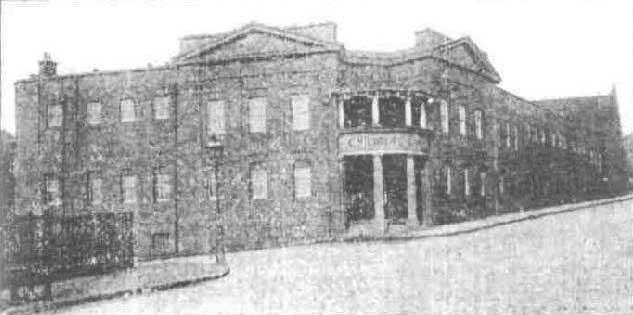
Source: Evening News, (Sydney, NSW), Wed 4 Oct 1911, p.6. Reproduction: Peter de Waal
1 The Shoalhaven News and South Coast District Advertiser, (NSW), Sat 3 Apr 1909, p. 7.
2 The Shoalhaven News and South Coast District Advertiser, (NSW), Sat 10 Apr 1909, p. 7.
3 The Sydney Morning Herald, Tue 21 Jun 1910, p. 10.
4 Evening News, (Sydney, NSW), Wed 4 Oct 1911, p. 6.
5 The Sydney Morning Herald, Wed 4 Oct 1911, p. 7.