Frederick Maurice Mulcahy, 1929 – Buggery
Below also see: Walter Joseph Mulligan, 1931
Isabel Mary Pattie, 1936 – Murder
Illawarra Mercury, Fri 19 Jul 1929 1
POLICE COURT.
————
WOLLONGONG.—Monday.
———
(Before Mr Stevenson, SM.)
———
…
SERIOUS OFFENCE.
Frederick Maurice Mulcahey [aka Frederick Maurice Mulcahy] (27) was charged that he did commit a serious offence at Wollongong, on July 13th.
At the request of the Police, accused was remanded for one week, bail being allowed in self in £50, and one other in £50, or two in £25.
~ ~ ~ ~ ~
South Coast Times and Wollongong Argus, Fri 19 Jul 1929 2
WOLLONGONG COURT
————
Monday.
(Before Mr Stevenson, SM.)
————
…
A REMAND.
Frederick Maurice Mulcahey (27) was charged with an abominable offence on a male person at Wollongong, on July 13th.
Sergeant Pye asked for a remand.
Remanded till July 22nd. Bail was allowed at self and one surety of £50.
~ ~ ~ ~ ~
Illawarra Mercury, Fri 26 Jul 1929 3
A SERIOUS CHARGE.
Frederick Maurice Mulcahey (27) was charged that he did commit an abominable offence upon James Herbert Robert Paddie [aka Herbert Robert Pattie ], at Wollongong, on July 13th.
Mr Sproule appeared for defendant.
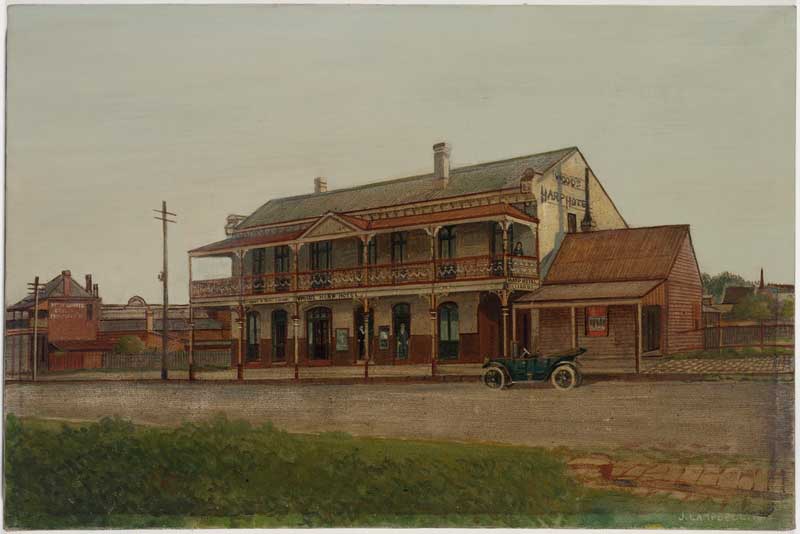
Reproduction: Peter de Waal
James Herbert Robert Paddie, No. 10 Camp, Cross-Country Railway, deposed: I came into Wollongong with O’Sullivan and McKee on the Friday and we were drinking pretty well all night until Saturday morning, at the Harp Hotel, Wollongong. About 2 pm the next day I met Walsh, the boxing promoter, and had a conversation with him about a prize fight. I returned to the Harp Hotel at about 2.15 pm, and there met defendant. We then went down to the Oxford Hotel, and I decided to have a sleep. McKee, my mate, said “I will go up with you.” Defendant said “No. You stop here. I will go with him.” We went to the Hard Hotel and had a couple more drinks, and defendant bought a bottle of beer. Mrs Gant unlocked the door and I went into room 24, and laid down in my clothes to go to sleep. I had on my overcoat. About five minutes later I woke up (here followed a description of the alleged offence). I got up and punched defendant in the eye, and he fell back on the bed, and put his feet up so that I could not hit him. I told him that I would give him in charge. I told Mrs Gant something, and then saw the police. The next day I pointed defendant out to the police.
By Mr Sproule: I am 23 years of age. I went to school with defendant at Goondah. I am a prize fighter, and have had a lot of fights. If I have had 50 fights I have won 40 of them. I had so many drinks that it would be impossible to count them. Walsh told me to go home, have a sleep, and chew some chewing gum so that I could pass the doctor for the fight, and that is why I went to bed at 2.30 in the afternoon. I don’t think that defendant was drunk as he was driving his car.
James McKee, labourer, Cross-Country Railway, gave corroborative evidence.
By Mr Sproule: I did not see Paddie for about 2½ hours on that afternoon. We were not drinking all Friday night. We had no drinks after 11.30 pm. It would be impossible to count the drinks we had on the Saturday morning.
Dr RR Perkins, Port Kembla, deposed that he examined Paddie, and found two slight abrasions which might have been caused in the way alleged.
When formally charged, defendant said “He was mad drunk. He is the one who should be tried for assaulting me, I am not guilty. I have never been charged in my life with doing anything wrong, and, on the advice of my solicitor, I reserve my defence.”
Defendant was committed to stand trial at the next Wollongong Quarter Sessions on October 8th, bail being allowed in self in £50, and one other in £50, or two of £25.
~ ~ ~ ~ ~
South Coast Times and Wollongong Argus, Fri 26 Jul 1929 4
WOLLONGONG COURT
————
Monday.
————
(Before Mr Stevenson, SM.)
…
A SERIOUS CHARGE.
Frederick Maurice Mulcahey was charged with committing an unnatural offence on July 13th at Wollongong.
Mr Sproule (RD Meagher, Sproule and Co), appeared for the defendant.
Inspector Gibson said both the arresting Constables were ill and under the circumstances he must ask for an adjournment.
Mr Sproule said the charge was laid by a man named Pattie. He pointed out that it was unfair to ask for an adjournment and suggested that all the available evidence be taken.
This course was adopted.
James Herbert Robert Pattie, labourer of No. 10 railway camp, stated on July 12th witness and another man went into Wollongong and visited the vaudeville. They were drinking a lot all night; on the following morning witness and a man named McKee were at the Harp Hotel. About 2 pm witness had a conversation about a fight at the stadium, and on his return to the hotel met the defendant, who “shouted” pretty freely. The party then went over to the Oxford Hotel, where witness decided to have a sleep. The defendant offered to look after him so they returned to the Harp Hotel, and had a couple more drinks. Mulcahey purchased a bottle of beer and he and witness then went up to room 24 where the latter went to sleep. About five minutes later witness woke up and found himself lying on the chest with the defendant committing an offence on him. The latter also kissed witness who struggled. Witness pushed him away and punched him in the eye, knocking him on to the bed. Witness told defendant he would give him in charge. When witness woke up he found his clothing disarranged. He went down stairs and on his return found defendant gone. On the following night witness identified defendant, who was then arrested.
Cross examined by Mr Sproule, witness said he had gone to school with the defendant, but had not remembered him. Witness had taken a dislike to the defendant’s action on a previous occasion, but the latter had explained that he was only joking. Witness had had some experience of the boxing game and had had about fifty fights all told, of which he had won about forty.
Witness: “I was going to have a sleep as I was going to fight that night. Mrs Grant had put some money on me and advised this.”
Mr Sproule: Was the defendant drunk? No, he couldn’t have been, as he was driving his car about.
You have been convicted on previous occasions? Yes, but I cannot definitely remember what for and on how many occasions.
James McKee, labourer on the Cross country railway, stated he knew both Pattie and Mulcahey. On July 12th witness was with the former at Wollongong. They stayed at the Harp Hotel that night, and the following morning witness was introduced to the defendant. All three of them had several drinks and then went over to the Oxford hotel. At this hotel witness suggested to Pattie that he go over and have a sleep. Witness was going over to see that Pattie was all right but Mulcahey said he would do it. Those two then left and witness remained at the hotel. He went back to the Harp Hotel about an hour later, but did not find Pattie until about two hours later.
Mr Sproule: I suppose you do drink? Oh, certainly, beer, wine, stout or spirits, I don’t mind which.
Well how many drinks did you and Pattie have on Saturday? I could not say, it would be impossible to count them.
Dr RR Perkins, Port Kembla, stated he examined Pattie, who complained of the alleged offence. Witness found slight abrasions of the skin which could have been caused by an assault as described.
Questioned by Mr Sproule, witness admitted that an assault of the nature described would cause pain enough to make a man cry out.
When charged, the defendant said “Pattie was mad drunk. He is the one who should be tried for assaulting me, I am not guilty, and have never been charged in my life with doing anything wrong, and on the advice of my solicitor I reserve my defence.”
Committed for trial at Wollongong Sessions on October 8th. Bail was fixed at £50, with one surety of £50.
~ ~ ~ ~ ~
The Nowra Leader, Fri 2 Aug 1929 5
A SERIOUS CHARGE.
———◦———
At Wollongong Police Court, Frederick Maurice Mulcahey [sic] was charged with committing an unnatural offence on July 13th, at Wollongong.
Mr Sproule (RD Meagher, Sproule and Co), appeared for defendant.
Inspector Gibson said both the arresting Constables were ill, and under the circumstances he must ask for an adjournment.
Mr Sproule said the charge was laid by a man named Pattie. He pointed out that it was unfair to ask for an adjournment, and suggested that all available evidence be taken.
This course was adopted.
James Herbert Robert Pattie, laborer of No. 10 railway camp, stated on July 12th witness and another man went into Wollongong and visited the vaudeville. They were drinking a lot all night; on the following morning witness and a man named McKee were at the Harp Hotel. About 2 pm witness had a conversation about a fight at the stadium, and on his return to the hotel met the defendant, who “shouted” pretty freely. The party then went over to the Oxford Hotel, where witness decided to have a sleep. The defendant offered to look after him so they returned to the Harp Hotel, and had a couple more drinks. Mulcahey purchased a bottle of beer and he and witness then went up to room 24 where the latter went to sleep. About five minutes later witness woke and found himself lying on the chest with the defendant committing an offence on him. The latter also kissed witness who struggled. Witness pushed him away and punched him in the eye, knocking him on to the bed. Witness told defendant he would give him in charge. When witness woke up he found his clothing disarranged. He went down stairs and on his return found defendant gone. On the following night witness identified defendant, who was then arrested.
Cross examined by Mr Sproule, witness said he had gone to school with the defendant, but had not remembered him. Witness had taken a dislike to the defendant’s action on a previous occasion, but the latter had explained that he was only joking. Witness had had some experience of the boxing game, and had had about fifty fights all told, of which he had won about forty.
Witness: “I was going to have a sleep as I was going to fight that night. Mrs Grant had put some money on me and advised this.”
Mr Sproule: Was the defendant drunk? No, he couldn’t have been, as he was driving his car about.
You have been convicted on previous occasions? Yes, but I cannot definitely remember what for and on how many occasions.
James McKee, labourer on the Cross country railway, stated he knew both Pattie and Mulcahey. On July 12th witness was with former at Wollongong. They stayed at the Harp Hotel that night, and the following morning witness was introduced to the defendant. All three of them had several drinks and then went over to the Oxford hotel. At this hotel witness suggested to Pattie that he go over and have a sleep. Witness was going over to see that Pattie was all right, but Mulcahey said he would do it. Those two then left and witness remained at the hotel. He went back to the Hotel about an hour later, but did not find Pattie until about two hours later.
Mr Sproule: I suppose you drink?—Oh, certainly, beer, wine, stout or spirit, I don’t mind which.
Well how many drinks did you and Pattie have on Saturday?—I could not say, it would be impossible to count them.
Dr RH Perkins, Port Kembla, stated he examined Pattie, who complained of the alleged offence. Witness found slight abrasions of the skin which could have been caused by an assault as described.
Questioned by Mr Sproule, witness admitted that an assault of the nature described would cause pain enough to make a man cry out.
When charged, the defendant said, “Pattie was mad drunk. He is the one who should be tried for assaulting me I am not guilty, and have never been charged in my life with doing anything wrong, and on the advice of my solicitor I reserve my defence.”
Committed for trial at Wollongong Sessions on October 8th. Bail was fixed at £50, with one surety of £50.
~ ~ ~ ~ ~
Illawarra Mercury, Fri 18 Oct 1929 6
QUARTER SESSIONS.
————
WOLLONGONG — Wednesday.
———
(Before His Honor Judge White 7).
———
Mr Crawford, Crown Prosecutor.
———
Frederick Maurice Mulcahy pleaded not guilty to a charge of committing a serious offence upon a male person at Wollongong, on July 13.
Mr Sproule appeared for the accused.
Jury: F Brunning, DW Boyd, EJ Dwyer, E Everitt, J Todd, W Madden, P Dolan, E Byron, WS Staff, LC Davis, H Brown, JC Reid.
(This case was reported as fully as possible when accused was committed for trial at the Wollongong Police Court).
James Herbert Robert Pattie, labourer, deposed that on the day in question, he was drinking the greater part of the afternoon with McKee and accused. He was engaged to fight that night by Walsh, a fight promoter, and went to his room to sleep off the effect of the liquor he had consumed. Accused accompanied him to his room and later witness went to sleep. A little later he awoke (here followed a description of the alleged offence). Witness punched accused and then informed Mrs Grant, wife of the licensee, and the police, what had occurred. The next evening witness pointed out the accused to the police. Witness was examined by a doctor shortly after the alleged occurrence.
By Mr Sproule: Mrs Gant might have opened the bedroom door. I had more drinks than I can remember. I weigh a bit over 11 stone, and box at that weight. I have won 40 out of 50 fights. I would not swear that I have not been convicted over 20 times.
James Gilbert McKee, labourer, gave corroborative evidence.
Constable EH Jonas, Wollongong, gave evidence as to the arrest of accused, who ma e a statement (produced).
The deposition of Dr RR Perkins (given at the police court) was then read.
The Defence:
Frederick Maurice Mulcahey, labourer, No. 7 Camp, Cross-Country Railway, deposed that he had never been in Court before, and had an excellent character. He had been to school with Pattie, and knew him well. On the day in question Pattie was “mad drunk,” and made indecent overtures to witness. It was Pattie who should have been charged, not witness.
Percival Charles Mason, ganger on Cross-Country Railway, who had known accused for 15 years, gave evidence as to the good character of the accused.
My Sproule, in his address to the jury, said it was the word of Pattie, a man with a number of convictions, against that of accused, a man of excellent character.
The jury, after a retirement of one hour and three quarters, returned to Court with a verdict of not guilty, and accused was discharged.
~ ~ ~ ~ ~
South Coast Times and Wollongong Argus, Fri 18 Oct 1929 8
QUARTER SESSIONS
————
WOLLONGONG, Monday.
————
(Before His Honor Judge White.)
————
…
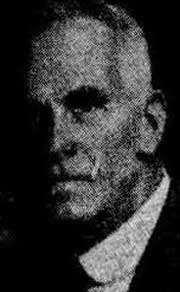
Sydney Morning Herald, Fri 26 Jan 1940,
p. 13. Reproduction: Peter de Waal
ALLEGED INDECENT ASSAULT.
Frederick Morris [sic] Mulcahy [sic] was charged that he did indecently assault [James] Herbert Robert Pattie, in a room at the Harp Hotel, Wollongong, on 13th July, 1929.
Mr Sproule appeared for accused, who pleaded not guilty.
Jury: F Brunning, DW Boyd, HJ Dwyer, E Everett, John Todd, P Dolan, E Byron, WS Staff, LC Davis, Hercules Brown, JC Reid, WM Madden.
In outlining the case to the jury the Crown Prosecutor said it was one of those cases that did not require enlarging upon. The complainant, the accused, and another man, he said, had been drinking together on the 12th and 13th July, at Wollongong, and it was alleged that accused took complainant to his (Pattie’s) room at the Harp Hotel, and there committed an indecent assault.
Herbert Robert Pattie stated that on the date mentioned he was employed at the cross-country railway works. He arrived at Wollongong, with others, on the Friday, 12th July, and had several drinks. On the following day (Saturday) he met accused and had several drinks with him and a man named McKee at the Harp Hotel. Some time later they went to the Oxford Hotel, and as witness had to box that night at the Wollongong Stadium, McKee suggested to him (Pattie) that he should go and have a rest. Accused said to McKee, “I’ll see him up to the Harp.” They returned to the Harp Hotel, said witness, and had more drink. Witness then got the key of his room from the landlady and accused accompanied him upstairs. Pattie said he had been asleep some little time when he was awakened as a result of the accused committing an indecent assault upon him. Witness said that accused kissed him and said, “Don’t move Jimmy, I love you.” Pattie then described how he punched accused and said to him, “You won’t getup and fight me, like a man, so I’ll give you in charge.” The witness went on to say that he went up to the police station and laid the charge against accused. On the following Sunday night witness said he and and [sic] McKee were at the Wollongong railway station, where they saw accused and subsequently pointed him out to the police.
Pattie said that after the alleged assault he was examined by Dr Perkins of Port Kembla.
The doctor’s evidence at the lower court was read over. It set forth that there were slight abrasions that could possibly be caused in the manner explained by complainant. Great force, however, would be required to accomplish the act, as described by Pattie.
In answer to Mr Sproule, Pattie said it would be impossible for him to say how many drinks he had had. He did boxing for money and of 50 fights he had won about 40. Pattie would not say he was a strong man with a good grip, but could take his own part. He said he had convictions for being drunk, etc, but he could not remember what all the charges were as they had faded from his memory entirely. He drank a little, he said, but did not drink all night long as it made a man feel too “dopey”—as it you were half smothered, he added. Never had he seen “reptiles” and punched out at them.
James Hubert McKee, a laborer, stated that he advised Pattie to go and have a rest, and accused went with Pattie from the Oxford Hotel to the Harp Hotel about an hour later but did not see Pattie then; however, he met him the same evening when Pattie told him what had occurred.
In answer to Mr Sproule, McKee said that Pattie was silly drunk when he left the Oxford.
Constable Jonas, Wollongong, stated that when he arrested Mulcahy the latter made a statement (produced) to the effect that when he assisted Pattie to his room, the latter pulled him down on the bad and acted indecently. Then Pattie started to hit him. The constable said that Mulcahy told him Pattie was very drunk and for that reason he had left him, got in his own car and gone home.
The accused Frederick Morris Mulcahy, left the dock and entered the witness box where he gave evidence in support of the statement he had given to Constable Jonas. He said he had gone to school with Pattie , whom he knew very well. Pattie was mad drunk at the time, the whole occurrence, said Mulcahy, only lasted about three minutes. The boot was on the other foot—Pattie had actually indecently assaulted him. Mulcahy said this was his first appearance before a court.
By Mr Crawford: I had only four or five drinks that day and was quite sober; Pattie was very drunk.
Percy Mason, a ganger on the cross-country railway, said accused had been working in his gang for 18 months and was a well-behaved, respectable young man of the highest character. Witness had known him 15 years.
The jury returned to Court at 2.5 pm with a verdict of not guilty, and the accused was discharged.
Walter Joseph Mulligan, 1931
Illawarra Mercury, Fri 27 Feb 1931 9
POLICE COURT.
————
WOLLONGONG.—Monday.
————
(Before Mr Chapman, SM.)
————
…
A REMAND.
Walter Joseph Mulligan (38) was charged with maliciously inflicting grievous bodily harm upon Lorenzo Randazzo at No. 6 Railway Construction Camp, Unanderra, on February 18.
Remanded until March 16, on the application of defendant. Bail was allowed in self and one other in £40.
~ ~ ~ ~ ~
Illawarra Mercury, Fri 20 Mar 1931 10
COMMITTED FOR TRIAL.
———◦———
CROSS-COUNTRY RAILWAY
INCIDENT.
————
At the Wollongong police court on Monday, Walter Joseph Mulligan (38) was charged with inflicting grievous bodily harm upon Lorenzo Randazzo, at No. 7 Camp, Cross Country Railway, on February 18.
Dr HH Lee, Wollongong, deposed that he saw Randazzo on February 18. He had a contused wound at the back of the head, in which witness inserted two stitches. Randazzo was admitted to the Wollongong District Hospital, where he remained for five days. It was not a very serious wound.
Constable RP Collins, Unanderra, deposed: I saw defendant on February 19, and said to him “I am informed that you assaulted Randazzo here yesterday morning.” He said “I did hit him, but he came at me with the hammer. I picked up a stick and hit him with it.” I asked him for the stick, and he said that he had dropped it after hitting Randazzo. Defendant stated, in answer to questions, that Randazzo had said “I will get you tonight, or, with a knife,” or something which sounded like that. I said “Was he facing you when you hit him?” and he said “Yes.” I said “How do you account for the cut on the back of his head?” and he said “I don’t know where I hit him. I suppose the stick swung around.” He then made a statement (produced) in which he stated that he had had arguments with Randazzo over money matters. Randazzo handed he a stick (produced) and I showed it to defendant, who said “How could that be it? It has been lying on the road there for Months.”
Frederick Maurice Mulcahey, labourer, No. 7 Camp, Cross Country Railway, deposed: At about 10.30 am on February 18, I was working with Randazzo. I heard defendant and Randazzo have a few words, and saw defendant hit Randazzo, after Randazzo had said, “I will get you with an knife.” Randazzo had a hammer in his hand when he spoke to defendant.
James Covington, labourer, of No. 7 Camp, gave evidence corroborative of previous witness.
Lorenzo Randazzo, labourer of No. 7 Camp, Cross Country railway, deposed that Mulligan (the defendant) had called him a “dirty — ——,” and had also said “You run down because Jack O’Brien is there, you —– Dago ——.” Witness said “I say friend you don’t want to sing out behind me.” Witness had both hands full when he was passing defendant, and said to defendant, not to annoy him any more, and that he (witness) would see him that night. Witness was then struck on the back of the head with a stick (produced). After attention by the first aid man witness came to Wollongong to see a doctor. The trouble between them arose through witness lending defendant 11/9, and asking for the money back. Defendant would not pay, and witness said that he would write to Thorpe (the engineer) for assistance in recovering this money. Witness wrote to Thorpe, who had taken no action in the matter.
Under cross examination, witness said that he would not use a knife in a quarrel.
His Worship committed defendant to stand trial at the next Wollongong Quarter Sessions, to be held on June 9th.
When formally charged, defendant said “Not guilty, Your Worship. I reserve my defence.”
Bail was allowed in self in £40, or two in £20.
Isabel Mary Pattie, 1936
The Sun, Sat 27 Jun 1936 11
LOCKHART TRAGEDY
————
EVIDENCE AT INQUEST
Lockhart, Saturday.
The coroner opened an inquiry to-day into the death of James Herbert Robert Pattie, 30.
Isobel [sic] Mary Pattie, 23, wife of the dead man, was present in custody.
Sergeant HF Burton, in evidence said that on June 26 he was called to Mrs Coleman’s home, and there found Pattie dead on the back veranda. The sergeant said that he was told that the cause of death was a bullet wound from a pea-riffle.
Sergeant Burton said that he detained Isobel Mary Pattie, and she had been charged with murder.
To enable further inquiries to be made by the police and to enable Isobel Mary Pattie to be legally represented, the inquiry was adjourned to July 9.
Subsequently Isobel Mary Pattie appeared in court on a charge of having murdered her husband.
She was remanded until July 29.
Bail was not applied for.
~ ~ ~ ~ ~
Truth, Sun 28 Jun 1936 12
LOCKHART SHOOTING
———◦———
BOXER’S WIFE CHARGED
WITH MURDER
Lockhart, Saturday.
When Mr Cowan, SM, opened the inquest into the death of James Pattie here to-day, Inspector Small applied for an adjournment for a week.
He explained that the police had not completed their inquiries into the case.
The adjournment was granted.
This was the sequel to last night’s fatal shooting at Pattie’s home. The report of a shot was heard, and immediately afterwards there was the hoarse cry of a man for a doctor. Those who were attracted to the scene found that Pattie, who is a well-known Riverina “knockabout” boxer, had been shot. A pea-rifle bullet had struck him in the mouth and had lodged in his spine. His neck was broken, and it is a fact almost without parallel in medicine that he was able to utter his cry for help. His death, it is considered, must have been almost instantaneous.
Mrs Pattie, wife of the deceased, has been formally charged with the alleged murder of her husband.
~ ~ ~ ~ ~
The Maitland Daily Mercury, Mon 29 Jun 1936 13
WOMAN CHARGED
————
DEATH OF HUSBAND
Lockhart, Monday.
At the Police Court, Isabel Mary Pattie, 23, was charged with having murdered her husband, James Herbert Robert Pattie, aged 30, a rabbiter. She was remanded till July 29.
At the inquest, which was opened by Mr AC Cowie, Sergeant Burton stated that he saw the body of Pattie at the house of Mrs C Coleman on Friday evening. He was informed that Pattie’s death was caused by a bullet fired from a pea-rifle.
~ ~ ~ ~ ~
The Sydney Morning Herald, Mon 29 Jun 1936 14
WOMAN CHARGED
———◦———
WITH MURDER OF HUSBAND.
———
Lockhart, Sunday.
At the Police Court Yesterday, Isabel Mary Pattie, 23, was charged with having murdered her husband, James Herbert Robert Pattie, aged 30, a rabbiter. She was remanded till July.
At the inquest, which was opened yesterday by Mr AC Cowie, Sergeant [Herbert] Burton stated that he saw the body of Pattie at the house of Mrs C Coleman on Friday evening. He was informed that Pattie’s death was caused by a bullet fired from a pea-rifle.
~ ~ ~ ~ ~
Daily Advertiser, Fri 10 Jul 1936 15
LOCKHART INQUEST
———◦———
WIFE SENT FOR TRIAL
————
Charge of Manslaughter
————
HER ALLEGED STATEMENT
————
Lockhart, Thursday.
Following the inquest into the death of James Herbert Robert Pattie, rabbiter, who was found dead with a pea-riffle wound in the throat, the coroner (Mr AC Cowin), to-day committed deceased’s wife for trial on a charge of manslaughter.
Superintendent Small, of Albury, represented the police, and Mr Manning, of Albury, appeared for the accused, who was present in custody.
Sergeant Herbert Burton said he had obtained a statement from accused. When asked how her husband had met his death she allegedly replied, “Jim seemed to go mad to-night. We were having tea. Jim swore at our little boy. I left the table and said, ‘I will go away in the lorry.’ Jim jumped from the table, fell on the floor, and appeared to take a fit. I went to the lorry and Jim followed me. He then caught me by the troat and pulled me out of the lorry.
“I broke away, but he caught me again and threw me on the ground and tried to choke me. I broke away again and ran on to the back verandah. He followed me and made a rush at me in a crouching manner. I don’t really know what happened then. I found the riffle in my hand and pointing it at Jim. He said, ‘go on, shoot!’ I heard a noise and saw sparks, and Jim fell on the verandah. I ran to him’ he said, ‘I’m all right; go for a doctor.’ he suddenly stopped breathing. I put the rifle on a box in the kitchen.”
According to the alleged statement, Mrs Pattie said it was her husband’s rifle, but her mind “seemed blank at the time.” Her husband had been drinking wine, and when he did that he became mad and violent.
Sergeant Burton said he knew from personal experience that deceased had a violent temper. He was a strong man, and had been a boxer. The accused was a decent, well-behaved woman.
In reply to Mr Manning, he said that Mr and Mrs Pattie had lived a hard, Gypsy sort of existence. Accused had answered all questions frankly.
Dr Victor Conlon said that when he viewed the body he discovered a punctured wound in the throat, and the spine was broken. His examination did not disclose the location of the bullet. He did not notice a smell of liquor at the time. The bullet wound was the cause of death.
In reply to Mr Manning, witness said he thought the shot was fired from five or six feet away. Considering accused’s agitated condition, it was possible for her to do something in a defensive manner more or less automatically.
In reply to the Coroner he said he would not call it an unusual shot. It could have been self inflicted.
“STRUGGLING ON GROUND”
Mrs Gladys Coleman, who shared the house with the Patties, stated that when accused left the tea table she said, “I’ll say I am going. You watch Jim. He’ll be all right.” Accused then said to her little boy, “Come on Bubsy, we’ll pack it.” Later she heard voices in the yard and saw Pattie and Mrs Pattie struggling on the ground. She heard the child screaming, “Daddy is choking mummy!” She then complained to Pattie regarding his conduct. He said he was sorry, but still held on to his wife’s throat. Witness returned to the kitchen and then she heard a rifle shot. On going out, Mrs Pattie said, “I’ve shot him.” Witness then went for a doctor and the police.
Corroborative evidence was given by Constable Attkins, [sic] Victor Breed and Mrs Coleman, and formal evidence as to accused’s voluntary statement by Detective Hargrave.
The coroner then returned a finding of manslaughter and committed accused for trial.
~ ~ ~ ~ ~
The Sydney Morning Herald, Fri 10 Jul 1936 16
RABBITER’S DEATH.
———◦———
MANSLAUGHTER CHARGE
AGAINST WIFE.
———
Lockhart, Thursday.
At the conclusion of his inquiry into the death of James Herbert Robert Pattie, a rabbiter, who was found dead with a pre-rifle bullet wound in the throat, the Coroner (Mr AC Cowin) committed the deceased’s wife, Isabel Mary Pattie, 23, for trial on a charge of manslaughter.
Sergeant Herbert Burton stated that he obtained a statement from Mrs Pattie. When asked how Pattie met his death she replied: “Jim seemed to go mad to-night. We were having tea. Jim swore at our little boy and I left the table and said, ‘I will go away in the lorry.’ Jim jumped from the table, fell on the floor, and appeared to take a fit. I went to the lorry and Jim followed me. He then caught me by the throat and pulled me out of the lorry. I broke away. He caught me again, threw me on the ground and tried to choke me. I broke away again and ran onto the back verandah. He followed me and made a rush at me in a crouching manner.
“I don’t really know what happened then. I found a rifle in my hand and pointed it at Jim. He said, ‘Go on, shoot.’ I heard a noise and saw sparks, and Jim fell on the verandah. I ran to him and he said, I’m all right. Go for a doctor,’ and he suddenly stopped breathing. I put the rifle on a box in the kitchen.”
Witness stated that Mrs Pattie also said that she and her husband had been drinking wine, and when Pattie did that he became mad and violent. Witness knew from personal experience that deceased had a violent temper. He was a strong man and had been a boxer.
~ ~ ~ ~ ~
Wagga Wagga Express, Sat 11 Jul 1936 17
LOCKHART SHOOTING
———◦———
WIFE COMMITTED FOR TRIAL
————
Inquest Story
————
At the conclusion of the inquiry into the death of James Herbert Robert Pattie, a rabbiter, who was found dead with a pea riffle bullet wound in the throat, the Lockhart Coroner (Mr AC Cowin) committed the dead man’s wife, Isabel Mary Pattie, aged 23 years, for trial on a charge of manslaughter.
Sergt Herbert Burton stated that he obtained a statement from Mrs Pattie. When asked how Pattie met his death, she replied, “Jim seemed to go mad to-night. We were having tea. Jim swore at our little boy, and I left the table and said, ‘I will go away in the lorry.’ Jim jumped from the table, fell on the floor, and appeared to take a fit. I went to the lorry, and Jim followed me. He then caught me by the troat and pulled me out of the lorry. I broke away. He caught me again, threw me to the ground, and tried to choke me. I broke away again and ran on to the back verandah. He followed me and he made a rush at me in a crouching manner. I don’t really know what happened then. I found a riffle in my hand, and pointed it at Jim. He said, ‘Go on, shoot!’ I heard a noise, and saw sparks, and Jim fell on the verandah. I ran to him and he said, ‘I’m all right; go for a doctor,’ and he suddenly stopped breathing. I put the riffle on a box in the kitchen.”
Sergt Burton stated that Mrs Pattie also said that she and her husband had been drinking wine, and when Pattie did that he became mad and violent. He (witness) knew that Pattie had a violent temper. He was a strong man and had been a boxer.
~ ~ ~ ~ ~
The Lockhart Review and Oaklands Advertiser, Tue 14 Jul 1936 18
LOCKHART TRAGEDY UNFOLDED
———◦———
MRS PATTIE’S STATEMENT
————
A Decent Woman Under Stress
of Fear Acts Desperately
————
MURDER CHARGE WITHDRAWN
————
During four and half hours Court proceedings before Mr AC Cowin, JP, Coroner, the tragical story of how a woman, well spoken of by police and people, under stress of fear, shot the husband she loved, was unfolded at the Lockhart Court house on Thursday last. The exhibits in the case, the rifle, the dead man’s trousers, photographs of the scene of the tragedy, a sketch of the lay out of the premises, five life cartridges and the voluntary statement of the accused, were the pegs upon which the said tale hung. It terminated in the committal of the accused for trial for manslaughter.
Inspector Small, of Albury assisted by Sergeant HF Burton, had charge of the case for the police; and Mr CR Manning, of Albury, represented the accused.
Sitting with the accused throughout the proceedings was her mother, who, according to the accused herself, had been the Good Samaritan to her on many occasions since she linked her life with that of Pattie, when she was little more than eighteen years of age. Mrs Pattie is now past her 23rd birthday. During the proceedings she kept up very well, but there were occasions when she evidently felt the stress of the painful situation and at such times her mother tried to enhearten her.
————————
THE SERGEANT’S EVIDENCE.
————
Sergeant HF Burton deposed:
I am Sergeant of Police stationed at Lockhart. At 8.15 pm on 26th June last I went to a house situated in Galore Street, Lockhart. The house is occupied by Colin Coleman. He has a collectors license and a license under Wool Hide and Skin Dealers Act. His wife and two children reside in the house with him. The deceased and his wife and child were temporary residents. When I arrived I saw the body of the deceased, James Herbert Robert Pattie, lying on the back verandah. The body was quite warm. It was fully clothed. Trousers, shirt, lumber jacket, shoes and socks. The body was lying about nine feet from the kitchen door. I examined the body. I found three small scratches on the face. Those marks appeared to me to be inflicted by finger nails. I examined the flooring near where the deceased lay. I found a number of boot marks. They appeared as if a struggle had taken place there. I went to the kitchen and found a rifle. It was lying on a box in the kitchen. It has a bolt fastening and contained a 22 short cartridge shell. The rifle is a 22 calibre pea rifle. It appeared to be recently discharged. It smelt strongly of fresh powder, and the rifling at the muzzle at the top showed a bluish grey powder. I searched the house yard at the spot about forty feet from where the body was lying on the verandah and about 50 feet from where the deceased housed his lorry. I found a number of boot marks. It appeared as if a struggle had taken place at that spot. Boot marks were those of a man and a woman. I followed the track from there. I found further boot marks at a spot a few feet from the back of the kitchen door. Boot marks were made by a man and a woman. A struggle had taken place at this spot. I saw marks where some person had apparently knelt down. The fibre mark of some material was plainly discernible in the soft mud. I afterwards made an examination of the trousers worn by the deceased. I saw certain marks on these trousers, indicating that they were the clothes worn in that struggle. I examined the clothing of the deceased and they had mud on them about the knees. The mud on the trousers was similar to the mud in the yard. I drew a sketch of the home of Mr Coleman and the surroundings. I produce the sketch. I caused to be taken photographs of that home, showing various positions. That same night after I made a traverse of that place I saw the accused, Isabel Mary Pattie the wife of the deceased, in the living room of the residence of Mr Coleman. She was hysterical. I said to her “Mrs Pattie, your husband is lying dead on the back verandah. I am going to ask you a question regarding the cause of his death.” I said to her “I want you to understand that you are not compelled to answer any question I may ask, but if you elect to do so, anything that you may say will be taken down and used as evidence.” I said “Do you thoroughly understand what I mean.” I said to her: “Can you tell me how Jim met his death to-night.” She replied, “Jim seemed to go mad to-night. We were having tea, Jim swore at our little boy. I left the table and said, ‘I will go away in the lorry.’ Jim jumped up from the table and fell on the floor and appeared to take a fit. I said to Mrs Coleman and Mr Breed, ‘Don’t take any notice of him, he always does that when he is in a temper.’ Mrs Coleman and Mr Breed were at the tea table when she said that. “I went to the lorry and Jim followed me. I tried to start the lorry. Jim said ‘you can’t start it, I’ve broken the wire’ I said ‘I will fit them.’ Jim caught me by the throat and pulled me out of the lorry onto the ground. I broke away from him. He caught me again, threw me on the ground and tried to choke me. I broke away from him again and ran on to the verandah. Jim followed me onto the back verandah and made a rush at me in a crouching manner. She said “I don’t know really what happened then. I found a rifle in my hand and pointed it at Jim. He said “go on shoot.” I then heard a noise, saw sparks and Jim fell on the verandah. I ran to him and lifted his head. Jim said ‘I’m all right. Go for a doctor. Jim was breathing heavily and suddenly stopped breathing.’ She said she was standing near the back door of the kitchen when it happened. I said to her “What did you do with the rifle?” She said ‘I put it on a box in the kitchen.’ I asked her “where did you get the rifle from.” She said ‘I don’t remember.” She said she only remembered finding the rifle in her hand. I then asked her who owned the rifle. It said “Is it Jim’s rifle?” She replied sometimes in the lorry and sometimes in the bedroom. I said: “Where was it kept to-day?” She replied: “I don’t know.” I said: “Did you place a cartridge in the rifle to-night?” She replied: I don’t remember.” I said: “Did you pull the bolt of the rifle back?” She replied: “I don’t remember. I can only remember finding it in my hand and seeing sparks.” She said her mind seemed to be blank at the time. I asked her if her husband was drunk to-night. She replied: “Yes, he had been drinking wine and when he does that he seems to go mad and is very violent.” I said: “Has Jim previously assaulted you?” She replied: Yes, Jim is good to me, but at times seems quite mad and does all sorts of things to me and the baby, but has always apologised for anything he has done.” I then took the accused into custody and brought her to the Police Station at Lockhart, and charged her with the offence. She said “Poor Jim, I had no idea of killing him.”
On 27th June, in company with sector Small and Detective Hargreaves, I showed the accused the rifle and said to her: “Is this the rifle you found in your hand, when you heard a noise and Jim fell down?” She replied: “Yes, that is the rifle.” I said to her: “Where did Jim usually keep his cartridges?” She replied: “Sometimes in the lorry and sometimes in my handbag.” I made an examination of the lorry later, I found a woman’s handbag on the floor of the lorry. It contained five 22 short pea rifle cartridges. They could be used in the rifle produced. They are live cartridges. The accused offered to write a statement of what had occurred on the occasion.
I gave her (the accused) a pen and ink and foolscap in the lockup at Lockhart. She was alone to write the statement. She handed to me a written account of what she wanted to say. I saw that the statement bears the name of the accused Mrs Pattie. I knew the deceased Pattie. I know he did drink. I have seen him under the influence. He appeared to be a very violent tempered man. I know from personal knowledge that he is a man of very violent temper. He was a rabbiter, general labourer and at times on the dole. I only know from what he told me that he was a boxer. I knew that he was a man who fought in the ring at boxing shows and other places. He was a strong man. He carried 48 rabbit traps on his back. As far as I know he was a good worker. He had a good name as a worker. I know the accused. I know she is a very decent well behaved woman. Her conduct as far as I am aware is satisfactory.
When the accused told me that her husband tried to choke her, I examined her throat. I found a red mark on each side of the throat. About the Adam’s apple and towards the ear, from the centre of the throat backward round the neck.
I formed the opinion that they were finger marks. I formed an opinion that they could have been caused as in the account given me by the accused.
To Mr Manning: Mrs Pattie when I interviewed her, answered all my questions frankly. The scratches on deceased’s face appeared to be quite recent. At the three places where there were marks I would say the marks were consistent with Mrs Pattie’s story. When she said that her husband had been good to her and when she said “Poor Jim” she seemed sincere and it appeared that she was fond of her husband. When anyone applies for the dole I go into their previous history. The track card showed that the deceased was moving from town to town, leading a Gipsy sort of an existence, a hard existence I should say. She said to me that she loved her husband.
Detective Constable WR Hargreaves gave formal evidence as to Mrs Pattie’s statement.
CONSTABLE D. ATKINS.
This deponent, being duly sworn states: My name is Douglas Hamilton Atkins. I am a Constable stationed at Lockhart. I remember the 26th June last. At 7.15 pm I was told something. I went to the house of Colin Coleman in Galore Street, Lockhart. On the back verandah I saw a man, by the name of James Herbert Robert Pattie, lying about nine feet from the back door. Pattie was quite dead when I arrived. Mrs Pattie was crying and in an hysterical condition. She said to me, “He wont speak to me.” I took her into the living room and sat her by the fire. I notified the Coroner (Mr Cowin) and sent for Sergeant Burton. The doctor had been sent for. The doctor came while I was there. The doctor pronounced life extinct. I was present with the doctor when he conducted an examination. That was an external examination. I saw three marks on the right cheek. One over the right eye and one on the bridge of the nose. The marks, in my opinion, could be caused by fingernails. I did not see any other external marks on the body. There was a wound found at the back of the throat. The doctor found that the neck was broken. I heard the doctor say to Mrs Pattie, “What happened, Mrs Pattie?” She replied, “He was choking me. I found a rifle in my hand and saw sparks fly and Jim fell over.” She said her husband was singing out. The doctor then asked her, “Where did you get the rifle from?” She said, “I don’t know; I just found it in my hand, and saw sparks fly.”
Constable Atkins proceeded with evidence corroborative of the evidence given by Sergeant Burton.
To Mr Manning: I cannot remember Mrs Pattie saying when she said she would fix the wires that he said, “I’ll fix you.” She was very distressed.
(Continued on back page).
…
LOCKHART TRAGEDY
———◦———
Continued from front page
————
THE DOCTOR’S EVIDENCE
————
Dr Victor A Conlon, Government Medical Officer, at Lockhart, deposed: I remember the evening of the 28th June last. I was called to the home of Mr C Coleman, in Galore Street, Lockhart. I examined a body there of James Herbert Robert Pattie. The body was lying on its back on the floor of the verandah. Life was extinct. There was a little blood oosing from the lips and a small scratch on the right cheek. I opened the mouth and discovered a punctured wound in the soft palate. The wound appeared to be recent. The cervital vertebra was broken. I went all over the body externally. I found no additional marks or scars. I made a superficial examination of Mrs Pattie. She was mentally very excited and was crying. The following day, under the instruction of the Coroner, I held a post mortem on the body. The result was that I traced the punctured wound as far as the cervital vertebra and examined the body over a considerable area round the fracture and after about an hour and a half, I suggested that to locate the bullet it might be necessary to xray the body as I could not discover any trace of the bullet. The punctured wound had darkened edges, positively indicating a dark substance burning, powder or lead. From my examination of that injury I say in my opinion that is what caused the death of the deceased. I did not find anything in examination that could have assisted death. I did not notice the smell of liquor on the deceased at the time of examination. I knew there was a question of liquor. I examined for it but did not find nay trace. To establish positively it would be necessary to make another examination. It would be necessary to make a special analysis. I am speaking of the examination at the time when I was dirst called. At the post mortem I did not examine the stomach. There is no question in my mind as to the cause of death other than that I have already described. If the deceased was leaning forward with his mouth open it wouold be possible for wound to take the course as described. I would say that a 22 bullet is a very small object to locate and being soft lead I would say that it might disintegrate when it struck the bone.
To Mr Manning: I think that the shot would be fired from five or six feet away. Assuming that the deceased was a strong man, a violent man and had dragged his wife about 90 feet, I would not consider it likely that she could have a rifle in her possession over that distance. Under the stress of fear or great mental excitement, it is possible for an apparently normal person to do something in a defensive manner more or less automatically, and if questioned soon after the incident they have no recollection of the act. I would say from examination of Mrs Pattie that he condition would be consistent with what I have said.
To the Coroner: I would not call it an unusual shot. It could have been self inflicted. The first thing I asked Constable Atkins if he was sure it wasn’t suicide.
To Inspector Small: My question to the constable was from my immediate examination. I thought it was a case of suicide.
Yolan Joan Coleman, a little girl aged nine years, after being questioned by the Coroner as to whether hse understood the meaning of taking an oath, was put in the box and recounted what she saw and heard of the quarrel between the deceased and Mrs Pattie.
————
MRS COLEMAN’S EVIDENCE
Gladys Evelyn Mary Coleman wife of Colin Coleman, deposed: I knew the deceased James Pattie and his wife since May 1935. About six weeks prior to June 26, they came to live with us. I remember 26th June last. I was at home with my family and Mrs Pattie. During that time a man came there, a cousin of mine by the name of Breed. After dinner that day Breed and the deceased went down the town. They returned about 4 pm. The deceased then was well under the influence of liquor. The deceased left and went back down the street in his truck. He returned when we were seated at tea. I was busy in the kitchen attending to the tea. Pattie had the most to say at the time. I saw Mrs Pattie walk out from the table and leave the room. I followed her and suggested that she come back to tea. She said, “No.” She was too disgusted. While I was in the living room with Mrs Pattie I heard a fall in the kitchen. Breed said to Pattie, “What is the matter Jim, have you fishbone in your throat?” We were having fish for tea. With Mrs Pattie we left the living room and walked out into the kitchen again. He was laying on the floor and making a peculiar noise. He was roaring very loudly. Mrs Pattie said, “O he’s all right. I’m used to him. He often does that when he gets drunk; it goes to his head and he goes mad.” He was left there for the time being. She said, “I’ll say I’m going; you watch Jim, he’ll be all right.” That was said just loud enough for me to hear. She then said, “Come on Buddy, we’ll pack up.” She said, “When I said that before he would come to his senses again.” Mrs Pattie and the child left the room. I next heard him out on the back verandah. He was lying there reefing at the wire netting and trellis and still roaring out. Mrs Pattie came into the kitchen and showed me the key to the truck. They then walked down to the truck, her and her baby. I heard the two voices later; his was exceptionally loud. It appeared to me to be an angry voice. I heard the child screaming “Daddy’s choking mummy.” I walked on to the back verandah. I saw the deceased and his wife about half-way between the shed and the back verandah struggling on the ground. I could hear Mrs Pattie making a noise as though she was being choked. When I heard that I said, “Oh, Victor [Breed], he’s chocking her.” He said, “I’ll go for the police.” I walked out on the verandah and said, “Jim Pattie, this is my house and I won’t have this going on; please cut it out.” He then answered, “I’m sorry Mrs Coleman,” but he still had hold of his wife’s throat. I then walked into the kitchen. Then I heard a report. It was like a shot from a rifle. Then a short time after Mrs Pattie walked into the kitchen and said, “I’ve shot him.” I said, “Oh, Isabell.” [sic] She said, “I saw sparks.” She had the rifle in her hand. She then put the rifle on the box at the end of the table. I heard him say “I’m all right; get a doctor.” He was then on the back verandah. I went from the kitchen into the living room and took a sharp look at where he was. I, with Mrs Pattie then waited for the doctor and the police, and then I went away while Mrs Pattie waited with her husband. Pattie had a very violent temper. His wife left him alone when he was in a violent temper. She never argued with him. She appeared to be afraid of him. Sober, he seemed to be just an ordinary man. He was a good, worker. I did not see the rifle before it was brought into the kitchen by Mrs Pattie that evening. From my knowledge of Mrs Pattie, I do not think she thought it was loaded. I know Mrs Pattie. She is of a quiet disposition. Nobody could help liking her. Her conduct was very good. Her association with everybody was very friendly. She had no liquor on the occasion of 26th.
To Mr Manning: I would say that Mrs Pattie was very fond of her husband. During the struggle I did not see any rifle at all. I have never seen him do anything like that fit before. I would say that his wife was more disgusted than angry. Before the shooting took place I was frightened for Mrs Pattie. She was very distressed. I do not think she realised what she had done when she came in with the rifle.
————
THE LEAD UP TO THE TRAGEDY
————
VICTOR BREED’S EVIDENCE
————
Victor Harold Breed, of Yerong Creek, deposed: On 26th June last I came from Yerong Creek at about 12 noon, to the home of Mrs Coleman, Lockhart. Mrs Coleman and Mrs Pattie were there and the deceased arrived about five minutes later. After dinner the deceased and 1 went down the town. The first place we visited was the Commercial Hotel. We had liquor there. The deceased drank wine. We had two each there. Some time later we went round to the “Green’s Gunyah” Hotel. We had two drinks each there. Then we knocked about the street for a little while, we separated for about half an hour and then went to the Wine Saloon. The only strong liquor he had was wine. He had six drinks during the afternoon. The deceased was practically a stranger to me. I just socially drank with him while we were out. When we started to come home he was very talkative. He got some fruit and lollies and cakes. We then went to the home of Mr Coleman. We arrived home about four o’clock. He arrived back somewhere about six o’clock. I should think that he had had more drink. He was very talkative when he came back. We all sat down to tea at the home of Mr Coleman. The deceased son, a child about four years of age was at the table with the other children. The deceased had a good deal to say. He swore at the child. Mrs Pattie said: “You shouldn’t use an expression like that Jim, more especially at the table.” Nothing was said for a few minutes and then the deceased repeated the words he had said. Mrs Pattie then put her knife and fork down and got up from the table, and said “I will not stay at the table with you.” A few minutes after that the deceased fell off the chair as if he was in a fit.” I sang out “he has taken a fit.” Mrs Pattie came in, I said, “oh, he has taken a fit.” Mrs Pattie said: “Oh he is all right, he is only pretending.” She had him, by the arm. She said “However he might get sick, we had better put him over near the door.” I took it that was from having too much liquor. I said he might have a fish bone in his throat. He started making a peculiar noise in his throat as if he might be choking. I saw Mrs Pattie with the key of the car later. She held it up in the doorway of the kitchen. The next I heard war someone trying to start the car up in the shed. I then heard a voice say: “You’re not —– well going.” I was still in the kitchen. The children were screaming. “He’s choking her.” I did not want to interfere between a man and his wife. I decided to go for the police. The matter appeared to be serious. I went through the house out on to the front. As I stepped on to the front the voices came closer and the noise appeared to be about the back verandah then. I heard a report. It sounded like a pea-rifle or a pistol shot. As I was going to the front gate, which is about ten paces from the verandah I heard the deceased saying “get a doctor.” I did arrange for someone to call the police and a doctor by phone. I did return with Constable Atkins to the home of Mr Coleman. Nothing happened while he was with me that could have put marks on his face.
I would say the occurrence that night was something like a drunken man would cause. It was of sufficient violence to frighten women and children. I would not say that Mrs Pattie would have any chance against the strength of her husband. I don’t think I would have much chance if I had gone. I did not see a pea rifle any time while I was there. I did not hear any person make any threat to anyone. I was paying sufficient attention to have heard any expression of that kind.
To Mr Manning: The expression “You’re —– well not going” was spoken in an angry tone.
Mr Manning intimated to the Coroner that he was not putting Mrs Pattie in the box.
————
THE FINDING.
The Coroner said that before announcing his finding he wished to thank Inspector Small, Sergt Burton and the other police officials for the assistance they had given him; and also to congratulate them upon their fair way in which they had presented the case. In some other places it had been said that the police used unfair means to obtain their ends, but that certainly could not be said on the present occasion. He also wished to. thank Mr Len McGrath, JP, CPS, who had kindly typed the depositions. Regarding the proceedings it was not the function of the Coroner to accuse anyone but to inquire as to the actual cause of death. However, in a very regrettable case, like the present, the Coroner had further duty placed upon him that if he thought, after hearing the evidence, that some persons or persons were responsible for the death it was his duty to make a decision which would cause the accused to appear at a higher Court, unless in the meantime the Attorney-General decided not to prosecute. From the evidence given he did not think it amounted to murder, because malice, which was considered an essential requisite of murder appeared to him to be present. He would therefore regard it as manslaughter 'and his finding was
“that the said James Herbert Robert Pattie at 'Galore Street, Lockhart, in the Police District of Narrandera in the State of New South Wales, died from the effects of a pea-rifle bullet wound in the throat, feloniously inflicted upon him on the 26th day of June 1936, by Isobel Mary Pattie, of Galore Street, Lockhart, and I further find that in the manner aforesaid the said Isobel Mary Pattie did feloniously slay the said James Henry Robert Pattie; and I commit her to take her trial at the Central Criminal Court or at such Court and on such day as the Attorney-General may appoint.”
Mr Manning asked the Coroner whether he would consider the question of bail.
The Coroner said he would hesitate to grant the request as it was unusual in cases of the kind and there were other means of making the application later.
Mr Manning said he had simply asked the question. He was satisfied. He also wished to associate himself with the remarks made by the Coroner regarding the manner in which Inspector Bell, Sergeant Burton and the other police officials had presented the case. They had been so fair that they had stolen all his thunder. His client, Mrs Pattie was also grateful for the kindness extended to her by the Government officials of the Albury gaol.
Inspector Small thanked the Coroner for his complimentary references to the way in which the police had presented the case.
————
MURDER CHARGE WITHDRAWN
Immediately after the Coroner’s Court, before Mr AC Cowin, sitting as a magistrate, the Police Court granted the application of Inspector Small on behalf of the police for the withdrawal of the charge of wilful murder against Isobel Mary Pattie, who appeared on remand.
Mrs Pattie returned to Albury gaol on Thursday evening and we understand that she has since been transferred to Long Bay.
————
MRS PATTIE’S STATEMENT.
In her statement, after reviewing the life of her husband and herself up to the time of the tragedy, Mrs Pattie said:
“About August last year, my husband got a job on the PP Board. He used to drink every Saturday. One day he got drunk; we had, Mr and Mrs Smith in the cart coming home. He jumped out of the cart and lay on the road, yelling and swearing, and a man came up. I think his name was Edwards. This was about 1 mile from Rand. This man wanted to know what was up and my husband got up and hit him, and then he pulled me out of the cart. After awhile, he got up and came home. Since we have been trapping this year, he has had a good bit of drink, so yesterday he came home, he had been drinking and we sat down to tea and he was making a lot of noise and telling the children to eat their tea. I left the table and went into the dinning room and then I heard a roar and a fall. He was banging his head on the floor and roaring out. I said to Mrs Coleman, “He’s all right; he always pretends to take fits.” I said, “I will pack up and go away in the car.” She told me not to be silly, and I told her that as soon as I got to the car he would get up and he did, but my husband had the key. He then started making an awful noise on the back verandah. I got the key out of his pocket. When I got to the car he was just behind me. He said, “What are you doing?” and I said I was going away. He said “You wont; I will break the wires and you can't start it.” I said I would fix the wires and he started using bad language and he grabbed me around the throat and dragged me up the yard. We fell down in the yard and he picked me up by the neck and dragged me to the back verandah. Mrs Coleman came out. He said something like he would “fix me.” I was struggling and biting him all the time. I couldn’t sing out. I kicked him on the shin. He got me and bumped my head on something. The next I remember, I had the gun and saw fire fly. He sang out and fell. I ran to Mrs Coleman and said “I think I have shot him.” She said “You haven’t.” I said, “I don’t know.” Mrs Coleman ran out. Jim said, “I’m all right; get a doctor.” I ran to Mrs Coleman. She said, “Victor has gone for the police.” I said, “I will go for the doctor.” She said, “No, I will.” She then went. I put a pillow under his head; he was still breathing but he wouldn’t talk to me. I knelt with him all the time. He seemed to breathe in gasping sounds and I spoke to him and then he stopped breathing. I did not know whether he was dead or not. Shortly after, the men came.”
~ ~ ~ ~ ~
The Lockhart Review and Oaklands Advertiser, Tue 25 Aug 1936 19
THE PATTIE CASE
———◦———
TRIAL TO BE IN SYDNEY
————
Witnesses who were bound over by the Coroner to appear “at the Central Criminal Court at Sydney or at such time and place as the Attorney-General may appoint” have been notified to attend at the trial in Sydney on 31st August, when Mrs Pattie wife of the late James Pattie, rabbiter, will be tried on a charge of manslaughter.
Although the court opens on the 31st it may be two or three days later when the witnesses are called as there are several other cases in the Criminal Court. The witnesses called will include:
Sergt Burton, Lockhart.
Constable Atkins, Lockhart.
Detective Constable Hargreaves, Albury.
Dr V Conlon, Lockhart.
Mrs C Coleman, Lockhart,
Yvonne Coleman, Lockhart.
Wm Breed, Yerong Creek,
it will be recalled that James Pattie died at Mr Colman’s residence as a result of a pea-rifle bullet wound in the throat on June 26th and in connection therewith his wife was committed for trial on a charge of manslaughter.
~ ~ ~ ~ ~
Goulburn Evening Penny Post, Tue 1 Sep 1936 20
ACQUITTED
————
DEFENCE NOT CALLED ON
————
SYDNEY, Tuesday: the plea of self-defence was raised by Mrs Isabel Mary Pattie, 23, at the Central Criminal Court to-day when she appeared before Mr Justice Maxwell charged with the manslaughter of her husband, James Herbert Robert Pattie, a rabbiter, at Lockhart.
Without calling on the defence, the jury acquitted Mrs Pattie, and she was discharged.
The Crown-Prosecutor, Mr McKean, said that the husband was a man of particularly strong physique, and was particularly bad-tempered and violent when in drink. On the day of the tragedy he banged his head his head on the floor and was roaring. His wife rushed from the house. He followed her, threw her to the ground, gripped her tightly by the throat and dragged her about the yard. The next thing she remembered, according to her story, was that she had a pen-rifle in her hands.
~ ~ ~ ~ ~
The Lockhart Review and Oaklands Advertiser, Tue 1 Sep 1936 21
ACQUITTED
———◦———
MRS PATTIE FREE.
————
At the Darlinghurst Court house to-day, Mrs Isobel Mary Pattie was acquitted of the charge of having feloniously slain her husband James Herbert Robert Pattie, rabbiter, on 26th June, 1936.
The case was heard before Mr Justice Maxwell and a jury in the Central Criminal Court to-day.
Mr McKean, K, was the Crown Prosecutor and Mr Binny represented the accused.
The evidence occupied all the morning, evidence being given by Sergt Burton, Detective Constable Hargreaves, Constable Atkins, Mrs Coleman and Mr W Breed.
The jury were not long in making up their mind and brought in a verdict of acquittal.
The news that Mrs Pattie is now free will be popularly received in the Lockhart district.
~ ~ ~ ~ ~
Barrier Miner, Wed 2 Sep 1936 22
ACQUITTED OF
MANSLAUGHTER
————
WOMAN ACTED IN
SELF DEFENCE
Sydney, Tuesday.
A plea of self-defence was raised by Mrs Isobel [sic] Mary Pattie (23), in the Central Criminal Court to-day, when she appeared before Mr Justice Maxwell charged with the manslaughter of her husband, James Herbert Robert Pattie, rabbiter, at Lockhart.
Without calling on the defence, the jury acquitted Mrs Pattie, and she was discharged.
The Crown Prosecutor (Mr McKean) said the husband was a man of particularly strong physique, and was particularly bad-tempered and violent when drunk. On the day of the tragedy he banged his head on the floor and was roaring. Mrs Pattie rushed from the house. He followed her and throw her to the ground, gripped her tightly by the throat, and dragged her about the yard. The next thing she remembered, according to her story, was that she had a pea-rifle in her hand.
~ ~ ~ ~ ~
Truth, Sun 6 Sep 1936 23
“SAW FIRE, HEARD
A REPORT”
———◦———
LOCKHART WOMAN FREED OF
KILLING HUSBAND
STRUGGLING desperately for her life in the torturing hands of a drink-maddened husband, what could a woman do? She bit and she kicked, but the cruel fingers that closed around her throat prevented her from screaming out for help. Then suddenly a flash of fire, the crack of a rifle shot …… and freedom.
THAT was the plight of Isobel Mary Pattie, young married woman, at Lockhart on the evening of June 26 last. Last week, without hearing her defence, a Central Criminal Court jury found Mrs Pattie not guilty of the charge of having feloniously slain her husband, James Herbert Robert Pattie.
A Slim pathetic figure in black as she huddled in the Dalinghurst dock, Mrs Pattie listened with wide dry eyes to the evidence against her. Only when she heard the verdict which gave her freedom again did all the restraint and tension of the past few horror-filled weeks snap, and the tears came. Sobbing, she fell into the arms of her mother, who was brought quickly from the back of the court to lead her away.
Mrs Pattie is still little more than a girl—she is 23—vigor and vivacity will return to her as the black memories of the past fade under Time’s healing balm and life begins anew. She will live with her mother at Brighton-le-Sands.
SELF-DEFENCE
In his opening address the Crown Prosecutor, Mr McKean, KC, said that the young woman’s defence would be that she acted in self-defence. She would say she was in danger of being choked and that to protect her own life she fired the shot which brought about the death of her husband.
Mr McKean explained that on June 26 the Patties, man and wife and four-year-old son, were living with some people named Coleman at Lockhart. The deceased was a particularly powerful man and particularly violent and bad tempered when intoxicated. On the day of the shooting he was very much under the influence of liquor and very violently disposed.
A struggle had taken place in the yard at the Coleman’s when Mrs Pattie made an attempt to leave the place in a car.
Someone went to call the police, Mr McKean went on, and the next thing a shot was fired. Mrs Pattie rushed into the house and told Mrs Coleman that she “saw fire and sparks, heard a report, and the next thing her husband was lying on the ground, shot through the mouth.”
UNHAPPY LIFE
Mr McKean read the jury a statement which he said Mrs Pattie had made to the police. It revealed that the accused was married to Pattie at Yass when she was only 18½ years old, and related many unhappy incidents during six years of poverty and misery culminating in the attack made upon her on the night of June 26 last.
“He grabbed me around the throat and dragged me up the yard,” the statement ran. “We fell down and he picked me up by the neck and dragged me back near the verandah. Mrs Coleman came out and he said something about “fixing” me. I was struggling and biting him all the time, but I couldn’t sing out. I kicked him on the shins and he got me and bumped my head on something. The next I remember I had a gun and I saw fire fly. He sang out and fell.”
Victor Harold Breed, of Yerong Creek, near Albury, said he was at his cousin, Mrs Coleman’s, place on June 26. During the afternoon he and Pattie went into the town and had about six drinks. They returned home about 4 pm, but Pattie went away again and came back about 6 pm. Pattie was very much under the influence then.
Breed said that during the meal Pattie swore at his four-years-old son at the table. Mrs Pattie remonstrated and when her husband again used the expression she got up from the table, saying she would not sit at the same table as he. Pattie then fell on the floor as though in a fit. Mrs Pattie said he often did that and that he was only pretending. Pattie rolled out on to the back verandah.
SCUFFLE IN YARD
A few minutes later, Breed said, he heard the car starting, and Pattie’s voice saying, “You're not —– well going.”
“Next I heard a scuffle in the yard and someone called out. “He’s choking her!” I heard a noise like someone choking, and I started to go for the police when I heard a shot. I heard Pattie call out to get a doctor.
Replying to Mr Binney (for Mrs Pattie) Breed said that when he decided to go for the police he really thought Mrs Pattie was being choked.
After further evidence was given and the Crown case was closed Mr Justice Maxwell intimated to the jury that it would be very dangerous if not impossible to convict on the evidence produced by the Crown. The jury then retired to consider whether they required to hear the defence, but returned in a few minutes with the verdict of not guilty.
1 Illawarra Mercury, (Wollongong, NSW), Fri 19 Jul 1929, p. 4.
2 South Coast Times and Wollongong Argus, (NSW), Fri 19 Jul 1929, p. 32.
3 Illawarra Mercury, (Wollongong, NSW), Fri 26 Jul 1929, p. 8. Emphasis added.
4 South Coast Times and Wollongong Argus, (NSW), Fri 26 Jul 1929, p. 28. Emphasis added.
5 The Nowra Leader, (NSW), Fri 2 Aug 1929, p. 1. Emphasis added.
6 Illawarra Mercury, (Wollongong, NSW), Fri 18 Oct 1929, p. 9. Emphasis added.
7 The Sydney Morning Herald, Fri 26 Jan 1940, p. 13.
“DEATH OF JUDGE WHITE.
———◦———
POPULAR JURIST.
————
Great Scholar and Athlete.
————
Judge Cecil Alban White, one of the oldest and most popular Judges of the New South Wales District Court Bench, died at his home in Rose Bay yesterday afternoon at the age of 70.
He had been in failing health since March last year, when he had to abandon his judicial duties. He retired from the Bench on September 29.
Born at Muswellbrook in 1869, Judge White was a son of Archdeacon W E White, rector of St Alban’s Church, Muswellbrook. He was educated at The King’s School, Parramatta, where he won the Broughton and Forest Exhibition, which took him to New College, Oxford. There he graduated BA, with first class honours in litterae humanities. At the same time, he was an all-round athlete, and represented the college in athletics, cricket, football, and rowing.
In 1893 he was called to the Bar at Lincoln’s Inn. On returning to Australia he served for three years as associate to Sir Matthew Henry Stephen. He was appointed Crown Prosecutor in the New South Wales Western Circuit in 1909, and Principal Assistant Law Officer in 1911.
In 1924 he was elevated to the District Court Bench, to which he brought high juridical qualifications, a courteous and kindly manner, and a deep and lively scholarship. When he retired from the Bench last September he had been senior Judge for several years.
Judge White was chairman of the Police Appeal Board from its inception in 1924, and he acted as Royal Commissîoner to inquire into certain questions relating to the administration of the Western Lands Act.
MANY INTERESTS.
Judge White was a member of the University and Royal Sydney Clubs. He was a former president of The King’s School Old Boys’ Union and a member of the school council. More recently he became a member of the council of Cranbrook School. In these capacities he exercised a keen interest in classical learning, of which he had a profound knowledge, and school athletics. He was himself a keen golfer, and was one of the oldest members of the Royal Sydney Golf Club.
He married in 1908 Miss Alice Constance Huthwaite, youngest daughter of the late Commander AGD Huthwaite, of Goulburn. Mrs. White survives him, with two sons, Mr Stephen White, barrister, of Sydney, and Mr Richard White, a medical student at the University of Sydney.
Before the funeral to-day there will be a service at St Michael’s Church, Vaucluse, at 2.15 p.m.
ATTORNEY-GENERAL'S TRIBUTE.
In a tribute to Judge White, the State Attorney-General, Sir Henry Manning, said last night: “His loss will be greatly felt by the profession. His judicial qualifications always inspired confidence and earned for him the respect and affection of the whole community.”
8 South Coast Times and Wollongong Argus, (NSW), Fri 18 Oct 1929, p. 12. Emphasis added.
9 Illawarra Mercury, (Wollongong, NSW), Fri 27 Feb 1931, p. 8.
10 Illawarra Mercury, (Wollongong, NSW), Fri 20 Mar 1931, p. 2. Emphasis added.
11 The Sun, (Sydney, NSW), Sat 27 Jun 1936, p. 2. Emphasis added.
12 Truth, (Syd, NSW), Sun 28 Jun 1936, p. 15.
13 The Maitland Daily Mercury, (NSW), Mon 29 Jun 1936, p. 1. Emphasis added.
14 The Sydney Morning Herald, Mon 29 Jun 1936, p. 10. Emphasis added.
15 Daily Advertiser, (Wagga Wagga, NSW), Fri 10 Jul 1936, p. 4. Emphasis in original and added.
16 The Sydney Morning Herald, Fri 10 Jul 1936, p. 12. Emphasis added.
17 Wagga Wagga Express, (NSW), Sat 11 Jul 1936, p. 3. Emphasis added.
18 The Lockhart Review and Oaklands Advertiser, (NSW), Tue 14 Jul 1936, pp. 1, 8.
19 The Lockhart Review and Oaklands Advertiser, (NSW), Tue 25 Aug 1936, p. 2.
20 Goulburn Evening Penny Post, (NSW), Tue 1 Sep 1936, p. 3.
21 The Lockhart Review and Oaklands Advertiser, (NSW), Tue 1 Sep 1936, p. 2. Emphasis added.
22 Barrier Miner, Wed 2 Sep 1936, p. 4.
23 Truth, (Syd, NSW), Sun 6 Sep 1936, p. 17. Emphasis in original and added.