Below also see: Edward Jago Walter Farrell, 1929
The Daily Telegraph, Tue 19 Dec 1922 1
THE COURTS
———
…
CRIMINAL.
——
…
(Before Judge White.)
…
Edward Jago Walter Farrell, a lad in knickers, pleaded guilty to a serious offence, and was sentenced to 12 months’ imprisonment, with hard labor, in the Long Bay Penitentiary, where he is to be kept under medical observation. His Honor ordered that at the end of a month a medical report be made, when he would make a recommendation. Mr AO Philip appeared for the accused.
~ ~ ~ ~ ~
The Sydney Morning Herald, Tue 19 Dec 1922 2
QUARTER SESSIONS.
(Before Judge White.)
Mr LJ McKean, Crown Prosecutor.
…
SERIOUS OFFENCE.
Edward Jago Walter Farrell was charged with having committed a bestial offence [with a cow] at Molong on November 27. Mr AO Philip (representing Messrs CJ Ellis and Philip) appeared for the accused, who pleaded guilty and was sentenced to 12 months’ hard labour in the State Penitentiary, there to be kept under medical observation. His Honor ordered that at the end of one month a medical report was to be made, and he would then make a recommendation as to the disposal of accused.
~ ~ ~ ~ ~
Edward Jago Walter Farrell, Gaol photo sheet 3
![SRNSW: NRS2467, [3/6108], State Penitentiary photographic description book, 5 Sep 1922-24 Mar 1923, No. 19083, p. 267.](../../images/trials/1922-Farrell-6108-gaol-photo-19083.jpg "SRNSW: NRS2467, [3/6108], State Penitentiary photographic description book, 5 Sep 1922-24 Mar 1923, No. 19083, p. 267.") |
Gaol Photo Sheet - Transcribed Details
No. 19083
Date when Portrait was taken: 19-12-1922
Name: Edward Jago Walter Farrell
|
Native place: Molong Year of birth: 17-11-1906 Arrived Ship: Trade or occupation Religion: R. C. Education, degree of: R&W Height: 5' 4⅝" Weight On committal: 117 Colour of hair: Brown Colour of eyes: Grey |
Marks or special features: Scar on back edge of right upper left shin |
|
(No. of previous Portrait ... ) CONVICTIONS |
|||||
|
Where and When |
Offence. |
Sentence |
|||
|
Sydney Q.S |
18 |
12 |
1922 |
Bestiality |
12 months HL. His Honor said “Prisoner to be placed under medical supervision and a report made to me at end of month.” |
Edward Jago Walter Farrell, 1929
The Leader, Wed 27 Feb 1929 4
MILLTHORPE NEWS.
———◦———
…
SERIOUS CHARGE.
At the local Police Court, yesterday, before the CPS and Mr CE Hayes, JP, a young man, Edward O’Farrell, [sic] aged 23 years, was charged with carnally knowing a girl under the age of 16 years. He was remanded for eight days, bail being fixed at £80, and one surety of £80, or two at £40. The alleged offence is said to have occurred on Saturday morning last. The girl is a resident of Guyong.
~ ~ ~ ~ ~
Barrier Miner, Tue 30 Apr 1929 5
ASSAULT ON A GIRL.
———◦———
YOUNG MAN GAOLED
————
Sydney, Tuesday.
At the Orange Quarter Sessions Edgar [sic] Farrell (23) was convicted of an offence against a girl aged 14 years and eight months.
The police stated that Farrell had previously been convicted of stealing at Muswellbrook, and of a serious offence in Sydney.
His Honor in imposing a sentence of 18 months’ imprisonment said that girls of tender years must have protection which the law provided for them.
~ ~ ~ ~ ~
The Forbes Advocate, Wed 1 May 1929 6
EIGHTEEN MONTHS GAOL
———◦———
LETTERS FROM GIRL
————
JUDGE SAID “PRETTY HOT”
————
Orange, Wednesday.
“In these days of decreasing skirts and decreased morals, it might be well to pass a few to protect young men from a certain class of girl.”
Thus Mr WR Campbell in his address to the jury at the Orange Quarter Sessions, when Edward Jago Walter Farrell, 23, was charged with carnally and unlawfully knowing a girl under 16 years of age.
A letter produced in cort [sic], and which had been classed as “pretty hot” by Judge Thomson, had been written by this or some other girl to the young man.
It certainly showed a lack of moral sense and responsibility, and might be an encouragement to young men. There was wisdom in the suggestion that the law might have to be amended for the protection of young men.
The jury returned a verdict of guilty, and accused was sentenced to 18 months’ gaol.
In outlining the case to the jury, Colonel Stacy, the Crown Prosecutor, mentioned that the accused and the girl met at Milthorpe [sic] during the day, and at night went for a walk, and something happened.
They returned to the town, had refreshments, and went to the pictures. Later, when Farrell was first accused of the offence, he denied it, but later said he thought the girl was nearing 17 years of age.
The defence would be raised that the girl was a consenting party, and that the accused believed she had reached a consenting age.
The jury would have to be satisfied that the accused had made himself acquainted with the fact the girl was over 16 years of age.
FOR A WALK
The girl was called, and said she had met the accused during the day. After tea he again met her and said, “You might as well come for a walk; you have nothing to do.”
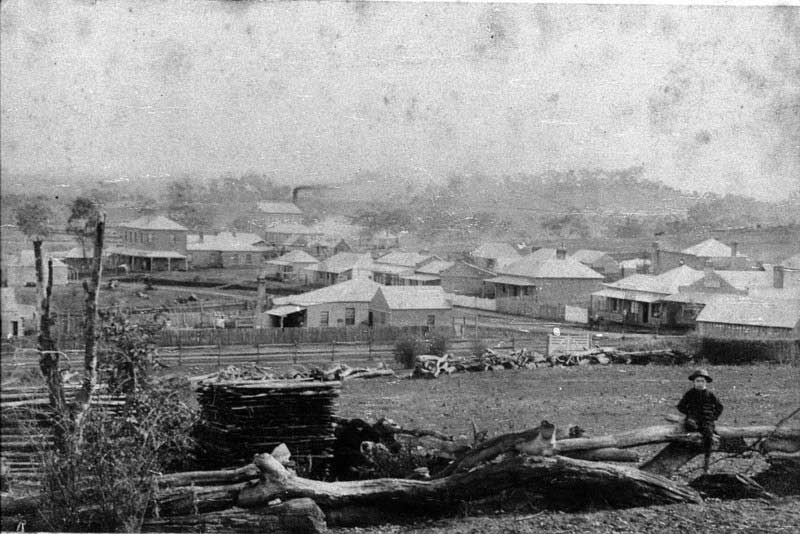
collection. Reproduction: Peter de Waal
They went for a walk along a road at Millthorpe, and then up a lane, where Farrell assaulted her.
They went back to town, had a little talk and an ice cream, and then she went to the pictures, where she met her sister.
On reaching home at Guyong her mother was told something, and they then returned to Millthorpe.
The accused, in evidence, said he met the girl at 4 o’clock and again after tea, when they went for a walk. He showed her a letter he had received, and said, “It is a nice sort of letter to write to a chap?”
She said she did not write the letter, but Edie McCann did. He was informed that McCann was about 17 years of age—the same age as Murphy.
They went for a walk, and he had the girl’s consent to act as he did. On their return to town he shouted the girl a drink and a ticket to the pictures.
Mr Campbell, addressing the jury, said the girl had consented to the commission of the offence, and the evidence showed that accused believed the girl was over 16 years of age. Could they place much credence on the girl’s story?
DRAMATIC STORY
He contended that they could not. First he told a dramatic story of screaming and the man placing his hand over her mouth; but later in the court at Millthorpe she frankly admitted that she was a consenting party.
Regarding the age of girls, he frankly admitted that he could not tell the age of modern girls. In these days of decreasing skirts and decreased morals, he believed the time had arrived when he law should be altered to provide protection for young men against a certain class of young woman.
The letter the accused had received was an invitation. It was whilst they were discussing the letter, Mr Campbell said, that the accused ascertained the girl was over the age of consent.
His Honor [Judge Thomson] pointed out that if the jury believed the accused had reasonable grounds for believing that the girl was over 16 years of age, they must bring in a verdict in his favor. The girl had admitted that she had acquiesced in the interference. But if the accused had a clear conscience, why did he at first deny having been out with the girl? He could have said that he was out with her and had her consent.
He spoke of the letter put in as evidence, and said the sending of that or similar letters to boys might or might no affect her veracity or truthfulness in the eyes of the jurymen.
Such letters—which had been described as “pretty hot”—certainly showed a lack of moral sense and responsibility. They were an encouragement to men, and there might be a necessity, as had been mentioned, of bringing in a law to protect men against such individuals. If the jury placed reliance on the girl’s story in the witness-box, and were satisfied she was speaking the truth, they would have to bring in a verdict of guilty.
~ ~ ~ ~ ~
The Leader, Wed 1 May 1929 7
ONLY QUARTER SESSIONS
CASE.
———◦———
MILLTHORPE YOUTH CONVICTED.
————
A letter and article of ladies’ under clothing in miniature were handed in as exhibits in the only case that was set down for hearing at the Orange Quarter Sessions, on Monday, Edward Jago Walter Farrell, 22 years of age, and a resident of Millthorpe was charged with carnally knowing a girl, [Neta Johanna Murphy], under the age of 16 years. He pleaded not guilty, and was represented by Mr WR Campbell, whilst Mr BV Stacy conducted the case for the Crown. His Honor Judge Thomson, presided.
The jury that was empanelled was: Arnold John Boyd, Donald Henry, Stuart McKay, John Anthony Stuart McKay, Archibald McKay, Thomas James Daniel, John Patrick Linfield, Charles Hawke, Samuel Brewer, Alexander Fitzgerald, Thomas Plowright Sharpe, Leonard Cooper, and John Melbourne Allman.
The accused exercised his right of challenging jurymen on four occasions.
Stating the facts of the case, Mr Stacy said that the age of the girl was 14 years and 8 months, at the time of the alleged offence. She would tell of all the happenings on the day and night of February 23. At the Millthorpe police station Farrell had at first denied committing the offence, but later admitted it. He told the police that he thought the girl was nearly 17 years of age, and she said “It’s a lie.” The jury, to discharge the defendant, had to find that he believed the girl to be over the age of 16 years, and that he had reasonable grounds for such a belief.
The girl, [Neta Johanna Murphy], was the first witness called, and, in a clear voice, she said that she resided at East Guyong. She went to Millthorpe on February 23, and met the defendant. At 6.40 that evening she saw him again, and he suggested that they go for a walk. They went towards the Showground, and turned into a lane about three-quarters of a mile from Millthorpe, where she alleged she was assaulted. Farrell placed his hand over her mouth to prevent her calling out. On her return to Millthorpe she left the defendant and went to the pictures. Her mother took her to Dr Jefferis. There was no talk of age between herself and the defendant.
Mr Campbell: Do you say that the alleged assault took place without your consent?
Witness: No.
At the Millthorpe Police Court you said that it was without your consent?—Yes.
And later amended that statement?—No.
You walked back to Millthorpe with him and he bought you a ticket for the pictures?—Yes.
Do you still say that you had no conversation about your age?—Yes.
Did he show you a letter?—Yes.
And he asked you whether you had written it?—Yes.
And you said you did?—No.
And then said that another girl had?—Yes.
Did he ask you if you had written such letters to other boys?—He knew.
Did he not ask you who the other girl was?—No.
Did he ask you how old she was?—No.
Didn’t you say that she was about as old as you were, and you would be 17 years in May?—No.
Did the assault take place with your consent?—No.
It was not until near the end of your evidence at Millthorpe that you said you consented?—Yes.
His Honor: Did he show the letter to you only once?
Witness: Yes.
Sergeant W[illie] G[uy] Jones deposed that on the night of February 23 he went to Dr Jefferis’ surgery, and saw the girl’s mother. He later saw Farrell. At the police station the defendant denied going out walking with the girl, and she then said that she had been walking with the accused and that he had assaulted her. Farrell replied that she had consented. Witness asked the girl if anything had been said about her age, and she replied, “No.” The defendant said, “Didn’t you say that you were nearly 17, as we were going through the sub-way?” and the girl replied “It’s a lie.”
Mr Campbell: She never told you that she had consented.
Witness: No.
Dr [James T] Jefferis, of Millthorpe, formally deposed that he had examined the girl and found that she had been interfered with.
Mr Campbell: The girl was not in the least agitated?
Witness: No.
Mr Stacy tendered the girl’s birth certificate.
In a statement from the dock, the defendant said that when he and the girl were going for a walk, he showed her a letter. At first she said she had written it, but later denied it, and said that another girl had done so. He asked her how old was the girl who had written the letter, and she said, “About as old as I am, nearly 17.” He then was led to believe that the girl was over 16. When in the lane she agreed to a request he made. Shortly afterwards they returned to Millthorpe, and he bought two tickets for the pictures.
In his address to the jury, Mr Campbell said that the question to be answered was whether the girl’s evidence regarding any conversation about her age could be believed. The girl, he said, had told untruths to Sergeant Jones, and also her evidence was unsatisfactory. He contended that her conduct could not be expected from a girl of 14 years, and that the defendant thought she was nearly 17. He would defy any man to tell a girl’s age. In these days of decreased skirts and morals, he thought that it was questionable whether there should not be a law to protect young men. The girl first said that she had written the letter, in which was enclosed a small pair of bloomers. Part of the letter read, “I hope we don’t need these for many years.” Later, however, she denied having written the letter.
Mr Stacy drew the attention of the jury to the girl, and asked if any man could think she was nearly 17 years of age. It appeared more likely, he said, that Farrell had shown her the letter in the afternoon, and not at night under the sub-way.
Summing up, His Honor pointed out that the question to be decided was whether the accused had committed the offence, knowing that the girl was under 16 years of age. At the Millthorpe police station he had denied being out with her, until confronted by the girl, and the jury had to decide whether Farrell had a clear conscience at that time. The girl had at first admitted that she had sent letters of a similar nature to that received by Farrell. The jury would probably think, as had the defendant, that the letter was a pretty hot one, and showed a lack of moral sense. If the accused was endeavouring to ascertain her age when speaking about the letter, it appeared strange that he had denied to the sergeant that he had been out with her.
After a retirement of nearly half an hour, the jury returned a verdict of guilty.
Sergeant Jones stated that Farrell had two previous convictions at Sydney and Muswellbrook, one for bestiality, and one for stealing.
His Honor informed the accused that he could not deal lightly with the charge, for he had committed a serious offence, the maximum penalty for which was ten years’ imprisonment. Young girls must be protected, and the law provided for that. He sentenced Farrell to 18 months’ hard labor.
…
LOCAL AND GENERAL.
———◦———
…
DEFAULTING JURYMEN.
The following jurymen failed to answer their names when called at the Quarter Sessions, on Monday, and they were fined £2 each: George Pearson, Christopher Beplate and Michael James Connolly. The fines imposed upon John Henry Evans and William H Bentley for not attending the previous sittings of the court were remitted by His Honor, Judge Thomson.
~ ~ ~ ~ ~
Singleton Argus, Wed 1 May 1929 8
EXTRAORDINARY SURGICAL
FEAT
———◦———
AIR INTRODUCED INTO
MAN’S BRAN.
————
…
At Orange Quarter Sessions, Edgar Farrell, aged 23, was convicted of an offence against a girl 14 years and 8 months. The police stated that Farrell had previously been convicted of stealing at Muswellbrook, and for a serious offence in Sydney. His Honor, in imposing a sentence of 18 months’ imprisonment, said that girls of tender years must have the protection which the law provides for them.
~ ~ ~ ~ ~
The Mudgee Guardian and North-Western Representative, Mon 6 May 1929 9
EIGHTEEN MONTHS
————
MILLTHORPE ASSAULT.
————
ACCUSED’S PREVIOUS
CONVICTIONS.
Edgar Jago Walter Farrell, 23, was charged before Judge Thomson at the Orange Quarter Sessions, with an offence against a girl of 14 years and eight months at Millthorpe. The jury, after an hour’s retirement, found the accused guilty.
The police said that Farrell had previously been convicted of stealing at Muswellbrook and of a serious offence in Sydney.
Farrell was sentenced to 18 months’ imprisonment.
~ ~ ~ ~ ~
The Sydney Morning Herald, Fri 24 May 1929 10
LAW NOTICES.
———◦———
Friday, May 24.
———
SUPREME COURT.
Term List.—in the Banco Court.—At 10 am.—Criminal appeals: R. v Gibson; R. v Foley; R. v Montrose; R. v Cookson; R. v Ashton; R. v Watson; R. v Farrell; Stenning v Jones, stated case.
~ ~ ~ ~ ~
Singleton Argus, Mon 27 May 1929 11
GLEANINGS
———◦———
…
Edward Jago Walter Farrell, who appealed to the Full Court of Criminal Appeal on Friday against his conviction at Orange of an offence against a girl under 16, said that he had the consent of the girl. “The law was passed to protect girls against themselves and others,” said Mr Justice James. Farrell said he had been going about with other girls who told him they were over 16, and they were not. “That shows the sort of girls there are about,” commented Farrell. His appeal was dismissed.
~ ~ ~ ~ ~
Edward Jago Walter Farrell, Gaol photo sheet 12
![SRNSW: NRS2467, [3/6124], State Penitentiary photographic description book, 21 Mar 1929-8 Aug 1929, No. 23833, p. 175.](../../images/trials/1922-Farrell-6124-gaol-photo-23833.jpg "SRNSW: NRS2467, [3/6124], State Penitentiary photographic description book, 21 Mar 1929-8 Aug 1929, No. 23833, p. 175.") |
Gaol Photo Sheet - Transcribed Details
No. 23833
Date when Portrait was taken: 25-5-1929
Name: Edward Jago Walter Farrell
|
Native place: Molong Year of birth: 17-11-1906 Arrived Ship: Trade or occupation Religion: R. C. Education, degree of: R & W Height: 5' 6½" Weight On committal: 129 Colour of hair: Brown Colour of eyes: Grey |
Marks or special features: Scar on back edge of right upper arm. Three scars on left shin |
|
(No. of previous Portrait .. 19083) CONVICTIONS |
|||||
|
Where and When |
Offence. |
Sentence |
|||
|
Muswellbrook PC Orange Q.S |
1 29 2 |
2 4 5 |
1927 1929 1929 |
Stealing Carnally know a girl under 16 years of age Appealed – Appeal refused 24-5-1929 |
£14-5-4 or 4 months Hl 18 months HL. |
|
One previous conviction |
|||||
1 The Daily Telegraph, Tue 19 Dec 1922, p. 10.
2 The Sydney Morning Herald, Tue 19 Dec 1922, p. 6.
3 SRNSW: NRS2467, [3/6108], State Penitentiary photographic description book, 5 Sep 1922-24 Mar 1923, No. 19083, p. 267.
4 The Leader, Wed 27 Feb 1929, p. 1.
5 Barrier Miner, Tue 30 Apr 1929, p. 4.
6 The Forbes Advocate, Wed 1 May 1929, p. 5. Emphasis in original and added.
7 The Leader, Wed 1 May 1929, pp. 1, 2. Emphasis added.
8 Singleton Argus, Wed 1 May 1929 p. 4.
9 The Mudgee Guardian and North-Western Representative, Mon 6 May 1929, p. 8.
10 The Sydney Morning Herald, Fri 24 May 1929, p. 7.
11 Singleton Argus, Mon 27 May 1929 p. 1.
12 SRNSW: NRS2467, [3/6124], State Penitentiary photographic description book, 21 Mar 1929-8 Aug 1929, No. 23833, p. 175.