Robert Adlard, 1915
Below also see: Walter George Rowley and Robert Adlard, 1918 – Abominable offence
Hilton Claude Peers and Robert Clifford Adlard, 1920,
Robert Adlard, 1921,
Robert Adlard, 1922
Robert Adlard and James Donaldson, 1923
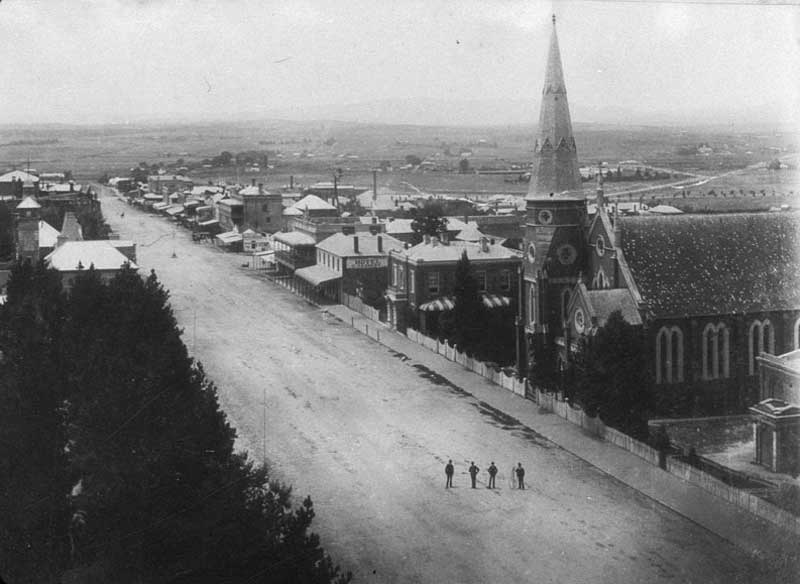
Reproduction: Peter de Waal
The Bathurst Times, Tue 15 Jun 1915 1
LOCAL AND GENERAL.
————
…
A HUSBAND’S PRIVILEGE.
A fine of 30/-, or 10 days, was imposed by Mr C Jennings, PM, at the Bathurst Court yesterday, upon Robert Adlard, for having used indecent language in William-street on June 12. The evidence of a police-constable was that Adlard used the language complained of to his wife. “I suppose he considers it a privilege to use such language to his wife,” remarked the Magistrate.
Walter George Rowley and Robert Adlard, 1918
The Bathurst Times, Wed 6 Feb 1918 2 & 3
THE HALL CASE
————
HEARING AT TO-DAY’S
SESSIONS.
———
THE STORY RECOUNTED.
———
VERDICT OF GUILTY.
———
Charles Henry Hall pleaded not guilty at the Bathurst Quarter Sessions this morning, before Judge Scholes and a jury, to a charge of maliciously wounding John Albert Dalton at Bathurst on November 16.
Mr FS Boyce (instructed by Mr FB Kenny) appeared for accused.
Mr TS Crawford was the Crown Prosecutor.
THE POLICE STORY.
Sergt Capewell stated that on November 17 he proceeded to Mount Rankin and saw accused, who said he was in Bathurst the previous day. The sergeant to Hall that there was a disturbance at the Grand Hotel, and a man named Dalton was assaulted, and that Hall was suspected of having assaulted him. Hall, at the sergeant’s request, then described his movements on the previous day. Having taken a load of rabbits in in the morning, he remained in town all day. In the morning he went to Davis’ and Hartland’s hotels and stayed in the latter hotel some time. In the afternoon they visited several hotels, and after having a drink at the Grand Hotel he, with a friend, walked out on to the footpath. At that moments a stout, nuggety maa, [sic] dressed in dark clothes, came out of the hotel and asked accused and his friend to have a drink. Accused told the stout man he thought he had had enough drink. The stout man then caught accused by the shoulder of his coat and told him to come in, as he had money to pay for them. They went in and ordered drinks, which were put on a ledge. Dalton then started to talk about the was, and said that those who had gone to the war were mongrels, and those who were going to the war wanted their heads blowing off. Accused told Dalton he was no man at all, and said he was a bit of a boxer himself. Dalton thereupon hit accused, knocked him against a chair, and kicked him on the knee. Accused then picked up his glass of brandy and threw it in his face, and Dalton fell on the floor. Accused helped to lift Dalton up, when Mr Kenna came in and said, “What are you doing here?” Accused replied, “We have been having a bit of a rough.” Mr Kenna told accused that he had better call a cab and send Dalton to a doctor. A cab was called, Dalton was taken to a doctor accused saw the doctor have a loom at him, and saw the cab drive away again. Accused then went down to Flanagan’s, when a soldier wanted to fight him. He told the soldier he did not want to fight him, and he walked down to the corner of Howick-street, where another soldier wanted to fight him. He then ran through Flanagan’s shop, out through the back, and into Rankin-street, thence to Ryan’s in Russell-street, where he remained and had tea, and afterwards got his horse and sulky and drove Miss Ryan to Mount Rankin. He said that he did not see any water bottle in the parlor at all, and the statement that he struck Dalton with a water bottle was untrue; also that he stabbed him with the jagged end of the broken water bottle was untrue; all he did was to throw his glass of shandy at him and hit him in the face. The sergeant then brought accused to Bathurst and charged him. Accused said that he went to the Grand Hotel with Stanley, but Stanley had walked out before he threw the shandy at Dalton, and two soldiers came in while Dalton was lying on the floor. The fragments of a water bottle produced were handed him on the 20th by George Primmer, groom at the hotel.
HIS HONOR IRRITATED.
Mr Boyce: Did you take a note while Hall was speaking?—Yes, I took a statement.
Let me have a look at it?—Yes.
His Honor: Did he sign it?—Yes.
Well, why was it not put in before, it would have saved us twenty minutes’ writing?
Crown Prosecutor: We had direct evidence, and thought it would be better than the accused’s statement.
His Honor: He signed it, and it is his statement; you should have put it in long ago.
Crown Prosecutor: I only saw the statement a few minutes before the court, and did not have time to read it.
His Honor: Never mind; it is his statement, and it does not matter whether you have seen it or not.
The signed statement was then read by witness and put in as evidence.
Mr Boyce: When did you interview Dalton?—I think it was on the 20th.
And when did you first see Primmer and the barmaid?—On the same day—20th.
MEDICAL EVIDENCE.
Dr HJ Harris stated that on November 16 he first saw Dalton in a cab, in front of witness’ surgery. He examined him roughly and sent him to his home, where he afterwards visited him. On inspection he found one cut over the left eye, four cuts on the left cheek, four cuts underneath the chin. He stitched the cuts. The cut over the eye was a long cut, and was pretty deep. The wounds could have been caused by a broken glass bottle coming in contact with Dalton’s face.
THE MAN WHO WAS HIT.
John Alfred Dalton, proprietor of the Milltown Hotel, Bathurst, stated that in the afternoon of November 16 he was in the parlor of the Grand Hotel when accused and another man came in, and Hall said, “What about a drink?” Witness replied, “Yes, you can have a drink.” The barmaid refused to serve the drinks, saying that she had instructions not to serve them with any drink. This appeared to make Hall angry as well as witness, and that he was as good a man as witness. Witness told Hall he did not want to have anything to do or say to him. About this time Hall’s mate left, and Hall then challenged witness to fight, but that he did not think Hall could fight his own shadow. Witness then went to sit down in a chair when he “got a crack on the forehead.” He regained consciousness at his home. There was no one but the two of them in the bar at the time. Accused said something about being at the front, and witness told him that if all the eligible went to the front there would be no need for conscription. On the table in the parlor was a water bottle.
Mr Boyce: You were drunk yourself, weren’t you?—Yes.
Was Hall sober or drunk?—I don’t know much about Hall, but I would say he was sober.
What hotels were you in that morning?—I was at Flanagan’s and McSorley’s hotel, and the Grand.
Where were you during the lunch hour?—Part of the time att McSorley’s and part at Flanagan’s hotel.
It was getting close to three o’clock and you had had nothing since breakfast?—Nothing since 10 o’clock.
And you were turned out of Flanagan’s hotel?—I was asked to leave.
Who asked you to leave?—Mr Flanagan.
Weren’t you asked to leave Flanagan’s because you were drunk?—No.
And weren’t you talking conscription at Flanagan’s?—The others were.
Haven’t you got unusual muscular development?—No, I have no muscle at all; it is all fat. (Laughter.)
Haven’t you often bragged or boasted about your boxing?—No; I never boxed in my life.
Dalton’s hat, with a cut in the front of it, was marked for identification.
You say Hall struck you without any provocation?—Yes; it was all done in a couple of minutes.
Did you ever have any words with Hall?—I never saw him before in my life.
Did you meet them in the parlor, or out in the street first?—In the parlor.
WHAT THE GROOM SAW.
George Primmer, groom at the Grand Hotel in November last, said that on November 16 he saw accused and Dalton in the parlor of the Grand Hotel about three or four o’clock. He was going from the back along the Russell-street footpath to the bar to get a beer. As he was passing the parlor door he heard accused say, “You can’t fight, you b—–; I can fight you with a bottle.” Accused then picked up the big water bottle, hit Dalton on the head, and knocked him down. Then accused picked up part of the broken water bottle and jabbed Dalton several times in the neck. Witness then went in and asked accused what he was doing. Accused said, “If they come, you know nothing.” Witness replied, “You will find I know too much for your liking.” Accused then asked for a cloth to wipe up the blood. Dalton was taken away in a cab to the doctor.
THE BARMAID'S ACCOUNT.
Kitty McKay, who was employed as barmaid at the Grand Hotel on November last, said Dalton was in the parlor on the day in question, and Hall went round to him. There were some words exchanged in the parlor, but she did not take particular notice. She then heard a commotion, and when she saw Dalton he was lying on the floor with his head in a pool of blood, and accused bending over him. The groom was also there. She then ordered Hall out of the parlor, but he refused to go. There were no tumblers about, but there was a water bottle full of water on the table in the bar parlor. She refused to serve Hall just before the assault. The fragments of glass produced were on the floor.
Cross-examined by Mr Boyce, witness said that when she went in to the parlor after the commotion Hall asked her for a towel to mop up the blood.
Mr Boyce: You said in the lower court that no one else but accused and Dalton was in the parlor when you went in?—Yes.
And now you say the groom was in there?—He was at the door.
This closed the case for the Crown.
HALL'S EXPLANATION.
Charles Henry Hall (accused), who for the past eight months had been rabbit trapping, said he was in the bar of the Grand Hotel on November 16. The statement he made to the police was correct. When he got to the Grand Hotel with Mr Stanley he had two drinks in the bar, which were served by the barmaid. They then walked out on to the footpath in Russell-street, when Dalton walked out of the parlor bar door. Dalton was then “in line o’ drink.”
Mr Boyce: What do you mean?—He had been having drink.
Witness (continued) corroborated the statement he made to the police, which was almost identical with what Sergt Capewell related. After the altercation about conscription, witness said that Dalton struck him with his fist on the chest and kicked him on the knee twice on the left side of the the [sic] back. Dalton then made another kick at witness, and then witness caught hold of Dalton’s right leg to try and trow him. In trying to save himself Dalton fell partly on the table and the tablecloth came partly off; there was a crash like a flower vase falling on the floor at the time. Dalton got free and was going to strike him, when he picked up the glass of shandy and hit Dalton in the face with it and knocked him out. Primmer was never in the room while witness was there. He denied the conversation with Primmer.
The Crown Prosecutor: You did not see any water bottle there?–No; there was no water bottle there.
Are you sure: I did not see any there.
His Honor: You first saw definitely that there was no water bottle there; now you say you did not see any there.
Crown Prosecutor: Did you see the wounds on Dalton’s face?—Yes, and I wiped the blood off him.
Do you mean to say that Dalton’s wounds could be caused by the thrust of a shandy glass?—Well, it might have cut him a bit, and the other cuts might have been caused by his falling on the broken glass.
You are a pretty good athlete?—I can neither read not write. (Laughter.)
You are a good walker?—Yes, but I am not much of a fighter, as my fingers are bent up.
It is not a fact that you are a man adicted [sic] to drink and bad language generally?—No, not bad language.
No were not offending Dalton?—No.
Isn’t it a fact that you are a regular drunkard?—No.
Haven’t you been before the court?—Yes.
Was your coat on or off?—I never had my coat off.
Miss McKay (recalled by Mr Boyce) said Mr Dalton was slightly under the influence of drink, but was not drunk.
A VERSATILE WITNESS.
James John Hill, garbage carter, in the employ of the council for about two years, in the course of about a quarter of an hour’s said that he saw Dalton taken away in a cab on November 16, from the Grand Hotel, and saw the groom in the yard of the hotel, who said, “I have one of the best cars you ever saw in the yard,” and asked witness to go and have a look at it. They were going to the car, and the groom picked up a pipe case containing a silver mounted pipe. Shortly after that someone called out to bring up a bucket of water and a mope at once to the bar. Witness then walked with the groom along the Russell-street footpath, and they saw some soldiers putting a man into a cab.
OTHER WITNESSES.
Walter Thomas Wardman, cab driver, who drove Dalton to the doctor, said that Hall was completely dressed when Dalton was being put in the cab.
Harry Flanagan, licensee of the Edinboro’ Castle Hotel stated that Dalton was at his hotel at 1.30 on November 16, while he was having dinner. Witness went into the bar and Dalton was in a sober condition. He might have had a couple of drinks, but no more.
Robert Adlard, greengrocer, gave evidence as to Dalton rolling up his sleeves at his own hotel and showing his big muscle, saying at the time that he was a fighting man.
George John Stanley, dealer, said that Dalton roled [sic] up his sleeve on the footpath at the Grand Hotel, and, showing his muscle, said he was a fighter and a puncher. They went inside and had a drink, and Dalton started talking conscription. Words passed between Dalton and Hall. Kenna came in and ordered the lot of them out. They stopped there a few minutes, and Dalton and Hall went on with the conscription argument. Dalton then hit Hall on the chest, and witness went out then, as they were “too big for him.”
The Crown Prosecutor: So you ran away when your friend Hall got into trouble?—I wasn’t going to stop there and get punched.
So that is your idea of life?—Yes; no one would help me if I got into trouble.
Well, then, I don’t want to ask you any more questions, thank you.
Counsel then addressed the jury.
His Honor, in summing up, said the cuts as described by the doctor were sufficient to justify the law as to the wounding, and accused admitted he caused the wounds. The defence had put it that Dalton conducted himself in such a manner towards Hall that Hall was justified, under provocation, in throwing a glass at Dalton. Were the wounds done maliciously, that was, with malice, spite, hatred, with intent? If the wounding were done maliciously, he was guilty of the charge; if it were not done maliciously, he was not guilty. The Crown had to prove the case to the satisfaction of the jury beyond any reasonable doubt. The witness for the Crown stated that Hall, under a very slight provocation, had picked up a decanter and struck Dalton over the head with it. If the jury found that that evidence were correct, they would find that Hall was guilty, because any person under any provocation would be guilty if he picked up a murderous weapon such as a decanter and struck a man over such a vital place as his head. Dalton did not know what caused the wound. He said he was going to sit down in a chair when he felt the blow on the head, and did not know any more. The only evidence to corroborate that was the evidence of Primmer. Were the pieces produced the fragments of a water bottle? Primmer said he saw Hall strike Dalton with the water bottle and then jab him in the neck with the neck of the bottle. The jury should see if they could find the broken neck of the bottle and also if there were any blood marks on it or any of the other fragments. The jury might find something in the fragments to influence them in arriving at their verdict. Primmer had denied all the evidence of Hill, [sic] and said it was all a lie. If Hill were telling the truth, Primmer was telling lies. It was not a case in which either could be mistaken. If one or the other of the persons’ evidence were true, the other was telling lies. Where was the motive for Primmer endangering Hall’s liberty by coming to court and telling lies.
On the other hand, proceeded the Judge, why would Hall assault a man he did not know without any provocation? Dalton, after a little argument, told Hall he could not fight his own shadow, and that seemed to be an incentive for Hall to assault Dalton. Hall seemed to be incensed at the assertion that he “could not fight his own shadow.” Then there was the language which Dalton was said to have used, and, if used, should have caused anyone who heard it to blush. After the jury had considered all the points they would come back to the point—whom they would believe? If the Crown had satisfied them beyond a reasonable doubt, they would find the accused guilty.
The jury retired to consider their verdict.
After about an hour’s retirement the jury returned, and the foreman asked: “Is the broken glass bottle produced in the same condition now as it was when it was picked up immediately after the occurrence?”
Witness Primmer (re-called): Yes.
Another jurymen: Was the tumbler broken?
His Honor: There was nothing said about a broken tumbler by this witness.
Another jurymen: What was done with the broken water bottle after the pieces were picked up off the floor?
Witness Primmer: I wrapped them up in a piece of paper, gave them to Mr Kenna, and he gave them to the police.
His Honor: Did you see him give them to the police?
Witness Primmer: Yes.
The jury again retired, and returned later with a verdict of guilty. Hall was remanded for sentence.
~ ~ ~ ~ ~
The Bathurst Times, Mon 25 Feb 1918 4
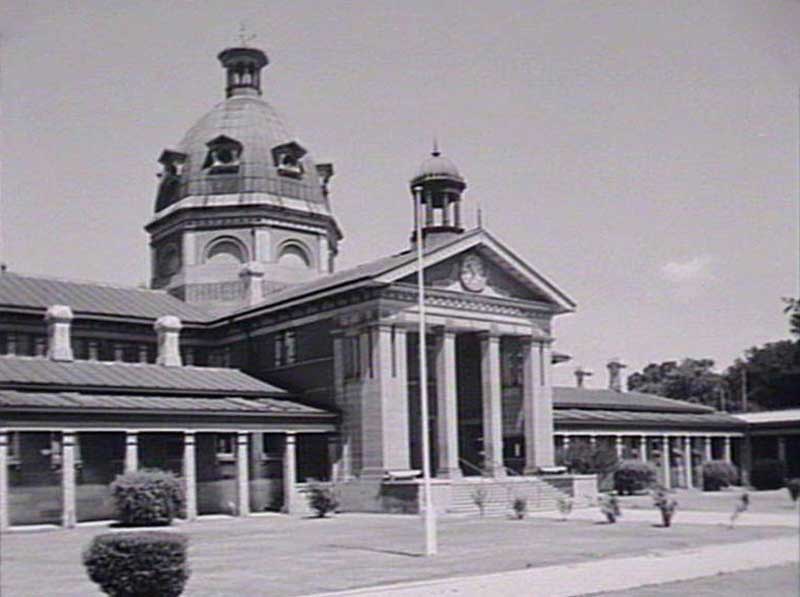
Reproduction: Peter de Waal
LOCAL AND GENERAL
————
…
AN ABOMINABLE OFFENCE.
Walter George Rowley, gardener, aged 62, and Robert Adlard, 36, were charged at the Bathurst Police Court this morning, before Mr C Jennings, SM, with having committed an unnatural offence in Rankin-street, on Saturday night. Evidence was given by Sergeant Loomes, Dr Busby, and Constable Flanagan. Both accused when charged pleaded not guilty, and reserved their defence. They were committed for trial at the Bathurst Quarter Sessions on May 22. Bail was allowed, self in £50 and one surety in £50, or two sureties in £25. Mr FB Kenny appeared for the two accused.
~ ~ ~ ~ ~
Leader, Fri 1 Mar 1918 5
AN ALLEGED ABOMINABLE
OFFENCE.
A case was heard by Mr C Jennings, SM, at the Bathurst police court on Monday, when two married men, named Robert Adlard (36) a green grocer and Walter George Rowley, a gardener, were charged with what was described as an abominable offence. At the instigation of Mr Jennings the court was closed during the hearing. The accused were defended by Mr FB Kenny, after evidence by Constable Flanagan, Dr Busby, and Sgt Loomes, accused were both committed for trial at the Bathurst Quarter Sessions on May 2. Bail was allowed in each case on one surety of £50 or two of £25.
~ ~ ~ ~ ~
The Bathurst Times, Thu 2 May 1918 6
TAKING OF THE OATH
————
An interesting discussion concerning the formal taking of the oath by a witness occurred at the Bathurst Quarter Sessions to-day, during the cross-examination of constable Flanagan, chief Crown witness in a case.
Mr W Curtis, for the defence, asked witness: “When you took the oath a few minutes ago, what did you say?”
Witness: “So help my God.”
You said “So help my God?—Yes.
You did not say “So help the God?”—No.
Is that the extent of your knowledge with regard to taking the oath?—As far as I know.
How long have you been in the force?—Two and a half years.
And is that the best you know about making the oath?—As far as I know.
His Honor: Most people take the oath by saying “So help my God.” and I have got tired of correcting them.
~ ~ ~ ~ ~
The National Advocate, Fri 3 May 1918 7
SERIOUS CHARGE
———✦———
TWO MEN ACQUITTED.
————
Robert Adlard (36) a green-grocer and Walter George Rowley (65), a gardener, were arraigned before Judge Scholes and a jury at the Bathurst Quarter Sessions yesterday on a charge of having committed a serious offence at Bathurst on February 24.
Mr RJ Browning prosecuted for the Crown, whilst the accused were represented by Mr Curtis, instructed by Mt Kenny, of Bathurst.
Both accused pleaded not guilty.
In his evidence, Constable Flanagan [see The Bathurst Times article above] declared that he was walking along Rankin St and had no doubt about what he witnessed. Dr [Hugh] Busby 8 also gave evidence for the Crown.
The defence was a point blank denial on oath of Constable Flanagan’s evidence. Accused had unblemished records.
In his address to the jury Mr Curtis pointed out that he did not desire the jury to decide whether Constable Flanagan was a liar or not, but he stressed the point that there were cases in which constables, in their zealousness, often imagined things which they really believed to be true. Certainly the jury would recognise that Constable Flanagan had shown an amount of bias in connection with the case. This was demonstrated while the constable was giving evidence.
The jury deliberated during the dinner hour, and believed the defence. The verdict was “Not guilty” and the accused were liberated.
Hilton Claude Peers and Robert Clifford Adlard, 1920
The Bathurst Times, Fri 9 Apr 1920 9
A DANCE AFTERMATH
————
ARGUMENT ABOUT A FIGHT.
————
STORY IN BATHURST POLICE
COURT.
————
The story of a “friendly” yarn about the Green-Evans fight at the conclusion of a dance in Bathurst on Saturday night was told Mr WN Fincham, SM, at the Police Court this morning, when Hilton Claude Peers (26), shearer, and Robert Clifford Adlard (21), dealer, were charged with behaving in a riotous manner on the morning of April 4. Both pleaded guilty.
Sergeant Jenkinson told Mr Fincham that about 3.45 am on Sunday morning he, in company with Constable Wallace, saw several young men talking very loudly near the Park Hotel in George-street. Two of the men were “shaping up” to another young man, who was backing away. As soon as the police arrived they ran away, but the defendants were apprehended.
Mr Fincham: Can you tell what started the argument?
Sergeant Jenkinson: No.
Peers: I can, your Worship.
Mr Fincham: You can if you like.
Peers: We had been to the dance and left there about 1 am. We were discussing the Green-Evans fight when the row occurred. There was no fighting, language or drink.
Mr Fincham: Are there any previous convictions?
Sergeant Dunn: Ten against Peers and none against Adlard.
Mr Fincham: Peers will be fined 20s or seven days’, and Adlard 10s or three days’.
Robert Adlard, 1921
The Bathurst Times, Fri 28 Jan 1921 10
LOCAL AND GENERAL.
————
…
BAD LANGUAGE
———
Before Mr FWC Crane in the Bathurst Court yesterday Robert Adlard was charged with using indecent language. Sergeant Jenkinson said that Adlard used the language in his own home, but he could be heard all over the place, and created a nuisance. He was fined £3, with 8s costs, in default one month’s gaol.
~ ~ ~ ~ ~
The Bathurst Times, Thu 24 Feb 1921 11
LOCAL AND GENERAL.
————
…
“I’LL GO TO GAOL”
“I have never before been charged with “righteous’ behavior,” said Robert Adlard to Sergeant Dunne when the latter was reading out a prior list of convictions for the information of the SM Mr Crane in the Police Court to-day. Adlard was charged with being drunk. When told by the Bench that he was fined £1, remarked, “What! £1 for being drunk. I want time to pay.”
The SM: “Has he been on bail?
Sergeant Dunne: “Yes, he wan bail out at 11 o’clock last night.”
Adlard: “I was locked up for six hours.”
The SM: “No time to pay. The police will send out for you.”
Adlard: “The police won’t send out, I’ll go to gaol.”
The SM: said “Put that man out.”
He was taken to the cell.
~ ~ ~ ~ ~
The National Advocate, Fri 25 Feb 1921 12
GENERAL NEWS
———◦———
…
RIOTOUS BEHAVIOR.
————
Robert Adlard (43), a green grocer, was charged before Mr FWC Crane, SM, at the Bathurst Police Court yesterday with having behaved in a riotous manner on the previous evening. Defendant who was still apparently suffering the effects of the morning after the night before, was fined £1. He asked for time to pay, but the Magistrate, on being informed that defendant had not spent the night in the lock-up, refused the application, reminding defendant that the police would send out for him for the amount of the fine.
Adlard interjected: “the police won’t sent out; I’ll go to gaol.” He did so.
~ ~ ~ ~ ~
The Bathurst Times, Wed 23 Mar 1921 13
LOCAL AND GENERAL.
————
…
ALLEGED RIOTOUS BEHAVIOR
George Winslett and Robert Adlard were charged at the Bathurst Police Court this morning before Mr JD Walker, CM, with behaving in a riotous manner in Durham-street yesterday. On the application of the police they were remanded till Saturday next to allow of their being dealt with by the SM. Bail was allowed in one surety of £3 each.
~ ~ ~ ~ ~
The National Advocate, Thu 24 Mar 1921 14
GENERAL NEWS
———◦———
…
ALLEGED RIOTOUS BEHAVIOR
————
George Winslett, (32) a carter, and Robert Adlard (42) a dealer, appeared before Mr JD Walker CM, at the Bathurst Police Court yesterday, charged with having behaved in a riotous manner in Durham-street, on the previous day. On the application of the police they were remanded till Saturday next, bail being allowed in each case in sureties of £3.
~ ~ ~ ~ ~
The National Advocate, Tue 29 Mar 1921 15
GENERAL NEWS
———◦———
…
BOTH IN IT.
George Winslett and Robert Adlard (43) appeared before Mr FWC Crane, SM, at the Bathurst Police Court on Saturday morning charged with behaving in a riotous manner in Durham-street. The police evidence was to the effect that they were fighting. Asked by the Bench who started the fight, Winslett laughed and said they started together. They were both in it. Defendants pleaded guilty and were fined £1 each.
~ ~ ~ ~ ~
The Bathurst Times, Tue 5 Apr 1921 16
LOCAL AND GENERAL.
————
…
A PERSISTENT DRUNK
———
“This man is becoming a nuisance about the town,” said Sergt Dunne at the Bathurst Police Court this morning when Robert Adlard was charged with being drunk. Mr JD Walker, CM, in fining defendant £1, in default seven days, advised him to keep away from the drink. Adlard promised to act on the advice.
~ ~ ~ ~ ~
The Bathurst Times, Wed 4 May 1921 17
SAYS HE’S PERSECUTED
————
A DEALER’S STORY
————
“DRAGGED OUT OF BED”
When Robert Adlard, 42, a dealer, appeared before Mr JD Walker, CM, at the Bathurst Police Court this morning he declared he was being persecuted and would have to get out of Bathurst.
Adlard was charged with having used indecent language at his home and within the hearing of people in Durham-street at 10.20 on the previous evening.
In remanding defendant till Monday Mr Walker fixed bail at £3 and told Adlard that he ought to “cut out the bad language and turn over a new leaf.”
Adlard indignantly denied having used indecent language. He said that Constable Lamrock, who was supposed to have arrested hm, lived next door and had a “nark” on him.
Senior-Sergeant Dunne: Stop that, Adlard. You know that’s not right.
Adlard: I know it’s too right. Last night the wife and I were having a bit of a tiff when the police came in, made me put my trousers on, dragged me out of bed, and down to the lock-up. They would not even let me put my boots on. I have my wife and two children there and I never use indecent language.
Defendant provided the bail money and was liberated till Monday.
~ ~ ~ ~ ~
The National Advocate, Thu 5 May 1921 18
GENERAL NEWS
———◦———
…
ALLEGED INDECENT LANGUAGE.
————
Mr JD Walker, CM, occupied the Bench at the Bathurst Police Court yesterday morning. Robert Adlard, a married man, was charged with using indecent language in his residence and within the hearing of persons passing in Durham-street. He was remanded til Monday next. Adlard entered into a recognisance of £3 on his own behalf to appear on that day. Before leaving the court he protested his innocence, saying he had a wife and children, and was not in the habit of using bad language. He also said he was being “persecuted” in Bathurst and wondered what would be done to him next. He complained that he was pulled out of bed and dragged off without being given time to properly dress himself.
~ ~ ~ ~ ~
The Bathurst Times, Mon 9 May 1921 19
MALIGNED HIS PARENTS
————
A FREQUENT OFFENDER FINED
————
When Robert Adlard (42), a dealer, re-appeared at the Bathurst Police Court this morning, charged with using indecent language within the hearing of persons in Durham-street on May 3, he reiterated the statement that the police had a set on him.
Mr FWC Crane, SM, occupied the Bench.
Constable Lamrock stated that he and Constable Butcher were on duty in Durham-street at about 10.20 on the night of May 5, and heard defendant, who was in his own house, using the language complained of, and a specimen of which was handed up to the Bench. Witness added that they invited Adlard outside and then took him to the lockup.
Adlard, who pleaded guilty, stated that the police pulled him out of his home and dragged him off to the lockup with only his trousers on. The police had a set on him.
Constable Lamrock: If I had a set on you you would have been here frequently.
The SM: I should think they would have a set on you for maligning your own parents as you have here (referring to the language on the paper submitted by the police).
In reply to the SM, witness said that the window of Adlard’s house was open and Adlard could be heard on the other side of the road.
Defendant was fined £3 or one months’ gaol.
~ ~ ~ ~ ~
The National Advocate, Tue 10 May 1921 20
INDECENT LANGUAGE
Charged with having used indecent language in his residence and within the hearing of persons passing in Durham Street on 3rd inst, Robert Adlard pleaded guilty before Mr Crane, SM, at the Bathurst Police Court yesterday. Constable Lamrock stated that at about 10.20 on the night of the 3rd, he and Constable Butcher after hearing the language complained of invited Adlard outside and took him to the lockup. A specimen of the words used was handed up to the Bench. Adlard admitted having used certain words, but complained that the police appeared to have a “set” on him. They pulled him out of the house without giving him time to properly dress. Constable Lamrock remarked that if the police had a set on him, Adlard would probably be before the court more frequently. Mr Crane said he should think the police would have a set on a man who used such language towards members of his own household. Constable Lamrock further stated that a window of the house was open and the language could have been heard on the other side of the road. Adlard was fined £3 the alternative being one month.
~ ~ ~ ~ ~
The National Advocate, Sat 11 Jun 1921 21
GENERAL NEWS
———◦———
…
ON LICENSED PREMISES.
George Winslett and Robert Adlard were charged at the Bathurst Police Court yesterday with having been found on licensed premises (the Globe Hotel) during prohibited hours. Both pleated guilty and were each fined 20/- with 8/- costs.
Robert Adlard, 1922
The Bathurst Times, Sat 29 Jul 1922 22
LOCAL AND GENERAL
—————
…
RIOTOUS BEHAVIOR
Robert Adlard, who had been arrested by Constable Wells, appeared before Mr JD Walker, CM, at the Bathurst Police Court this morning, charged with having been drunk and disorderly. In reply to the Bench defendant said that he was taking a bottle of wine and a bottle of beer home when he was challenged to a fight. He did not want to fight, the other man being the aggressor.
Mr Walker: “Drink seems to be the cause of your trouble.”
Defendant: “I was just taking home a couple of bottles. I think it is better to have it in my room than in the street.”
Mr Walker: “How many drinks a day do you have?”
Defendant: “About six or seven.”
Mr Walker: “look at all the money you waste. You ought to be putting it in the bank.”
Defendant: “ I ought to.” Defendant was fined 10s in default 48 hours’. He asked for a week to pay, but the application was opposed by Senior Sergeant Dunne, who told defendant that if he could find money for beer he ought to be able to find it to pay the fine. Two days were allowed.
Robert Adlard and James Donaldson, 1923
The National Advocate, Thu 1 Feb 1923 23
GENERAL NEWS
———◦———
…
DRUNK IN PUBLIC PLACE
Robert Adlard, 43, dealer, and James Donaldson 70, laborer, were each fined 10/- or four days, at the local Police Court yesterday, for being drunk in a public place, viz the yard of the Commercial Hotel. On a charge of using obscene language in Howick Street, Donaldson was remanded til this morning, bail allowed in the sum of £2. Mr JD Walker CM occupied the bench.
1 The Bathurst Times, Tue 15 Jun 1915, p. 2.
2 The Bathurst Times, Wed 6 Feb 1918, pp. 2, 3. Emphasis added.
3 Robert Adlard appears in this case as a witness.
4 The Bathurst Times, Mon 25 Feb 1918, p. 2. Emphasis added.
5 Leader, (Orange, NSW) Fri 1 Mar 1918, p. 8.
6 The Bathurst Times, Thu 2 May 1918, p. 2. Emphasis added.
7 The National Advocate, Fri 3 May 1918, p. 2. Emphasis added.
8 The Sydney Morning Herald, Wed 11 Sep 1929, p. 17.
“DR HUGH BUSBY.
————
Bathurst, Tuesday.
Dr Hugh Busby, one of Bathurst’s oldest medical practitioners, and Government medical officer here for many years, died last night after four weeks’ illness, which commenced with an attack of influenza and developed into pneumonia complications. He was 53 years old, and a son of the late Alexander Busby, who was bank manager at Taree and other centres, and a grand son of the late George Busby, who was assistant Colonial Surgeon in 1832, and later carried on private practice at Bathurst until his death in 1870. His great-grandfather was John Busby, Sydney’s first water supply engineer.
Dr Hugh Busby was educated at Newington College, where he distinguished himself in sport, and won the Wigram Allen Scholarship for Classics. He graduated from Sydney University, where he gained his blue for football, and joined the staff of Sydney Hospital. He was a member of the University Club and of the Australasian Pioneers’ Club. His widow was a daughter of Mr WS Moore, who was Minister for Mines and Agriculture in the Carruthers Ministry in 1904, and Minister for Lands in the Wade Ministry in 1907.”
9 The Bathurst Times, Fri 6 Apr 1920, p. 2. Emphasis added.
10 The Bathurst Times, Fri 28 Jan 1921, p. 2.
11 The Bathurst Times, Thu 24 Feb 1921, p. 2. Emphasis added.
12 The National Advocate, Fri 25 Feb 1921, p. 2. Emphasis added.
13 The Bathurst Times, Wed 23 Mar 1921, p. 2.
14 The National Advocate, Thu 24 Mar 1921, p. 2. Emphasis added.
15 The National Advocate, Tue 29 Mar 1921, p. 2.
16 The Bathurst Times, Tue 5 Apr 1921, p. 2.
17 The Bathurst Times, Wed 4 May 1921, p. 3. Emphasis added.
18 The National Advocate, Thu 5 May 1921, p. 2.
19 The Bathurst Times, Mon 9 May 1921, p. 3. Emphasis added.
20 The National Advocate, Tue 10 May 1921, p. 2. Emphasis added.
21 The National Advocate, Sat 11 Jun 1921, p. 2.
22 The Bathurst Times, Sat 29 Jul 1922, p. 2.
23 The National Advocate, Thu 1 Feb 1923, p. 2. Emphasis added.