The Moree Gwydir Examiner and General Advertiser, Fir 5 Jan 1917 1
POLICE COURT.
————
At the Police Court on Tuesday, before Major Crane, PM, John O’Connor was committed for trial on a charge of bestiality. Bail was allowed, self in £100 and two sureties in £50 each or one of £100.
~ ~ ~ ~ ~
The Moree Gwydir Examiner and General Advertiser, Fir 23 Feb 1917 2
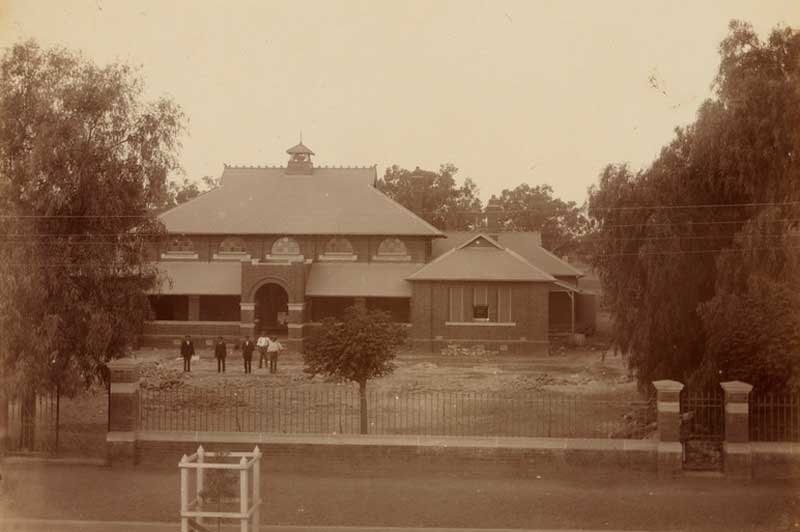
Image: NSW State Library collection. Reproduction: Peter de Waal
QUARTER SESSIONS.
——:○:——
Tuesday, February 20.
———
Before His Honor, Judge Hamilton.
———
…
ALLEGED BESTIALITY.
———
John O’Connor pleaded not guilty to a charge of alleged bestiality [with a mare].
Mr Zlotkowski appeared for the defence.
Jury: S Boughton, T Keating, G Rutter, T Duke, WR Kempe, AC Bramma, AG Jurd, H St John George, Thos Tranby, SA Budden, S Nell, WE Myring.
After the evidence had been taken the jury retired at 6.20 pm and returned into Court two hours later, when the foreman intimated that there was no chance of their arriving at a verdict, and they were then locked up for the night. When the Court resumed on Wednesday morning his Honor was informed that the jury had failed to agree, and they were thereupon discharged.
Mr Browning applied for commitment to the next Quarter Sessions or any Court the Attorney-General may fix. Application granted. Bail allowed.
His Honor: I did intend committing the witness Dean for perjury, but it may prejudice the case.
~ ~ ~ ~ ~
The Inverell Times, Fri 1 Jun 1917 3
QUARTER SESSIONS.
——–:○:——–
(Before His Honor Judge Hamilton.)
The usual Court of Quarter Sessions was opened in Inverell yesterday morning. His Honor, Judge Hamilton presiding. Mr RJ Browning was Crown Prosecutor. The legal profession was represented by Mr Patrick (barrister) and Messrs AF Avern, DA McIntyre, JW Anderson, WB Halloran, JA Boyd, SJS Butler, and HE Manning (solicitors). Mr W le Brun Brown, PM, occupied a seat on the Bench as Deputy Sheriff, and Mr GN Cleeve acted as sheriff’s officer.
———
JUROR'S EXPLANATION.
His Honor heard an application be RN McLean for a refund of £2 fine imposed upon him at the last Court for failing to attend as a juror.
Mr WB Halloran appeared for the applicant.
Applicant explained that he had made important business engagements in Sydney prior to receiving the juror’s summons, and he could not return in time for the Court.
The fine was remitted.
———
JUROR EXCUSED.
An application by George S Bone to be excused from attendance as a juror was granted.
———
JUROR FINED.
Alexander Munsie failed to answer his name as a juror, and was fined £2.
———
NEW J’sP.
Messrs Alfred A Thomas and Oswald J Penberthy, of Elsmore, were sworn in as Justices of the Peace.
———
ALLEGED BESTIALITY
MORBID MOREE MATTER.
———
John O’Connor, on bail, was charged with alleged bestiality at Moree on 23rd December, 1916.
He pleaded not guilty.
Mr AF Avern (instructed by Mr BF Zlotkowski, of Moree) appeared for the accused.
O’Connor was first tried at Moree, but the jury failed to agree, and the new trial was set down for the Inverell Sessions.
The following jury was empanelled: CJ Welsh, JE McKenzie, GA Jamieson, RW Barr, R Waddell, Frank Brown, HC Fraser, HR Gobbert, CP Lucock, William Jack, Henry Rudd, Kook and FS Crawford.
Accused challenged two jurors, and the Crown asked three jurors to stand aside.
The Crown Prosecutor briefly outlined the case to the jury, and evidence was then entered upon.
Constable Donkin, stationed at Moree, stated that on the day in question he was called to the Post Office Hotel and requested by the licensee to put the accused out of the dining room, as he had been using bad language. George Dean was sitting on a bench on a verandah of the boarding house nearby, and after returning from his tea Dean told witness something, in consequence of which he proceeded to the yard. There was not a soul about at the time, and witness did not see anybody in the yard. He proceeded to a shed on the bounding fence, and there saw the accused. Witness here described the alleged offence. The animal moved, and accused then looked round and saw witness. He had a clear view of the happening, and there was no doubt about the offence at all. Witness said to the accused, “You’re a dirty animal,” to which the accused replied “Strike me dead mate; you don’t blame me for doing that.” “Blame you, you dirty brute; do you know who I am” (witness was in plain clothes), to which accused replied, “Yes, you’re a constable.” Witness then told accused that he was going to lock him up, but accused retorted “Are you?” and made off over the fence. He went in pursuit, and after a brief space overtook the accused, who resisted violently. A man, named Harper, was passing and witness called to him to go to the police station for assistance, and two or three minutes later Constable McKenzie arrived. Before McKenzie arrived, accused, who was on the ground with witness on top, said, “Don’t charge me with bestiality; it will —– kill me.” At the lock-up, when being charged, accused said, “You did it to the mare yourself, not me.” The clothes worn by accused at the time were exhibited. They consisted of light khaki-colored trousers, shirt and flannel. The clothes were sent to Sydney for analysis. In answer to questions, accused said he was at Gurley on the Thursday night previous to the occurrence in question, and a certain thing happened. He had the same clothes on them [sic]. Continuing, witness stated that later on that night he returned to Dean’s boarding-house, where he had been living for five or six months, and had a conversation with Dean.
Mr Avern: You’re a married man? – Yes
And don’t live with your wife? – No.
Did you tell Mr and Mrs Dean that you were a widower? – I decline to answer questions irrelevant to this case.
His Honor (sharply): That’s for me to determine.
Continuing in answer to Mr Avern, the constable stated that he might have led people in Moree to believe that he was a widower. He had a daughter living with him at the boarding-house, and he left Dean’s for a more suitable establishment. The alleged offence took place at the rear of Dean’s boarding-house. When witnesses put accused out of the hotel he was “pretty drunk.”
Mr Avern: Now wasn’t he hopelessly drunk?
Witness: No, his legs were alright.
Mr Avern: And his head all wrong. (Laughter.)
Witness: He appeared to be wild with drink.
Proceeding, in reply to Mr Avern, witness stated that Dean’s boarding-house was close to the hotel and he had asked them to keep an eye on the accused. After witness had had his tea Dean told him, “That joker (meaning accused) has gone down the back.” It was not true, however, that he said to Dean, “I’ll go down and give him a Yankee start.”
Mr Avern: Have you been the subject of an inquiry in regard to a Moree fire?
Witness: No.
Wasn’t your conduct on the night of the Moree School of Arts fire inquired into? – Absolutely no.
His Honor: It is a serious allegation.
The constable: And most unfair, too.
Mr Avern: Were you not on town duty that night?
Witness: Yes.
And were you not awakened at 5.45 am on the morning of the fire by two men returning from the fire? – I decline to answer.
Were you not asleep in an hotel whilst the fire was on? – No.
Did you hear the fire bell ring that morning? – No.
And the fire bell went at 4 am? – Yes, between 4 and 5.
In reply to further questions, witness admitted having a drink in a Moree hotel on the night of the fire, and afterwards fell asleep. He was not, however, wakened the next morning after the fire was over by the barmaid. It was true that his conduct was bequired [sic] into, and that he had told another police officer that he was called to East Moree on the morning of the fire. However, when called upon to make and official report to his senior-sergeant he told the truth.
His Honor: What has this to do with the case? I think it is cruel and will tell the jury so.
Mr Avern: Haven’t you been the subject of other inquiries?
Witness: Yes, practically every constable has. I was once reported for kicking a dog. (Laughter.)
His Honor: I thought you had to shoot dogs in the street. (More laughter.)
Witness admitted being fined 30/- on one occasion, but was not asked to resign from the force.
Sen-Sergeant Robinson, in charge of the Moree police station, deposed that the mare in question had been in his charge since the alleged offence. The animal was a very quiet one.
Constable McKenzie, lock up keeper at Moree, stated that Harper came to the station on the night in question, and witness immediately proceeded to a vacant allotment near Dean’s boarding-house, where he saw the accused on the ground, handcuffed, and Constable Donkin. The accused was under the influence of liquor, but was not drunk. The next morning accused said to him, “What am I in here for, being drunk?”, to which he replied, “No”. Accused seemed surprised when informed of the charge, and stated, “I was too drunk last night to know what I was doing.”
To Mr Avern: The accused seemed shocked and surprised next morning when informed of the charge.
The depositions of Dr JB Clelland, Government Microbiologist, were next read. The analysis of the clothing was unfavourable to accused.
FOR THE DEFENCE.
The accused [John O’Connor] made a statement from the dock. He said: “Your Honor, gentlemen of the jury. I am not guilty of this charge at all. On the 23rd December last I was drinking very heavy, and on the morning of the 24th I found myself in the Moree lock-up, very much bruised and sore all over, as though I had been kicked about like a football.”
George W Dean, saddler, said he had resided between 16 and 17 years in Moree, and prior to that had lived in Inverell for 29 years. He and his wife kept a boarding-house in Moree. He knew Constable Donkin, who was a boarder at his establishment. On the evening in question he saw the accused for the first time in his life. The time was 6.30 pm, and the accused was very drunk. Accused lurched up to near where witness was on his verandah, and had to hang on to the post for support. Accused said he wanted to go into a bedroom and have a sleep, but witness told him he could not do that. Accused then walked towards the hotel, but returned and went down to a fence at the rear of his boarding-house. Accused got through the fence, so witness went down his yard to see what he was doing. He then saw accused leaning on the fence, with his arm on the rail. Witness saw Constable Donkin go down the yard to where accused was hanging on to the fence. He saw the constable push the accused through the fence on to the vacant ground, and noticed a scuffle taking place. At the same time the mare in question was in the yard standing under a tree. Witness went to the fence, about six yards from the scuffle, and there saw the accused lying on the ground insensible. The constable had disappeared, and later witness saw him going towards the police station. Later, when the officer told him about the charge witness laughed and said, “That could not be true, as the pony would kick him.” The animal had only been brought in from the common a couple of days previously, and was very frisky.
Mr Avern was proceeding to ask the witness as to whether he had told anybody before the case that the accused was wrongly charged when
His Honor interjected: If he does that I’ll commit him for perjury, because he distinctly told me at the Moree trial that he had not spoken to a soul about the case. I pointed out then that this man allowed the accused to lie in gaol without making a statement to anyone, which was a most extraordinary thing.
To Mr Browning: When he saw accused lying on the ground insensible his hands were handcuffed in front.
His Honor: Both constables said the man was handcuffed with his hands behind his back.
James McNulty, saddler, residing at Dean’s boarding-house, Moree, deposed that he saw the accused being taken to the lock-up. About ten minutes before this he had seen Constable Donkin going towards the police station.
To the Crown Prosecutor: The accused was arrested between 5 and 6 pm, “Billy Hughes’ time.” (Laughter.) Constable Donkin was in uniform.
Before Mr Avern commenced his address a juryman asked several questions in regard to the animal. The jury then announced that they had agreed to their verdict, and did not want to hear any more. They found the accused not guilty.
His Honor: If you think the constable has committed perjury then you should say so.
The Foreman: We believe it was an impossible affair.
His Honor: You find then, that the constable committed perjury?
The Foreman: No, we don’t say that. We find in favour of the accused owing to the contradictory evidence.
His Honor replied that he could not quite understand the verdict. However, it would, to say the least of it, have been a most extraordinary thing for the jury to have found that the constable committed perjury.
The accused was thereupon discharged.
This concluded the business before the Quarter Sessions.
1 The Moree Gwydir Examiner and General Advertiser, Fri 5 Jan 1917, p. 2.
2 The Moree Gwydir Examiner and General Advertiser, Fri 23 Feb 1917, p. 2. Emphasis added.
3 The Inverell Times, Fri 1 Jun 1917, p. 2. Emphasis added.