The Argus, Mon 13 Sep 1869 1
CRIMINAL CHARGE AGAINST THE
REV. PATRICK NIALL.
———◦———
At the police court at Mornington, on Saturday last, before Messrs Templeton, PM, Gillett, and Mairs, JP’s, Patrick [William] Niall, a Roman Catholic priest, surrendered to his bail to answer a charge of committing a criminal assault upon George Fairlem [aka Fairlam], Superintendent Hare prosecuted. The prisoner [Patrick William Niall] was defended by Mr RD Ireland, QC, and Mr Duigan, instructed by Mr JG Morrison.
The first witness examined was George Fairlem, a mariner, late chief officer of the ship Hurricane, examined by Superintendent Hare.—I recollect the 23rd of last month. I came ashore from the wreck to Scurfield’s Hotel, at Dromana, about seven o’clock that evening. I saw the prisoner there. He arrived by the coach from Schnapper Point. I saw him once before, but did not speak to him. When I saw him on the 23rd ult, Mr Scurfield introduced us. We sat beside the fire conversing. Mr Scurfield was in the room at the time. Constable O’Shannassy [aka O’Shanassy] came in after the prisoner had had his tea. About twelve o’clock the prisoner left the room, bidding the company good night. I saw him about twenty minutes or half an hour after. He came to the parlour door, and apologised to Mrs Scurfield for coming in his night-dress, saying he wished to speak to me. I said “All right,” and took no further notice. He shut the door, and went away. The prisoner was dressed in a night-shirt, a pair of pyjamas, and night-cap. In about ten minutes or a quarter of an hour he returned, and again said he wished to speak to me privately. Mrs Scurfield and Constable O’Shannassy were in the room at the time. In reply to the prisoner I again said all right, and he shut the door. I then went out and saw him in the lobby; he walked into his own room, and I returned to the parlour. The same persons were still there. I think O’Shannassy then left the room. The prisoner again came to the door of the parlour, and said, “Mr Fairlem, I want to speak to you privately; I will not detain you many minutes.” I got up and went into the passage to see what he wanted. He did not speak, and walked to his room. I followed, and stood at the threshold of the door. He caught hold of me by the hand, and tried to pull me in, and shut the door on me. He did not say anything at the time. I pushed him on one side, and returned to the parlour. Mrs Scurfield and Constable O’Shannassy were there. I stayed in the parlour about ten minutes; it was then about one o’clock. I asked Mr Scurfield to wake me in time to go by the coach in the morning. I was sober when I went to bed. I had two or three glasses of grog during the day and evening. I went to bed in the room I always occupy. The prisoner’s room was about ten or twelve feet from mine. The curtain at the window of my bedroom was drawn up. I went to bed, and fell asleep. I was awakened about four am by the bedroom door being opened, and I saw the prisoner standing at the door, I recognised him by his white dress. He shut the door softly, and came into the room. He came to the side of the bed. (The witness here described the attempt to commit the offence.) I jumped out of bed, and pulled him out by the hair of the head, and thumped him round the room, calling him a dirty old beast. He got into his room, and fastened the door. I called to him if he did not open it I would break it. Mr Scurfield then came into the passage, and the prisoner opened the door, and I struck him again. Mr Scurfield went away, saying he would bring Constable O’Shannassy. When the constable came into the passage, I was still striking the prisoner, who called to him for help. I told O’Shannassy what I was striking him for, and continued striking him until he said the prisoner had had enough. The prisoner tried to make O’Shannassy and Scurfield believe that he had only gone into my room to wake me and that I accused him wrongfully. Mr Scurfield ordered the prisoner out of his house. At that time the prisoner was all covered with blood, and both eyes bunged up. The prisoner went into his room, and shortly after came out dressed, with his portmanteau in his hand. He said to Scurfield, “I hope you will not turn me out at such a time in the morning.” Mr and Mrs Scurfield, O’Shannassy, the prisoner, and myself then went into the parlour. Mr Scurfield said the prisoner should be exposed. The prisoner said I might as well take his life as expose him. I said I would not do so, as I had punished him enough. I told O’Shannassy all that had occurred in my bedroom. The prisoner was present at the time. The prisoner was sitting in a low chair or kneeling, I cannot say which, when he asked me not to expose him. I went up to town in the coach shortly after. I have not seen the prisoner since, until to-day.
Cross-examined by Mr Ireland.—I was very much excited at the time. I was sober at the time. I do not think I had more than six glasses of grog during the day and night. I never stated to any one that the offence had been committed, and that is why I put the letter in the papers.
To Mr Templeton.—I asked Mr Scurfield to wake me in the morning. The prisoner, Mr and Mrs Scurfield, and Constable O’Shannassy were present at the time. There was a bright moonlight that night.
William Dixon Scurfield, examined by Superintendent Hare.—I am a hotelkeeper residing at Dromana. I have known the prisoner about five years. During that time he has been in the habit of staying at my house. Mr Fairlem was staying at my house on the night of the 23rd August. The prisoner also came to my house that night by the Schnapper Point coach. He arrived a little after eight o’clock. I shut up the bar at ten o’clock, and joined the prisoner, Mr Fairlem, and Constable O’Shannassy in the parlour. I went to bed about one o’clock. I left Mr Fairlem, the prisoner and O’Shannassy in the parlour. 1 cannot say if Mrs Scurfield was in the parlour when I went to bed. About an hour after I was awoken by a noise of scuffling, and Fairlem’s voice calling on me. The voice came from Fairlem’s room, or in the lobby adjoining. I partly dressed, and went into the passage, and saw Fairlem standing out side the prisoner’s door, threatening to burst it in if he did not come out. The prisoner opened the door, and came into the passage. Fairlem seized him, and a scuffle ensued, in which Fairlem struck the prisoner, saying “I will learn you to try on such tricks with me.” I went over to the police station for Constable O’Shannassy. When I returned the prisoner was washing the blood off his face, and Fairlem was in the parlour. Fairlem did not strike the prisoner after I returned, I was called into the prisoner’s room, and he asked me what he had better do under the circumstances. O’Shannassy was present at the time. I advised him to go back immediately to Brighton. He said he could not do that, as he must go on to Point Nepean. He said he must make some excuse for his appearance, and asked me to remain silent as to the occurrence. I promised to keep silence on one condition—namely, that the affair should not be misrepresented. The prisoner said he would account for the condition of his face by saying that he had fallen over a heap of wood in my yard. Some hours afterwards he asked me for the loan of my snuffbox, as he had mislaid his own. The prisoner left my house about noon on the 24th for Point Nepean. I saw the prisoner again on the evening of the 27th. He stayed at my house. I do not recollect if he said anything about the affair when he returned on the 27th of August. The distance between the door of the prisoner’s room and that of Fairlem’s room is at the outside 9ft. A boy named Gardiner slept in the room opposite Fairlem’s and adjoining the prisoner’s bedroom. A person in one room can overhear what is said in the other. I know the snuffbox produced. I saw it in the prisoner’s possession on the night of the 23rd August. Fairlem was sober when I went to bed and also when I got up. I cannot recollect the words used by Fairlem when he was striking the prisoner. He accused him of taking liberties with him. I said the prisoner had tried it on with my son.
Cross-examined by Mr Ireland.—I am certain that the prisoner did not leave the room to go to bed before I went to bed.
To Mr Templeton.—At the time Fairlem was striking the prisoner, and accusing him, the prisoner said he had gone into his room to wake him to go by the coach.
Catherine Hetherington Scurfield, wife of the last witness, examined by Mr Hare.—remember the prisoner and Mr Fairlem being at our house on the night of the 23rd August. They were in the parlour with Constable O’Shannassy and my husband all the evening. The prisoner and my husband left the room to go to bed about the same time—as well as I can recollect was near half-past two o’clock. The prisoner afterwards came to the parlour door; he was then in his night dress. He begged my pardon, and said I thought I had retired. He then shut the door and went into my private sitting-room, put out the light, and peeped through the curtains into the room where we were sitting, I afterwards heard him in the passage, and Fairlem took him a glass of whiskey to his bedroom. It was about fifteen minutes to three o’clock when I went to bed. Fairlem went to bed and O’Shannassy went home at the same time. I was awoken by a noise as of fighting in the passage, but did not leave my room. I saw the prisoner the next day. He said he would excuse the state of his face by saying he had fallen over a wheelbarrow in our yard.
Cross-examined by Mr Ireland.—I did not hear the prisoner say to Fairlem that he wanted to speak to him privately. The prisoner only opened the door once, but I heard him in the passage three times. I did not go out of my room when I heard the noise of fighting in the passage. I did not leave my room till nine o’clock in the morning.
William O’Shannassy sworn.—I am a mounted constable stationed at Dromana. I have known the prisoner for fifteen years. I belong to his church and he has been my clergyman during that time. On the evening of the 23rd August, I went to Scurfield’s Hotel in consequence of a message I received from the prisoner, who wished to see me. We were sitting in the parlour, in company with Mrs and Mr Scurfield and Fairlem, until about half-past eleven o’clock, when Scurfield went to bed, and the prisoner shortly afterwards went to bed also. About ten minutes afterwards he came back and asked for his valise, which I carried to his bedroom. He then had his clothes on, but was wearing his night-cap. When I went to his room he told me to tell Mr and Mrs Scurfield and Fairlem that it was time to go to bed. I told them what he said, but we remained there, and shortly afterwards he carne in his night-dress and asked if I had gone. I stooped under the table so that he might not see me. He told the others that it was time to go to bed. He then returned to his bedroom. He came to the door again about twenty minutes afterwards, and said “I want to see you, Mr Fairlem.” Fairlem went into the passage, and after a few minutes returned to the parlour much excited. He showed his excitement by grinding his teeth and putting up his sleeves. I left about half an hour afterwards, and Fairlem went to his bedroom. It was about ten minutes to two when I left Scurfield’s Hotel. I was awoke by Scurfield about ten minutes to four o’clock. I followed him to the hotel as soon as I could put my clothes on. I heard the noise of a scuffle going on in the house, and Fairlem’s voice. When I went into the house I saw Fairlem striking the prisoner, having hold of the hair of his head. I ran up and pulled Fairlem away. The prisoner’s face was covered with blood. He asked Fairlem if he did anything more when he went into his room than endeavour to wake him to go by the coach. Fairlem called him a liar. We went into Fairlem’s bedroom, and I asked him if he was going to give the prisoner in charge for assault. He replied “No, I have given him enough.” I then asked the prisoner if he was going to give Mr Fairlem in charge for ill-using and abusing him. He said, “Oh no; how could I do such a thing?” Scurfield said that he (the prisoner) had behaved improperly to his son some time before, but he screened him. The prisoner said if Fairlem would apologise, there would be no more said about it. Fairlem said, in a loud voice, “Apologise to you; never.” The prisoner said, “Well then, we will say no more about it.” Fairlem said, “I will say no more about it,” and then shook hands. Fairlem then went by the coach to Melbourne. The prisoner said he would account for the marks on his face by saying that he had fallen over some timber. When he returned from Point Nepean the prisoner asked me if the afiair had become public. I told him that every one in Dromana knew of it, and that I had heard that Fairlem had spoken of him in Melbourne. The prisoner said, “William, I can hardly believe that, for Fairlem has no grounds for making such an accusation.” I then advised him to procecd against Fairlem for illtreating him. He replied, “It would never do for a priest to do that.”
Cross-examined by Mr Ireland.—I saw Fairlem take a glass of whiskey into the priest’s room. When Fairlem came into the parlour after seeing the prisoner he was grinding his teeth. He said, “That old beggar wants to do something to me.”
To Mr Hare.—I did not see Fairlem go into the prisoner’s room. Fairlem was not drunk when he went to bed.
To the Bench.—Scurfield was in the passage when I came there, and stopped Fairlem from striking the prisoner.
Baker Fachell, examined by Mr Hare—I am a waiter at Scurfield’s Hotel at Dromana. I was at the hotel on the night of the 23rd August. I slept in the room marked C in the plan now produced. I went to bed about one o’clock. I woke between three and four o’clock, hearing the kitchen-door open. I heard some person in the kitchen, and saw the figure of a man go past the window of my room, going towards the house. I thought at the time it was the prisoner. About ten minutes afterwards I heard a scuffle in the room on the right hand side, and then heard Fairlem’s voice threatening to break the prisoner’s door down unless he opened it.
Christopher Gardiner, examined by Mr Hare.—I live at Richmond with my mother. I am fifteen years of age. I was at Dromana on the 23rd of August. I slept that night at Scurfield’s Hotel, in the room next the one the prisoner slept in, and opposite Fairlem’s room. I was awoke about four o’clock by a noise in the passage, and I heard the voices of Fairlem and the prisoner and the sound of blows. The prisoner cried out. I then heard Scurfield say, “Put him out the back way, Fairlem.” Some time afterwards I got up and dressed. I saw the prisoner standing in the passage. He was half-dressed, with the rest of his clothes in his hands.
This closed the case for the prosecution.
Mr Ireland said that in the case put before them that day there was not the slightest attempt even to prove that the crime with which his client was charged had been committed.
Mr Templeton said that so far the Bench agreed with him, but that the evidence went to show that there was an attempt to commit the crime.
Mr Ireland thought that, accepting the evidence given by the witnesses, it did not show that even an attempt had been made. At the worst construction, it would show a licentious turn of mind, but nothing more. At that late hour life would not enter into the details of the evidence. If the Bench thought there was a sufficient case to send the prisoner to trial he would not attempt to impose on them the functions of a jury. In justice to the prisoner he did not wish it to be supposed that he had not good grounds for addressing a jury because he did not state them then.
Mr Templeton said that the case had been brought very fairly before the court. They were of opinion that the case must go before a higher court, and that it would be no benefit to the prisoner if they discharged him. The prisoner was then committed for trial at the next criminal sessions.
In answer to Mr Ireland Mr Templeton said there was a difference of opinion between the magistrates whether the charge should be an attempt to commit a criminal assault or a common assault.
On the application of Mr Ireland the Bench reduced the amount of bail one half. The same sureties were accepted in £500 each, and the prisoner himself in £1,000. The sureties were present, and the necessary bonds being entered into, the prisoner left the court with his friends.
~ ~ ~ ~ ~
The Argus, Tue 14 Sep 1869 2
CRIMINAL SESSIONS.
———◦———
The following is the calendar of prisoners for trial at the Criminal Sessions which commence on Wednesday next:—
John McLeod, rape.
Robert Mackay, stabbing with intent to murder.
Henry Blucher, stealing a cheque.
John Owens and John Mason, burglary and larceny.
Henry Barton, sacrilege.
Thomas Walker, forgery and uttering.
Henry Hazell, Joseph Jennings, and Joseph Dyer, stealing lamps.
Patrick [William] Niall, unnatural offence.
~ ~ ~ ~ ~
Leader, Sat 18 Sep 1869 3
MELBOURNE CRIMINAL SESSIONS.
When his Honor Judge Barry took his seat yesterday, the court house was not so crowded as on the previous day, still the attendance was far beyond the average. Patrick [William] Niall, convicted on the previous day of an indecent assault, was placed in the dock for sentence. Mr Duigan rose and addressed the court. He said that the prisoner had been in priest’s orders for seventeen years, and was advanced in life. The injuries he had received at the hands of Fairlem had impaired his mind and health. He (Mr Duigan) knew full well that nothing he could say would influence his Honor in the amount of punishment he deemed it necessary to award, but he would respectfully remind him that the prisoner stood there disgraced and dishonored. After he had completed the sentence passed upon him his life would be paused in disgrace, consequent upon the act of which he had been found guilty. The learned counsel, who was much affected, concluded by urging on his Honor to remember that the brightest ornament of the justice seat was mercy.
Being asked by his Honor if be had anything to say, the prisoner, in a voice some what shaken with emotion, said that it was impossible for him to adduce proofs of his innocence, but that the whole of his past life ought to stamp such a charge as being utterly false. It was in the power of any man to make similar charges against others if he was malicious enough to do so. He was not in a position to adduce any proofs in extenuation of the charge, but he could say that the statement that had bean made against him did not from first to last contain one particle of truth. He left the parlor at half -past ten o’clock, and only returned there twice. The first time he went to the parlor after retiring was to get his valise. On going to his bedroom a second time, he found that he had not sufficient bedclothes, and returned to ask for his opossum rug. That day he had travelled from Dandenong to Brighton, thence to Snapper Point and Dromana, and was extremely fatigued. He went to bed and awoke about 5 in the morning. He wished to leave the house, but found the door leading to the yard locked. On retracing his steps to his room, he had to pass Fairlem’s door. The door was ajar, and could not be pushed open without coming in contact with the bed. He did not know whether this was by accident or design. He opened the door a little, and saw Fairlem in bed. He took him by the shoulder and shook him, telling him to get up, if wanted to go by the coach. Fairlem dressed himself fully, and before leaving his room called out for Mrs Scurfield. Mr Scurfield got up and went for the constable. The prisoner begged his Honor to recollect that Mrs Scurfield had stated that she was aroused by hearing her name called, and had heard him close his door immediately after. He did not remember anything being said about his giving the prisoner in charge. The whole affair did not take up half an hour. The constable had told him that he remained in the hotel so late because from expressions that had fallen from Fairlem he felt sure that he (Fairlem) would attack him (Niall) before he left the house. The prisoner did not know why the constable had suppressed this evidence and substituted other. That was a matter only known to the constable and God. A glass of whiskey had been brought to him after he left the parlor but he did not drink it. He had to officiate next morning, and as it was past 12 o’clock it was against common sense to suppose that he would eat or drink before saying mass, especially as he had to officiate in the morning. In justice to himself the prisoner felt bound to deny that anybody came to his room next morning before Fairlem left. Mrs Scurfield appeared to sympathise with his sufferings. It would be disreputable for him to have to appear to prosecute such a man as Fairlem, as people would say he had been engaged in a quarrel. He intimated that if Fairlem would apologise he would accept the apology. Mrs Scurfield went to the common parlor and told Fairlem what he had said, when Fairlem came and said “What shall I apologise for?” He replied “That is best known to yourself.” The prisoner asked Fairlem if any provocation had been given as to justify the assault. Fairlem accused him of putting his hand upon his, Fairlem’s, person, but said not a word about his going into the bedroom and getting into bed, yet he had heard the most profane and the most, loathsome language fall from the mouth of O’Shanassy; in place of lessening it, the lascivious language had been intensified. Oh my Lord, it would have made your very blood freeze in your veins to have heard the expressions put by O’Shanassy into Fairlem’s mouth. Fairlem shook hands with the constable, and then offered his hand to him, Niall, saying “Will yon take the hand and the word of a man that nothing further should be said about the matter?” Fairlem then offered his hand to Scurfield, who refused to take it, and said, “I shall see further about it.” The prisoner contended that if he had been assaulted in Fairlem’s bedroom, it was absurd, to think that Fairlem would have assaulted him a second time in his own room. In the forenoon of the day upon which the assault had been committed, the constable told him that when he (the constable) left they were all drunk, and that he had waited outside the premises until he saw that Fairlem had put out his light, as he heard that Fairlem meant to do him (Niall) some mischief. While addressing the court the prisoner seemed agitated and nervous, and although he occasionally wandered in his discourse, he spoke in a deliberate manner.
In passing sentence, His Honor, addressing the prisoner, said he had been arraigned under the section of the Criminal Statute, that made any person convicted of a criminal assault, or of an assault with intent to commit the crime, or of an indecent assault on any male person guilty of a misdemeanor, and which gave a discretionary power to the judge to sentence the person convicted to a term of imprisonment not exceeding ten years. From the discretionary power invested in the judge, it was clear that the Legislature deemed it wise that a person convicted of either of the crimes should be subjected to a punishment that should stamp the detestation in which the offence was held. He had no hesitation in saying that he would be abusing the discretionary power vested in him if he awarded the fullest degree of punishment to each of the three counts alike. In the first a man stimulated by lust was degraded to the level of the bestial herd of wolves. The second was a complicated immorality nearly as revolting as the first; but the third degree of the crime, abominable, hateful, and loathsome as it was, admitted of a marked distinction being made in the punishment. He had been charged with the commission, of each of the three offences named, and it had been left most impartially to the jury to decide of which they could find him guilty, if they could not find themselves warranted to acquit him. They had taken the most mitigated view of the prisoner’s case as far as the circumstances of the evidence admitted. He (the Judge) would be wanting in descretion if to an ignorant man, probably nurtured in crime and vice, he gave the same punishment as to a man of education, who had been inculcated in the principles of virtue, and to whom the guidance and teaching of others had been entrusted. The punishment he should award would be attended with sad results and with very painful circumstances. Attendant upon his crime was not only the loss of the esteem of his own flock, but the disgrace he had brought upon the ancient faith which he professed, and the detestation of the respectable portion of humanity. The remorse of conscience would, he thought, to a man like him, be far more afflicting than the pricks and stings which would be endured by men less sensitive. He did not wish to inflict pain upon the prisoner by referring at any farther length to these things. The punishment be should inflict was not to be scanned by that which would be given to a person of another degree. He then sentenced Niall to nine months’ imprisonment.
…
MELBOURNE CRIMINAL SESSIONS.
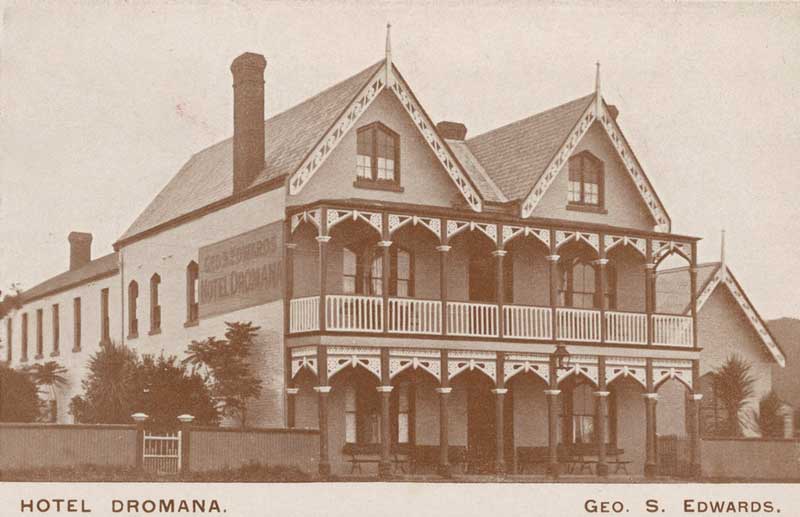
collection, H90.140/186. Reproduction: Peter de Waal
These sessions opened on Wednesday before his Honor Judge Barry; Mr Dunne prosecuting on behalf of the Crown.
…
ATTEMPT TO COMMIT AN INDECENT ASSAULT.—
Patrick Niall surrendered on his bail charged with an attempt to commit an infamous offence on the morning of the 24th August last, at the Dromana Hotel. The full particulars of this case will be found in another column.
The prisoner was allowed to stand on the floor of the court, and defended by Mr Ireland, QC, and Mr Duigan.
The evidence taken in the Police Court having been repeated, the Crown called William Scurfield, and, having been sworn, he deposed to the time he had been at home. Mr Dunne then sat down, stating that the witness was at the service of Mr Ireland. The defence declined to cross-examine him. (This was the boy on whom it was said the prisoner had attempted a similar infamous offence1 about six months ago.) The case for the Crown being concluded, Mr Ireland asked his Honor if there was evidence to go to the jury in the testimony of the prosecutor Fairlem.
His Honor considered there was. Mr Ireland pressed that a reservation might be made of the point, but his Honor declined to do so. Mr Ireland then addressed the jury for the defence. They retired to consider their verdict at half-past seven o’clock, and, after being locked up for two hours came into court, and asked if they could find a verdict of indecent assault. His Honor replied that they must find a verdict on each of the three counts; they could say not guilty on all of them, or guilty on one. They were again locked up, and at ten o’clock Mr Ireland, addressing his Honor, said that previous to addressing the jury he had asked his Honor if there was any evidence of an attempt, and he would now ask to withdraw that, as it might be the jury were then discussing that question. His Honor replied that the more he thought over the matter the more did he feel that it was for the jury to determine that. Mr Ireland was quite ready to withdraw the point, as he wished for no compromise. If the jury did not believe the defendant’s story, they might find him guilty. His Honor said the matter entirely rested with the jury. Mr Ireland then asked to have the point reserved, but his Honor expressed a disinclination to do so, and left the bench. At twenty-five minutes past ten the jury again came into court, finding a verdict of not guilty on the first and second counts, and guilty on the third count of indecent assault. The prisoner was remanded for sentence till nine o’clock next morning.
The prisoner was brought up for sentence on Friday morning. Mr Duigan addressed the court on the prisoner’s behalf, and the prisoner himself made a statement in extenuation.
His Honor Judge Barry then sentenced the prisoner to nine months’ imprisonment.
~ ~ ~ ~ ~
Weekly Times, Sat 18 Sep 1869 4
THE CHARGE AGAINST
THE REV MR NIALL.
After between six and seven hours patient investigation, on Saturday, the magistrates at the Schnapper Point Police Court committed the Rev Patrick Niall to take his trial on the charge made against him. The prisoner’s counsel appeared to think the Bench would commit, and did not enter into an elaborate defence, merely remarking that if all the evidence were admitted to be true, there would be nothing to show that the prisoner had done more than go into Fairlem’s room at an early hour of the morning for the purpose of calling him, knowing that he wanted to be off by the coach. He further stated that there were other facts which could be laid before a jury, which were not brought out in the police court, consequently he hoped the public would, in justice to Mr Niall, reserve their judgment until after the case had been tried. The prisoner was required to find two sureties of £500 each, and to enter into his own recognisance of £1,000. The case has created much sensation in the neighbourhood of Dromana, and the small court-house was packed with spectators on Saturday. We have carefully perused the evidence as furnished to us in detail by our special reporter, and are constrained to withhold it as unfit for publication in any respectable journal.
The investigation of the charge made against the Rev Patrick Niall, Roman Catholic priest, took place at the Criminal Sessions on Thursday. His Honour Mr Justice Barry was the presiding Judge. Mr Ireland, QC, and Mr Duigan, instructed by Mr Morrison, defended the accused, who, on being put into the dock, pleaded not guilty, and was then, on the application of his counsel, allowed a seat on the floor of the court. The defendant exercised his right of challenge to the fullest extent, and then the jury took their seats in the jury-box.
Mr Dunne conducted the case for the Crown, and informed the jury that there were three charges against the defendant—the first, intent to commit an unnatural offence; second, attempt; and lastly, indecent assault. A history of the charge was then given, and during the day a number of witnesses gave evidence of the offence alleged to have been committed at Dromana. At the close of the case for the Crown, Mr Ireland asked his Honour if he thought there was evidence to go to the jury on the first charge, as Fairlem denied that an attempt had been made. His Honour said the evidence went to show, if it was not an attempt, it was near an attempt. Mr Ireland wished to know if his Honour would reserve the point. His Honour said he would not pledge himself at present. Mr Ireland then said he would go to the jury; and at twenty minutes past 5 o’clock commenced the case for the defence, contending that the very charge, made against any ordinary individual, whether true or false, absolutely ruined him for life, and how much more severe was it against a Christian clergyman? Many remarkable cases had occurred, which now were matters of history, where most estimable men, of hitherto unblemished reputation, had been accused of similar crimes, and were subsequently discovered to be innocent, notwithstanding the strong charge made against them, and now in this case he (Mr Ireland) hoped that the jury would well consider the evidence given by these witnesses before they convicted the defendant, who was ruined as a clergyman, no matter what their verdict would be, but ought not to be hounded out of society. The statement made that the defendant had been previously accused of attempting to commit a similar offence upon the son of the hotelkeeper was scarcely worthy of credence and absurd in the extreme, because the defendant, according to the sworn testimony of the witnesses, was on terms of intimacy with the landlord and his family, and was received in the house, which he should think was scarcely probable if he were thought guilty by these people. At twenty-five minutes to 7 o’clock the learned counsel concluded his forcible and logical address, and his Honour proceeded to sum up. The jury returned into court in about an hour afterwards, and the foreman asked his Honour if they could find a verdict of indecent assault.
His Honour: “You must find a verdict on all three counts, gentlemen.”
Mr Ireland: If they do not believe the defendant’s story, so far as we are concerned we do not care what the verdict is. The jury then retired, and again made their appearance at twenty-five minutes past 10 o’clock, with a verdict of guilty of indecent assault, and not guilty on the other counts. He received a sentence of nine months’ imprisonment.
~ ~ ~ ~ ~
The Argus, Mon 3 Feb 1873 5
THE REV P W NIALL’S CASE.
In August, 1869, Patrick William Niall, a clergyman of the Roman Catholic Church, was charged with having committed an assault of a disgusting nature upon one George Fairlam, mate of the ship Hurricane, at Dromana.
The accused was tried at the Criminal Sessions, Melbourne, was found guilty upon a minor count, and was sentenced to nine months’ imprisonment.
Among the witnesses against him were Constable Wm O’Shanassy, Mr WD Scurfield (landlord of a hotel at Dromana), and Mrs Scurfield, besides, of course, Fairlam, the principal witness.
The evidence against Niall was, that about 4 o’clock on the morning of the 24th August, 1869, he went into Fairlam’s bedroom at Scurfield’s hotel, and there committed the assault. Fairlam retaliated by striking him several times on the head, and Scurfield went for Constable O’Shanassy, who came in the course of 10 minutes from the police station. Fairlam, however, would not at that time lodge any complaint against Niall, and Niall refused to give Fairlam in charge for assaulting him.
A few days ago Niall applied for summonses for perjury against O’Shanassy and Mr and Mrs Scurfield (Fairlam is absent from the colony) None of the justices at Mornington (Schnapper Point) would sign the information, nor would the police magistrate, Mr Templeton. Dr Sturt, of Emerald-hill, however, signed the information, the summonses were issued, and made returnable at the police court, Schnapper Point, on Saturday.
The information against Constable O’Shanassy alleged that he swore at the police court inquiry, in the first instance, that he had taken a snuff-box belonging to Father Niall from a chair in Fairlam’s room, whereas in truth and in fact he did not find the snuff-box there. Secondly—That he swore that Scurfield had gone to the police station for him, had awoke him out of sleep, that he (O’Shanassy) then dressed and went over to Scurfield’s hotel, whereas in truth he had stopped at the hotel all night. Scurfield had never gone to the police station for him, but he appeared without having been sent for.
The magistrates on the bench were Mr F Gillett (chairman), the Hon CJ Jenner, Mr John Everard, and Mr W Groves.
Mr Fisher appeared for the prosecution; Mr Gillett for the defence.
Before the inquiry was entered upon, Mr Fisher objected to the presence on the bench of one of the gentlemen who had presided at the previous investigation. He alluded to Mr Gillett, who, besides having been present on the former occasion, was reported to have expressed very strong opinion against this case being now proceeded with.
Mr Everard said that so far from Mr Gillett’s previous knowledge of the case being a disadvantage, it was rather an advantage.
Mr Fisher did not object so much on that ground as on account of the opinions he had expressed. Mr Gillett had been asked to sign the information but he had declined which, he submitted, he had no right to do.
Mr Groves said that the whole of the local Bench had refused to sign the summonses.
Mr Gillett said that, as the information had been sworn in town, it was considered advisible the summonses should be issued by the same magistrate.
After some further conversation.
Mr Gillett stated that he would retire from the bench if his colleagues desired it, but as they had not he would sit. If no magistrate could sit upon a case if he had presided at some former hearing of it, it would be very difficult to make a Bench sometimes.
Mr Gillett then asked for an adjournment, as the defendant had only been served with the summons on Wednesday, and the defendant was instructed by his superior officer to ask for a postponement.
The Bench decided to hear the case for the prosecution, and if an adjournment were then necessary, it would be granted.
Mr Fisher then stated the case. In August 1869 the Rev Mr Niall was charged with having committed an assault on one George Fairlam, mate of the ship Hurricane. This vessel had been wrecked near Dromana, and Fairlam was appointed to watch over the interests of the underwriters. Mr Niall made this man’s acquaintance at Scurfield’s hotel on the 23rd August. According to the evidence given by Fairlam, O’Shanassy, and the others they were all dunking at Scurfield’s till late that night. Niall retired to his room, but returned two or three times, and once beckoned Fairlam out, and on the return of the latter on one occasion to the parlour he appeared very angry and exited. A couple of hours later Fairlam went to bed, and was awoke about half-past 4 by Niall assaulting him. A snuff-box was made to play a prominent part in the story by O’Shanassy, who said he found it m Fairlam’s room early that morning, after the assault, and being identified as Father Niall’s, of course had great weight in corroborating Fairlam’s story. It would be shown that shown that the statement about the snuff-box was untrue, that O’Shanassy never found it, and that it was really found by a Mrs Peatly in Father Niall’s own room, showing that this was a vile concoction on the part of O’Shanassy. Then O’Shanassy also stated that Mrs Scurfield had gone over to the police station, and brought him to the hotel soon after the assault was committed, whereas it would be proved that O’Shanassy was never out of the hotel, but had remained in it drinking all night. Mrs Scurfield had also said she had not got up till 9 o’clock, whereas it would be proved that she had risen at the time Fairlam was beating Niall, had brought him (Niall) a damp cloth to put on his face, and asked him to accept an apology from Fairlam. The motive for bringing the charge against Farther Niall was this, that the goods from the Hurricane had been pillaged, and that though Fairlam was apparently acting for the underwriters, he was really interested with O’Shanassy and the Scurfields in pillaging the goods The goods were either sold or kept at Scurfield’s. They supposed that Father Niall had become acquainted with what they had done, and to divert attention from themselves they had concocted this story against Mr Niall. Fairlam was now absent from the colony, and of course could not be proceeded against.
The following evidence w as given:—
William Armstrong, clerk of petty sessions at Mornington, produced the depositions of the defendant O’Shanassy in the case against Patrick Wm Niall. He also recognised the snuff-box as the one produced at the trial.
Cross-examined.—Did not know where Fairlam is now. Did not know that there is a warrant against him for stealing a gold watch and chain.
Patrick Wm Niall.—In 1869 I was a priest of the Roman Catholic Church. Have been in the colony since 1852. Officiated at Schnapper Point and Dromana since February, 1853. Remember the 23rd August, 1869. On that morning left Eumemering to come to Dromana. I use snuff. I left my own snuff-box on that occasion at Brighton, but I got the box produced from a gentleman on the coach. (The box is an ordinary tin matchbox.) I arrived at Dromana about half past 8 o’clock. I went to Scurfield’s hotel. I was directed by Mr Scurfield to go to the front parlour, as there was no person in it, and there was a fire in it. O’Shanassy came to the hotel about an hour and a half afterwards. I had sent for him. I saw no one till O’Shanassy came. I told him I wished to make arrangements about the next morning’s service—mass. I then wished him good night. He asked me to have a glass of wine with him. I declined to have it, as it was not long since I had tea. He expressed a wish to take a glass of something, and pressed me to do the same, and I consented. Scurfield brought in four glasses of spirits-one foi himself, one for me, one for O’Shanassy, and one for Fairlam. I don’t think I did more than taste my glass. Drink was brought in three times afterwards, but I took none. Some time after this—I should say about half-past 11 o’clock—I asked Mrs Scurfield for my candle, and I went to bed. I did not find my valise m my room and I went to the parlour for it. I opened the door and asked for it, and O’Shanassy brought it to me. I got a book from my valise and read for about 10 minutes. On turning down the bedclothes I did not find a sufficient quantity of clothing, and I returned to the parlour, knocked again, and asked for my opossum rug. O’Shanassy brought it. This would bring the time up to 12 or half past 12. Facing my bedroom was a small parlour, in which was a light I went into it and turned out the light. O’Shanassy and Fairlam were in an adjoining room with a glass door. I saw them through the door. I then went to bed, and remained reading for sometime in bed. I had placed the dressing-table near the head of my bed. In the course of 10 or 12 minutes I heard a knock at the door, and the man (who I knew afterwards was called Fairlam) opened the door and said he brought me a glass of spirits. I told him I could not drink it at that hour. I went to sleep, and awoke about 5 o’clock on hearing the horses being put to the coach. I lit the candle, and looked at my watch. I got up and went to the back door but could not open it. Fairlam’s door was open and I went in called him, and asked him to open the door. He came out of the room and tried to open it but could not. He went up the passage and brought a key, threw it down, struck me, and said, “I’ll teach you not to come O’Shanassy over me’” I called for help and Scurfield, who was m the passage, went for O’Shanassy. In a few moments O’Shanassy and Scurfield came but there was no blood on my face when O’Shanassy came. After O’Shanassy came, Fairlam struck me again. O’Shanassy said “I think you are going too fair, you had better come away,” and he took Fairlam away. They went to the front parlour and
I to the back. Ms Scurfield came to my room with a damp cloth and said that Fairlam was willing to apologise. I went to the parlour, and Fairlam said, “Will you take the hand of an honest man and promise not to speak of me as the author of the assault.” I said I would. Fairlam then asked O’Shanassy to take his hand and promise not to speak of the assault. O’Shanassy gave the promise. Fairlam went off in the coach. I was not completely dressed at the time. O’Shanassy and I went into another parlour. He said “Why did you not give him in charge?” I said “You saw him strike me, why did you not take him—were you afraid of him?” We remained in conversation some time and in the course of it O’Shanassy said that he had remained up in the house all night to protect me, because Fairlam had threatened to give it to me. He added that Mrs Scurfield and Fairlam were both drunk when they went to bed at half-past 3. As to the snuff-box, O’Shanassy could not have found it in Fairlam’s room. It was in my own room, on the washstand, after the assault. I took snuff out of it repeatedly that morning. I offered snuff out of it to several people among others to Mr Rogers, about half-past 7 or 8 o’clock. I afterwards (about 10 o’clock) missed the box and next saw it in the police court in possession of O’Shanassy. O’Shanassy said he got it on a chart in Fairlam’s room. I can almost swear there was no chair in that room—in fact, I am positive about it. Nothing was said in O’Shanassy’s presence about Willie Scurfield or an assault upon any other person. O’Shanassy swore that I was in my nighhtclothes when I went to the door for the valise and rug. That is untrue I was dressed as I am now except that I had a white handkerchief on my head. O’Shanassy told me I ought to have given the man in charge. I did not call Fairlam out to have a private conversation with him. I did not address him by name, as I did not know it till next morning.
Cross-examined.—I instructed Mr Ireland, my counsel, as to the private conversations with O’Shanassy. I don’t know whether he asked anything about the conversations. He told me he could not make out half of what was written in the brief. I can’t say if O’Shanassy was asked whether he said he remained up all night to protect me. I believe he was asked either in this court or in the Supreme Court. Scurfield could not have gone to the station for O’Shanassy; he had not time. When O’Shanassy carne I was in my room and Fairlam was assaulting me. He was at the door. O’Shanassy did not say to me, “Give the man in charge” in Fairlam and Scurfield presence. O’Shanassy never said it except in court. I can’t say if Fairlam, Scurfield and O’Shanassy swore it. I don’t believe Scurfield would perjure himself. I was not in Fairlam’s room before half-past 7 or 8 o’clock. I went in then to see Mrs Ford and Mrs Scurfield who were in the room sitting on the bed. I know that I could find no chair to sit on then. I have sworn an information against Mr and Mrs Scurfield for perjury. I would swear an information against Fairlam and the witness Gardiner if they were here. I have not applied to the bishop to be reinstated as a priest. It was about half past 10 o’clock that I borrowed a snuff-box to replace the one I lost. It is not true that other charges were made against me besides this assault on Fairlam. I heard a rumour of one. It was made by a person whom I had maintained. I found him in my storeroom, and I turned him a way. He afterwards accused me of having assaulted him on a Sunday morning, after I had service in my private chapel. I never did have service in my private chapel on a Sunday. I went to Dr Whittenbury to get a warrant against him, but I could not find him. I was Fairlam’s room when I asked him to open the door for me at 5 o’clock. I did not know it was Fairlam at the time. I heard come one in the room and I went into it. I have seen Superintendent Hare about this charge. He did not say that there were other charges against me besides this one. He said that there were other persons who could confirm this charge against me.
Re-examined.—I have been told that the men that Mr Hare allude to were willing to make depositions, but there was no truth in the statements.
Watson Eaton, a farmer near Dromana—I have been practising medicine for the last 20 years. I am not a registered practitioner. Never was at a university. There is no doctor in the neighbourhood.
Mr Fisher.—Did you attend to O’Shanassy about August, 1869? (The question was objected to.) Did you consider him in a fit state, owing to delirium tremens, to attend to his duty?
Mr Gillott objected to this question as it had nothing to do with the case.
The witness was then examined as to whether Scurfield could have gone to the police station and brought O’Shanassy back to the hotel in 10 minutes. He said he thought it could be done. The station was about a couple of hundred yards from the hotel.
Susan Peatty wife of George Peatty, living at Dromana, remembered 24th August 1869. Was at Scurfield’s hotel at half-past 8 o’clock. On the day of the trial (11th September) at Schnapper Point, O’Shanassy overtook me on the road. I said to him, “If you want any more witnesses you had better call on me, as I know a little about the affair.” He asked me what did I know. I told him I knew of him (O’Shanassy) lying under the table covered with a dark rug, drunk. He asked me who told me that. I told him I would tell him when I went to court. He asked me if I knew anything more. I said plenty more, but I would not tell it till I got to court. He told me to go to Mr Ireland, as he (O’Shanassy) was for the Crown. He then went on, but returned and said “I have forgotten my bool; I must go for it.” This was about four miles from the Dromana station. He went back a quarter of a mile, and was with Scurfield for a few minutes. He had not time to go to the station when he rode past me again. The snuff-box produced is the one I picked up in Father Niall’s bedroom at the washstand on the morning he was assaulted. Mrs Scurfield and I went into the room. I picked up the box and gave it to Mrs Scurfield, and she put it in her pocket. This was about 8 or half-past 8 o’clock. We afterwards went into Fairlam’s room. The room was in good order. There was a chair in it. The bed was not disturbed.
Cross-examined.—Nobody told me to come to the court on the 11th September I came of my own knowledge I have not spoken to Father Niall for the last four years till this morning.
George Peatty labourer, was present at the trial of Father Niall at Schnapper Point, and saw a lad named Harry Watkins go in and out of court and tell O’Shanassy, who was outside, what the witnesses were saying.
James Rodgers, farmer at Balnarring, was at Scurfield’s Hotel between 8 and 9 o’clock on 24th August. I don’t remember having a pinch of snuff from Father Niall that morning. I used to take snuff from him whenever I met him. I don’t remember seeing a snuff-box in his hand that morning. Saw a nobbler of whiskey in Father Niall’s room on the dressing table.
John Clydesdale wife of a farmer at Dromana, said that some time after the trial she overheard Mis Scuifield say to O’Shanassy that Mrs Peatty said she found the snuffbox in Father Niall’s room. O’Shanassy said “She can’t say that as I picked it up in Fairlam’s room on the chair.” I never told Mrs Murray that Mrs Scurfield said if it was not for my cleverness about the box there would have been no case.
This closed the case for the prosecution.
Mr Gillott then addresed the Bench for the defence contending that no case had been made out against O’Shanassy. There was no evidence whatever of the least importance except that of Niall himself, and that evidence was directly contradicted by all the witnesses examined at the previous trial. If every convicted felon was to be allowed to obtain informations for perjury against the witnesses who gave evidence against him without any other testimony against them but his own, the criminal courts might as well be shut up, for no person would give evidence. Most of the evidence given to-day was irrelevant, and all that was relevant could have been adduced at the trial of Mr Niall, if it had been considered advisable to do so. Three years had been spent in trying to get up this case with the assistance of Mrs Murray, who went about the district on a pretended mission of charity; but with all that time they had not succeed in making out anything like a case.
The magistrates, after deliberating a few minutes, dismissed the case.
————
The charge against Mrs Catherine Scurfield was then proceeded with. The perjury she was said to have committed was in swearing that she did not leave her room till 9 o’clock on the morning of 24th August; that she did not go into the parlour at 5 o’clock; whereas she did leave her room before 9 o’clock.
Before the evidence was given.
Mr Fisher formally objected to the presence of Mr Gillett on the bench. He had stated to the Bench that he was informed Mr Gillett had prejudged the case; and after that intimation no magistrate who was objected to should remain on the bench.
Mr Gillett.—As you have made a charge against me, you must give me the name of your informant.
Mr Fisher had made no charge, and would not give the name.
Mr Gillett.—Very well; go on with the case. If I had prejudged it I would not be here.
Mr Fisher made some other remark, but Mr Gillett said he would argue the point. The case must proceed.
Mr [Patrick William] Niall was then examined, and said that soon after he was assaulted Mrs Scurfield came into his loom with a damp cloth and asked him to forgive Fairlam who would apologise. After some hesitation, he promised to forgive Fairlam.
Mrs Peatty said that she was at Scurfîeld’s hotel about half past 8. Saw Mrs Scurfield. Was with her Mr Niall’s room. Saw the snuffbox there. Gave it to Mrs Scurfield, who said that Father Niall had left it behind him, instead of 5s, for cleaning out the room.
James Rogers said that he saw Mrs Scurfield dressed and in the passage of the hotel a little before 9 o’clock.
Charlotte Ford said that she was at Scurfield’s about 9 o’clock, and saw Mrs Scurfield dressed then.
Cecilia Murray, widow.—I reside in Melbourne generally, but I travel. In September 1871, I was collecting for the Roman Catholic Orphanage, Geelong. On the 21st September, I was at Scurfield hotel. I asked Mrs Scurfield questions about the poor maligned persecuted priest, Father Niall. She declared before God that all that was sworn against him was untrue, and that she was afraid to speak the truth at the trial because Mr Ireland was bullying her and Detective Mainwaring had his eye on her. I asked her to declare the truth if the case was brought on again, for the sake of her immortal soul.
Cross-examined.—I had collecting carts. I did not pay over the money I collected because Father Corbett would not let the people give anything to me. I collected £3. I paid it all back except half-a-crown to Mrs Scurfield, which I meant to give her when I saw her. I got 2s-6d from Constable Potter, I did not return it to him, as he got value for it in a lottery.
Mr Gillett.—Did you not represent your self as a sister of charity?
Mrs Murray.—I represented myself as a true sister of charity, and I am one. They don’t recognise me at the convent, and I don’t care for their recognition. The bishop won’t recognise me, but I’ll show him up directly for that. I went to Dromana to find out the truth about this affair. Mr W Robinson, Parliamentary agent, and agent for Sir James McCulloch, told me that Father Niall knew so much about O’Shanassy, the Scurfields, and the wreck of the Hurricane that they took the proceedings against him. I told Scurfield I went to look after some property of mine at Dromana, but I was not on my oath then.
This closed the evidence.
The Bench dismissed the case.
Mr Fisher asked the reasons for the decision.
Mr Gillett.—We decide on the evidence.
The case against Mr Scurfield was then withdrawn.
1 The Argus, (Melbourne, Vic), Mon 13 Sep 1869, p. 6. Emphasis added.
2 The Argus, (Melbourne, Vic), Tue 14 Sep 1869, p. 5. Emphasis added.
3 Leader, (Melbourne, Vic) Sat 18 Sep 1869, pp. 19, 20, 21. Emphasis added.
4 Weekly Times, (Melbourne, Vic), Sat 18 Sep 1869, p. 15. Emphasis added.
5 The Argus, (Melbourne, Vic), Mon 3 Feb 1873, p. 6. Emphasis added.